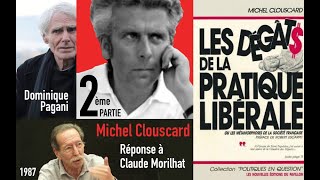
Dominique Pagani sees Rousseau as an "invariant", placed at the moment when the modern world is born1. He reads him first in the Social Contract: the critique of the right of the strongest, the distinction between possession and property, and freedom understood as obedience to the law one has prescribed for oneself. He often comments on chapter 8 of Book I, where the passage to the civil state turns a "stupid and limited animal" into a man, and where the "abuses" of this condition bring force back in2. He regards him as the most radical figure of the Enlightenment, since he calls property into question3. He also draws on Emile (learning a manual trade, the century of revolutions) and the Letters to Malesherbes, where Rousseau rejects a society of servitude and domination, not society in general4. In the fifth walk of the Reveries, he locates the birth of the modern sentence and of poetic prose5. He links him with Clouscard, Kant, Plato and Nerval, whose pilgrimage leads to his empty tomb at Ermenonville6.
Summary produced automatically from 150 of the passages below, to be reviewed; the numbers link to the moment in the session.
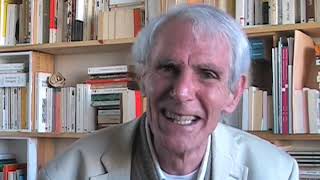
Who is this?
Jean-Jacques Rousseau (UK:, US: ; French:; 28 June 1712 – 2 July 1778) was a Genevan philosophe, writer, and composer. His political philosophy influenced the progress of the Age of Enlightenment throughout Europe, as well as aspects of the French Revolution and the development of modern political, economic, and educational thought. […]
4:22Emile, or On EducationA text from Emile on happiness, landscape, and property serves as editorial; Rousseau is the first to speak of landscape in modern terms.
19:15Emile, or On EducationReading and commentary: exclusive pleasures are the death of pleasure, and the demon of property infects everything it touches.
31:06He refuses the royal gratuity after Le Devin du village and lives by copying music in order to remain free.
25:03Newton of morality: he does for action what Newton does for knowledge.
28:26Letter on VirtueRefuses metaphysical dissertations: it is a matter of feeling virtue, which the simplest understand better than the learned.
38:45The Social ContractThe strongest must convert his force into right; possession is the effect of force, property is a right.
1:18:27Reveries of the Solitary WalkerThe idleness of Île Saint-Pierre is not an example: it is the compensation of a man who has been cut off from the company of men.
1:28:54The Social ContractThe passage to the civil state substitutes justice for instinct, but abuses can degrade man below the animal.
2:53The ConfessionsA pleasure-seeker, but with a measured, sublimated pleasure, who suspects a flaw in the women with whom eroticism succeeds.
4:29Same stance as Clouscard toward the intelligentsia of his time: the huron who turns up with his accent.
10:21Reveries of the Solitary WalkerThe fifth walk inaugurates the fusion of genres and modern poetic prose, whereas his early speeches are stilted.
12:39The Social ContractHe saves his psyche because he knows the collective is decisive; the only one to have written both The New Heloise and the Social Contract.
15:47Starting point of the sequence from Rousseau to Lenin that Pagani claims.
6:59Reveries of the Solitary WalkerHe invokes it to answer "what is to be done?". The praise of idleness in the fifth walk allows him to approach the value of labor through the value of idleness.
14:19He refuses Madame de Pompadour's pension in order to keep his independence, copies music, and appears as a demigod above the ruins of the Ancien Régime.
16:15He is not a precursor of Romanticism: he surpasses it in one leap and heralds modernity and a mutation of literary speech.
22:25He occupies the dialectical middle term, happiness, between the libertine's enjoyment and Robespierre's virtue.
32:28The Social ContractHe is the first to pose the tripartition between the naturalist, theological and anthropological standpoints, with his concept of the freedom of man.
5:30His tomb at Ermenonville, empty since the transfer to the Panthéon, is a pure sign; against the clichés about abandoning his children or his misogyny.
14:45The Social ContractDistinguishes natural liberty and civil liberty, possession founded on force and property founded on a positive title.
20:14Reveries of the Solitary WalkerMakes precious idleness his chief enjoyment and formulates a secular happiness born of a forced exile.
41:01Emile, or On EducationAnnounces the century of revolutions, founds property on labor: every idle citizen is a rogue.
55:59Reveries of the Solitary WalkerAt the end of the fifth walk, he enjoys his written reveries, addressed to the other, more than the lived ecstasy.
0:38The Village SoothsayerA challenger figure who refuses the royal pension and whose image remains standing on the ruins of the monarchy.
6:14Constitutional Project for CorsicaIn his draft constitutions, he acts as a consultant and calls for the development of industry; he understood the Corsican problem.
8:09Reveries of the Solitary WalkerHis prose moves from the emphasis of the first Discourse to the fluid sentence of the Reveries, which foreshadows Chateaubriand and Proust.
14:56The Social ContractThe passage from the state of nature to the civil state; the abuses of the new condition as a modern theory of evil.
25:24The Social ContractThe opening of the Social Contract delegitimizes any power founded on force: the right of the strongest is gibberish.
5:18He places himself within the triangle and sets the Ancien Régime and the liberals back to back in order to situate the general will on a third plane.
5:38A childhood of truant days and readings of baroque novels, opposed to that of Voltaire.
6:43Emile, or On EducationÉmile inaugurates the novel of formation and inscribes the child within a political totality: learning a trade in order to rise to the status of man.
12:00Reveries of the Solitary WalkerOn the Île Saint-Pierre, he touches the absolute and a enjoyment made of precious idleness, in a pre-Proustian mode.
13:17Constitutional Project for CorsicaAt first reluctant, he becomes involved in the Corsican project to the point of asking to die on the island; the island figures nature as refuge.
0:50Discourse on the Origin of InequalityNatural man is a myth he forges, intermediate between the state of nature and civil society.
4:08Letters to MalesherbesHe seeks places where nothing foreshadows servitude and domination; nature makes neither the rich man nor the prince.
12:40Constitutional Project for CorsicaA serious inquirer, he investigates the island then asks to come and die there; the project remains unfinished.
20:40Reveries of the Solitary WalkerThe fifth walk tells of his happiness on the Île Saint-Pierre and founds poetic prose.
32:48Reveries of the Solitary WalkerReverie is the compensation of the unfortunate man who has been cut off; Rousseau anticipates more than romanticism.
18:40The only precedent in which Clouscard recognized himself; an immense dialectician, even though the word dialectic never appears in his work.
24:21The Social ContractInitiator of the philosophy of the French Revolution; the same author writes the Contrat social and the Rêveries du promeneur solitaire.
25:04Julie, or the New HeloiseA torrent of paroxysmal passions, set against the implacable logic of the Contrat social: a synthesis of praxis and psyche.
32:20Mocked for his accent in the salons; he saw in that mockery a mockery of a social milieu.
1:29:16The Social ContractThe strongest is never strong enough to remain master forever unless he transforms his force into right and his obedience into duty.
20:11The Social ContractThe passage from the state of nature to the civil state makes man an intelligent being; he is wrongly presented as the man of nature.
33:43The Social ContractAbusing the civil state means deceiving, restoring in it the law of the strongest; the beginning of the Social Contract analyzes the right of the strongest.
43:05The Social ContractIf there are slaves by nature, it is because there have been slaves against nature; against Aristotle, he mistakes the effect for the cause.
44:07Emile, or On EducationHe announces inevitable revolutions, defines the satrap as estranged from himself, and states that what men have made, they can destroy.
11:08Rousseau's tomb turns the journey toward the social contract rather than toward the personal novel.
29:48Reveries of the Solitary WalkerThe fifth walk gives the first occurrence of the word romantic in French.
1:02:26Constitutional Project for CorsicaA hunted man, he asks to die in Corsica; a destiny of the island runs through him: the maternal womb, the Île Saint-Pierre, Corsica.
1:12:27By refusing the Pompadour's hundred louis, he ruins the royal edifice; a man of praxis and psyche.
1:35:51Man becomes intelligent only within civil society.
1:22:14The Social ContractHer empty tomb, at Ermenonville, is the endpoint of the narrative: collective emancipation beyond the personal novel.
1:30:19EmileHe wanted to do away with wet nurses; Girardin applied Émile to his children.
1:32:30Reveries of the Solitary WalkerFirst occurrence of the word "romantic": the English manner of gardens, as opposed to the French manner.
1:37:51"Last echo of ancient wisdoms": he renews the gesture of Plato's Republic, already forgotten a generation after the Revolution.
1:47:21The Village SoothsayerBy refusing Pompadour's pension, he ruins the edifice founded by Henri IV; his figure stands on the ruins of the Ancien Régime.
4:29In his case, life is part of the work. Clouscard sees him as an ancestor and could adopt his motto "Vitam impendere vero."
19:38The effect he produces with his accent in Parisian salons resembles that of Clouscard among the fashionable set.
23:30Julie, or the New HeloiseHis position toward the salons of the Enlightenment is analogous to Clouscard's. He analyzes mockery of accent as a class positioning.
50:17The ConfessionsHe has a pathetic need to be recognized for himself. Accepted into the salons, he would have been just one more fashionable intellectual.
1:17:23Constitutional Project for CorsicaReminder that he wrote a draft constitution for Corsica.
13:28Emile, or On EducationEverything men have made, men can unmake; nature makes neither the rich man nor the prince.
16:43Kant makes him the Newton of morality: he places freedom at the center of human relations.
1:17:59Emile, or On EducationMan in society necessarily lives at the expense of others and owes them, in labor, the price of his upkeep; hence Émile's manual trade.
1:21:06The Social ContractMan begins to exist only in the civil state; in the state of nature, he is a stupid, limited animal.
1:52:21Emile, or On EducationInaugurates the Bildungsroman, a mediation between French classicism and the German nocturnal.
3:09The Social ContractThe chapter on the civil state deals with the passage from the state of nature to the civil state, which develops the faculties and ennobles the passions.
20:38The Social ContractThe abuses of the civil state can degrade man below the state of nature: this is the first modern theory of evil.
22:11"Everything is good as it leaves the hands of the Creator" refers to the supernatural, not to nature.
32:13Emile, or On EducationHe announces the state of crisis and the revolutions, formulates alienation, and distinguishes ineffaceable natural determination from what men can destroy.
49:51Passions that become ennobled shed light on the difference between Iseult and Antigone.
13:50Letters to MalesherbesIn the third letter, he is not fleeing society in general but the society of servitude and domination, and there he discovers infinite desire.
18:28The Social ContractThe stronger must convert his strength into right; force made the first slaves.
1:39:44Reveries of the Solitary WalkerThe only Enlightenment philosopher to herald romanticism; he is the first to use the adjective "romantic" in the fifth walk.
36:16Constitutional Project for CorsicaMisses the economic; his pre-industrial horizon is the small property owner, except when he surveys Corsica's mineral resources.
1:06:25Reveries of the Solitary WalkerRomanticism sits down with him at the water's edge.
1:16:09Reveries of the Solitary WalkerThe fifth Walk describes a reverie rocked by the waters, a self-annihilation in which the musical modernity of prose is born.
1:23:58Discourse on the Origin of InequalityThe only one to hold together the lyrical and the dramatic, the individual and the collective; uncompromising on equality and property, a possible starting point at the Liberation.
10:31Letters to MalesherbesFirst of the moderns, he expresses in the third letter the first voluptuousness of melancholy: a sadness he would not have wished not to have had.
1:11:21Reveries of the Solitary WalkerThe fifth walk describes, without knowing it, a return to the prenatal state cradled by the continuous movement of the waters.
1:21:29Reveries of the Solitary Walker"As long as this state lasts": man is sufficient unto himself like God, but only for moments.
4:30Shared reference for both terms: he opens both revolutionary thought and the modern relation to landscape.
10:41The Social ContractHe initiates revolutionary theorization; Castro kept the Social Contract under his arm in the Sierra.
13:46Julie, or the New HeloiseSaint-Preux's letter in the mountains inaugurates the poetry of the mountain: the pure air blunts what is harsh in the passions.
1:10:01The Social ContractCritique of the right of the strongest: one submits to force, one only obeys right; the pact has always already been present.
1:16:15Letters to MalesherbesHe flees not society but the places that herald servitude and domination.
1:19:21The Social ContractHe founds the political body on man and brings autonomy: obedience to the law one has prescribed for oneself is freedom.
1:30:24Kant went beyond his walk to obtain a translated copy of the Social Contract.
18:38The Social ContractBalance of the passage to the civil state: man loses natural liberty, bounded by his strength, and gains civil liberty.
21:38The Social ContractHe loses possession and gains property, which presupposes recognition; the contract begins when force is put at the service of law.
38:59He does not hate society, but this society of servitude and domination, opposed to the contract and to liberty.
1:10:05EmileHe announces the century of revolutions and the state of crisis (remark by the moderator).
3:20A man hunted his whole life, his writings burned, his homes stoned, he considers exiling himself to Corsica: a figure of the savage who flees.
4:45The Social ContractChapter 8 of book I shows the gain of the passage to civil society and the danger of its abuses, which degrade man below the animal.
9:32He proposes for the human world a principle of freedom as important as gravity is for Newton; nature is for him an intermediate stage.
1:53The Village SoothsayerCopyist of music in order to remain independent, he refuses the royal gratification and a career as a star after the success of his opera.
2:55Reveries of the Solitary WalkerHis poetic texts in prose have few colors and many sounds; the fifth walk extinguishes the visual in the sound of water.
12:19He gives the right answer to the debate over opera by unifying, first, poetry and prose in his last works.
2:19Reveries of the Solitary WalkerIn his last work, he deplores the ravages of age without paying homage to old age or exalting youth; he detests youthism.
4:05Emile, or On EducationThe key is political education from the earliest years; attached to the passions, he remains young until the end without believing in going back.
6:49Letter on VirtueA little-commented text, in which the state tells the individual everything it owes him; he refutes the naturalist reading of Rousseau.
28:37Aware that mocking an accent means mocking a social milieu; his tercentenary is being celebrated.
29:58Coming from Switzerland, he arrives in Paris and appears reactionary in the salons because he is revolutionary on the social level, positing equality as a right.
33:21The Social ContractUntouched by the quarrels over the Terror; Clouscard retains from him the critique of worldliness, class snobbery, and the idea that things happen in threes.
35:23According to the publisher, he already confronted the Voltairean bourgeoisie of the Enlightenment.
18:08The Social ContractLike Clouscard, he holds together the Social Contract and the New Héloïse, the Reveries and the Discourse on Inequality.
37:56The Gilets jaunes call for the State in the Rousseauian sense of general will.
43:50Reveries of the Solitary WalkerThe ecstasy in which one is self-sufficient like God seems to contradict the Social Contract.
45:00Emile, or On EducationRaising Émile to the state of man through a manual trade; in society, man owes his upkeep to labor: "every idle citizen is a rogue."
47:23The ConfessionsA pleasure-seeker in pursuit of pleasure and happiness, but not in injustice.
2:30:32Reveries of the Solitary WalkerThe fifth walk dates the modern beginning of maternal temptation: a rocked reverie that reconstitutes the state of the fetus.
2:36:46Discourse on the Sciences and ArtsSomewhat flowery eloquence, far from the sentence of the Rêveries marked by maternal deprivation.
2:15:56Letters to MalesherbesThe gold of the broom-flowers and the purple of the heather: a new and gratuitous luxury, a reply to Voltaire's Le Mondain.
1:21:14Reveries of the Solitary WalkerTaking refuge on the Île Saint-Pierre, he is lulled by the uniformity of the water's movement and becomes an infant again.
1:29:49Reveries of the Solitary WalkerThe sound of the waves supplies within him the inner movement that reverie extinguishes.
1:53:50The state in the sense of the general will and the collective interest.
22:15The Social ContractLegitimacy in the street when democracy disappears from institutions restores the spirit of the Social Contract and the general will.
51:38Starting point of the most fruitful modern thought, up to Clouscard.
53:07The Social ContractBook I, chapter 8, distinguishes the state of nature, where there is neither good nor evil, from civil society.
56:32The general will is the general interest, the authentic meaning of the State.
28:52Emile, or On Education"Every idle citizen is a rogue": in society, each person must pay, through work, the price of his upkeep. This is his most Marxian passage.
29:11Reveries of the Solitary WalkerThe fifth walk praises idleness and the happiness of having nothing to do.
49:51The state as general will, in Rousseau's sense, and not as state apparatus.
27:30The Social ContractThe sovereignty of the people is the main subject of the Social Contract: the sovereign expresses the general will.
1:00:53Reveries of the Solitary WalkerThe reverie of the fifth walk: reflections fade into the continuous movement that rocks, closer to music than to discourse.
8:15Source of the notion of autonomy that Kant borrows from him.
9:13The Social ContractIn Book I, chapter 8, he distinguishes natural liberty, bounded by the individual's own strength, from civil liberty, limited by the general will.
13:52Founder of the philosophy of the French Revolution; the general will is not a completed totality.
51:14Reveries of the Solitary WalkerA general setting without detail, the first use of "romantic," the island imaginarily in the middle, the struggle of the weak and the powerful.
56:37Reveries of the Solitary WalkerThe sound of the waves fixes his senses; the rhythm of the water supplies the inner movement and lulls him.
1:23:43The ConfessionsThe day at Thun shows the presence of the body and sensation, more modern than many romantics.
1:34:18The ConfessionsThe innocence of morals has its own continuous voluptuousness: it is the relation to time that distinguishes happiness from pleasure.
35:40Great founder of romanticism, Senancour's master.
40:17Julie, or the New HeloiseHe invents the beauty of the mountain, until then held to be a horror.
46:33Reveries of the Solitary WalkerThe fifth walk relives through writing the reverie of the Île Saint-Pierre; "it is when one is about to leave one's remains that one is most offended by it."
1:47:26The state in the sense of the general will, not of the state apparatus.
52:36Emile, or On Education"We are approaching a state of crisis and the century of revolutions": he prophesies a revolution that no longer stops.
1:03:08Reveries of the Solitary WalkerOn Île Saint-Pierre, he describes only sensations that make him feel his own existence: this is the first emergence of pre-romanticism.
3:24Letters to MalesherbesIn the third letter to Malesherbes, he finds in the gold of the broom flowers a gratuitous luxury, in response to Voltaire's praise of luxury.
1:17:02A Jean-Jacques Rousseau park turned into a Disneyland is taken as an example.
1:29:07EmileA lucid prophet, he announces "the state of crisis and the century of revolutions," that is, an unending succession of revolutions.
17:54Emile, or On EducationÉmile completes the didactic edifice of the eighteenth century; his "Music" article for the Encyclopédie deals with Persian, Chinese, and Arab music.
32:03The Social ContractCriticizes Aristotle's thesis that some men are born to command and others to obey.
41:02Reveries of the Solitary WalkerThe word "romantic" appears in the fifth reverie; Rousseau inaugurates poetic prose in the Confessions, the Reveries, and La Nouvelle Héloïse.
1:01:46Emile, or On EducationÉmile is the monument in which the didactic work begun in the Renaissance culminates.
1:58Starting point of the sequence on revolutionary thought.
5:11Reveries of the Solitary WalkerThe greatest revolutionary of the Enlightenment is also the author of the Reveries; he is the first to link praxis and psyche.
6:59Julie, or the New HeloiseHis main subject is an amorous passion of the order of Eros, which is consistent with the Social Contract.
10:12What we should have meditated on regarding him while working through Kant, Hegel, Marx and Lenin.
39:24Emile, or On EducationHe announces "the state of crisis and the century of revolutions" and thus prophesies the 19th century.
44:37Emile, or On EducationThe "sumptuous fool" who puts his being into what is foreign to him: one of the first definitions of alienation. He offers a social apology for the trade.
57:27The Social ContractThe social contract does not fall under moral duty-to-be: society cannot be constituted otherwise.
2:24:14The Social Contract"Force made the first slaves, their cowardice perpetuated them."
1:14:25The Social ContractHis antitheses on freedom applauded in Ivory Coast; the distinction between possession and property understood by a pupil.
1:54:35Letters to MalesherbesNot an enemy of society in general but of a society of servitude and domination: the start of the path toward Hegel and Marx.
18:21Constitutional Project for CorsicaHe wrote the preface to the bilingual edition of this text; in the Social Contract, Rousseau predicts that Corsica will astonish Europe.
19:57Found in Thérèse Levasseur an illiterate companion, unlike Clouscard.
44:24Birth certificate of the fusion; déclassé, he escapes madness; his paranoia is justified by real persecutions and Voltaire's cabal.
1:04:32Nerval unfolds between his mother's grave and Rousseau's at Ermenonville.
24:11Reveries of the Solitary WalkerThe fifth walk does not invite flight from society: it is the consolation of an "unfortunate man cut off from human commerce."
26:07The Social ContractHunted for his publications; he is not a totalitarian thinker.
1:13:55The Social ContractMan only becomes intelligent through civil society; against Aristotle, he mistakes effect for cause: slaves by nature are first slaves against nature.
38:39First to place property at the center of the debate, the only one of the Enlightenment to attack it; opposed to Voltaire's theater in Geneva in favor of popular festivals.
41:22Emile, or On EducationEvery idle citizen is a rogue: in society one necessarily lives at the expense of others and owes one's keep in labor.
1:30Reveries of the Solitary WalkerA question from the audience asks whether one can imagine an eleventh promenade; he also evokes Rousseau's dialogue Rousseau, Judge of Jean-Jacques.
4:30Reveries of the Solitary WalkerIn the fifth promenade, Lake Bienne which circumscribes and the island placed at the middle of the lake reveal his maternal fixation.
6:31Since him, the decisive advances of modernity have been placed in the second state of reverie.
9:05He was never unfaithful to ancient savagery, nor did he dismiss what it gave through praxis.
3:18To be free is less to do what one wants than not to depend on another's labor; he loved "free freedom."
5:33The Social ContractThe impulse of mere appetite is slavery, obedience to a law one has prescribed to oneself is freedom; the reflexive "one-self" prefigures Kantian autonomy.
7:59His standpoint, like those of Clouscard and Marx, has nothing puritan about it.
8:40Reveries of the Solitary WalkerThe fifth walk is a study on happiness.
3:11Proposes farniente as a value; opposing Pascal to it would be a misreading.
4:26Emile, or On EducationPrescribes for Émile a trade that works the hands more than the head, a passage to be read to the working classes.
5:08Reveries of the Solitary WalkerIn the fifth walk, he savors the precious farniente on the Île Saint-Pierre, having been hunted and stoned at Môtiers; his dangers were not imaginary.
5:42The Social ContractBurned in public with Émile.
6:06Pagani takes up his own expression, the reign of servitude and domination.
38:23The Social ContractWe owe him sovereignty, the most progressive idea of the Revolution: to bow only before the decrees of our fellow beings founded by contract.
0:58Constitutional Project for CorsicaConsulted by the young Corsican republic, he drafted a constitution left unfinished after Corsica was sold to France.
39:49Essay on the Origin of LanguagesAgainst Anglo-Saxon utilitarianism, he places wells at the origin of languages: language comes from passions more than from drives.
1:37:27Emile, or On EducationWants to raise the child to the state of man; foresees inevitable revolutions; nature makes neither the rich man nor the prince.
1:08Letters to MalesherbesIn a letter, he invites Malesherbes to make music together, which would be a change from the "modern din," that is, from Rameau.
20:08Emile, or On EducationThrough manual labor, the pupil rises from the rank of king to the state of man: a distinction between man in potentiality and man in act.
27:00The Social ContractHe holds together the Social Contract and the Nouvelle Héloïse, praxis and psyche; like him, Clouscard discovers the hypocrisy of the salons.
53:33Like him, Clouscard refuses to yield to the fashion of the time.
26:59The Social ContractHe wrote both the Social Contract and Julie, or the New Heloise; he discovers, like Clouscard, the hypocrisy of the Parisian salons.
53:42Like him, Clouscard refuses to yield to the fashion of the time.
1:20:01The Social ContractEntry into civil society exchanges natural liberty for civil liberty, and possession, an effect of force, for property founded on a positive title.
9:26Letter on VirtueCivil status as a principle; he recommends the Lettre sur la vertu, where the individual's debt to the collective is not guilt-inducing.
1:44:10Emile, or On EducationHe is the first to formulate free determination: what men have made, they can unmake; nature makes neither rich man nor prince.
2:37For the organizer, he announces the new world.
29:03The Social ContractAfter destruction, one must build: the Social Contract lays the foundations of a new bond among men, based on freedom rather than birth.
6:00Inspired Kant on the distinction between legality and morality.
41:47Mentioned in connection with children abandoned to public assistance in the 18th century.
1:00:20Constitutional Project for CorsicaAt first reluctant, he gets drawn in, takes an interest in mining resources to guarantee independence, and sees clan quarrels as the enemy of the Corsicans.
46:33The label of precursor of Romanticism does not fit him; he brought something new.
1:27:12The Social ContractThe passage from the state of nature to the civil state substitutes justice for instinct; this passage continues without end.
57:25The Social ContractThe passage from the state of nature to the civil state substitutes justice for instinct, but its abuses can degrade man below the animal.
37:57The Social ContractThe strongest is never strong enough to always be master unless he converts his force into right; obeying the law one has prescribed for oneself is freedom.
1:21:34In the letter to Malesherbes, he describes his ecstasy on the island: he was not thinking, not reasoning.
1:26:42Constitutional Project for CorsicaHis letters on Corsica form an extraordinary document; he gives up the project and asks to come die there, to live free on a free land.
22:43Letters to MalesherbesHe seeks wild places where nothing announces servitude and domination: he flees that particular society, not society in general.
42:54Among the authors of revolutionary thought seen during the term.
38:28Reveries of the Solitary WalkerIll, he delights himself writing about the island of Saint-Pierre, which he sees better while writing than while there.
1:41:54The beginning of the new regime, at the stylistic level.
5:10Discourse on the Origin of InequalityImagine how the first men came together, an example of thinking about origins.
1:15:49The Social ContractReading of the passage from the state of nature to the civil state, which turns a stupid and limited animal into an intelligent being and a man.
3:20Emile, or On EducationModel of the novel of formation at the time.
38:16Emile, or On EducationInaugurates the fusion of the poetic and the philosophical in following an individual.
2:34:55The Social ContractContrary to the image of the noble savage, he shows that the passage into civil status hominizes man, for better and for worse.
6:03Julie, or the New HeloiseThe Rousseau of the Reveries gives its truth to the Social Contract; the preface to La Nouvelle Héloïse answers the question about the imaginary.
8:32The misunderstanding about determination goes back to him.
9:55Emile, or On EducationWhat men have made, men can destroy; only nature imprints indelible characters, and it makes neither the rich man nor the prince.
6:29The Social ContractHis advance is decisive: the people is that which recognizes itself in the contract, an actor both governing and governed, bound by the general will.
11:03Julie, or the New HeloiseDeeply akin to Clouscard; he makes no moral indignation against the salons and goes further in pleasure than the libertines.
2:58Rousseau remains an invariant for him. He stands at the moment when our world is born, with the industrial revolution, the French revolution and the romantic anthropological revolution.
.jpg)
 Talks · 4 Jun 2023PHILOSOPHY with PAGANI: E for ENFANCE (CHILDHOOD)