What Dominique Pagani says Dominique Pagani often comes back to Wagner, above all to The Ring of the Nibelung, Tristan and Isolde and Parsifal. In The Rhinegold, he sees the opposition between love and gold, and the payment of the giants who build Valhalla appears to him as a wage negotiation1 . Following Lévi-Strauss, he regards Wagner as the father of the structural analysis of myths. For him, the Ring is a model of rigour for the sciences of history2 . From Tristan, he takes the infinite melody and a chromaticism that dissolves tonality and prepares atonal music without belonging to it3 . With Parsifal, a testament built on compassion, he follows Nietzsche's reversal: hostile to the libretto, Nietzsche is overwhelmed by the music4 . He finds the man odious and his writings a mix of the best and the worst. Wagner was a barricade fighter in 1848 and an antisemite out of resentment toward Meyerbeer5 . In his view, the works are politically more relevant than the speeches6 .
1 Marx Plage 1/2 1 Feb 2016 · 1:10:29 2 9 #13 Comment des sciences de l'histoire peuvent-elles être réelles? 29 Jan 2021 · 6:28 3 Musicosophie 11. Musiques modales et tonales 24 Jan 2021 · 1:07:58 4 La maladie, le malheur, le mal 20 Sept 2024 · 26:24 5 La matrice de toute illusion : le passé vécu comme présent 4 Jun 2024 · 29:29 6 9 #12 Comment des sciences de l'histoire peuvent-elles être réelles? 14 Jan 2021 · 1:00:33 Summary produced automatically from 150 of the passages below, to be reviewed; the numbers link to the moment in the session.
Who is this? Wilhelm Richard Wagner ( VAHG-nər; German: ; 22 May 1813 – 13 February 1883) was a German composer, theatre director, essayist, and conductor, best known for his operas, although his mature works are often referred to as music dramas. Unlike most composers, Wagner wrote both the libretti and the music for all of his stage works. He first achieved recognition with works in the Romantic tradition of Carl Maria von Weber and Giacomo Meyerbeer, but revolutionised the genre through his concept of the Gesamtkunstwerk ("total work of art"), which sought to unite poetic, musical, visual, and dramatic elements. […]
Read the article on Wikipedia Text: Wikipédia , CC BY-SA 4.0 , excerpt · Portrait: Franz Hanfstaengl, Public domain
Season 12 · 1 Apr 2024 The quest for the Grail, sanctimony or sacrilege?22:23 Parsifal Parsifal, created in 1882, is his testament. In it he abandons the Germanic material of The Ring of the Nibelung for the quest for the Grail.40:30 Parsifal He does not write operas but musical dramas; Parsifal is a sacred stage festival, and he had thought of having Perceval appear in Tristan.44:34 Parsifal He recounts the plot: the domain of the Grail wastes away, the spear has disappeared, Klingsor has castrated himself, Amfortas bears a wound that does not close.1:21:26 Parsifal The leitmotifs of the spear, the Grail, and Kundry's laughter; with Wagner, tonality dissolves.2:01:59 Parsifal In the third act, Parsifal returns on Good Friday and closes the wound with the spear.Season 9.2 · 14 Apr 2021 9 #19 Twilight of the Gods, or from repetition to liberation • Part 21:26 Twilight of the Gods Twilight of the Gods takes up the Ragnarök; its leitmotifs transform rigorously into one another; the tetralogy has longueurs but also the summits of Western music.28:19 Twilight of the Gods Wagner closes the work with the account of a woman who says "I know all."37:49 A Communication to My Friends A 1851 text where Psyche, the true feminine, makes him a revolutionary; the tetralogy, first titled The Death of Siegfried, was written reluctantly.40:02 Tristan und Isolde Tristan and The Mastersingers, his two absolute masterpieces, loosened his musical writing.50:53 The Ring of the Nibelung Each leitmotif is composed to combine infinitely and transform into another.Season 9.2 · 3 Apr 2021 9 #18 Twilight of the Gods, or from repetition to liberation0:29 Parsifal The enchantment of Good Friday, a high point of his testamentary work, celebrates the renewal of life.4:27 Parsifal The "Brille ab" anecdote: during rehearsals he covers a spectator's eyes, almost an admission of the failure of the total work of art.13:09 The Ring of the Nibelung Lyric drama is not text against music but the fusion of all the arts; a reminder of his three early romantic operas.20:19 Tristan und Isolde He interrupts the Ring for twelve years for Tristan, which revolutionizes harmony, then The Mastersingers, his only comic work.58:44 Twilight of the Gods Commented listening to the prologue: the Norns' scene, leitmotifs of the Rhine, of fate, of Loge, of the curse.Season 9.2 · 18 Feb 2021 9 #15 How can sciences of history be real?3:22 Siegfried He suspends the Ring at the second act of Siegfried to compose Tristan and Die Meistersinger, then resumes it twelve years later.10:27 The Rhinegold Account of Das Rheingold, governed by an algebra: only he who renounces love can seize the gold.30:08 The Valkyrie Account of Die Walküre, including Wotan's great recapitulatory monologue, read aloud, and Brünnhilde's sleep.1:17:19 Twilight of the Gods The Norns and Hagen's scheme; the Ring draws on Scandinavian myths and on the Nibelungenlied.1:25:21 Raised by his Jewish stepfather Geyer, he becomes a virulent antisemite in Paris out of resentment against Meyerbeer. Season 9.2 · 29 Jan 2021 9 #13 How can sciences of history be real?1:51 One of the figures about whom the most has been written; the Wagnerians only know a few "greatest hits." 41:15 The Rhinegold Died the same year as Marx; he holds some hyper-reactionary ideas alongside others that are very progressive, and wrote texts on the Revolution.52:28 The Rhinegold During the piling up of the gold, several leitmotifs sound at once: accumulation, servitude, then Freia's theme.1:10:23 Siegfried He wrote the poems of the Ring backwards and interrupted the composition in 1857, in the middle of Siegfried, for twelve years.1:12:17 Siegfried The Forest Murmurs are the most ecological passage of the Ring: Siegfried dreams of his mother and falls asleep.Series · 28 Jan 2021 Musicosophy 12. Nietzsche (right up) against Wagner8:28 Tristan und Isolde His chromaticism threatens tonality without abolishing it: it is a tonal music always at its limit.1:02:05 Siegfried Idyll He already sounds harmonies close to the blues; yet he never succeeded in pure music.1:04:41 His idea of drama fuses word and music; Boulez judges his endless melody to be what is most modern in him. 1:17:58 He has nothing of Nazism except antisemitism and German nationalism, which appeared after his failure in Paris. 1:40:07 Parsifal His last work causes the rift; Nietzsche condemns the libretto, then admires the prelude.Season 3 · 1 Aug 2017 #3.3 From Ulysses to Daedalus1:26:49 The Ring of the Nibelung The longest work in Western art reworks the Greek tetralogy to gather the people.1:29:42 An odious but charming man, whom kings come to see at Bayreuth; he moves from pagan inspiration to Parsifal. 1:31:39 Tristan und Isolde Five hours of the most torrid passion, conducted by Bülow, his rival.1:32:41 Parsifal The hero is an idiot without a name, who does not ask the expected question.1:36:49 Parsifal The prelude converts Nietzsche to Wagner's Christianity.Season 13 · 20 Sept 2024 Sickness, misfortune, evil26:26 Parsifal Nietzsche disparaged Parsifal without having heard a note of it, then called it an absolute masterpiece upon hearing it.40:44 Tristan und Isolde Antidote and poison; Tristan marks a great turning point in the history of music; he dared to express illness.54:59 At the height of glory at Bayreuth, he nonetheless says he has been alone since Nietzsche left him. 57:15 Tristan und Isolde Presentation of the plot and the death of Isolde before the listening.Season 12 · 4 Jun 2024 The matrix of all illusion: the past lived as present3:31 Parsifal The second act of Parsifal, the middle act, has a philosophical quotient; it is where the hero's name is finally discovered.29:46 His virulent antisemitism comes from the spite of his failed career in Paris, where Meyerbeer blocked his path. 40:33 Parsifal First work conceived specifically for Bayreuth; its premiere took place in 1882.1:25:22 Parsifal Object of a cult among Proust and his generation; he uses "weilen," to remain, in Kundry's mouth.2:08:32 Parsifal In his work the second act is always the act of action, where a threshold of irreversibility is crossed.Season 12 · 30 May 2024 From fidelity to grace - From substance to Subject2:41 In his lyric dramas, the second act is that of irreversible action, the third that of redemption or renunciation. 3:37 Parsifal The first act shows the Grail without the spear, a formal ritual from which faith has fled, and Parsifal's failure.14:36 In his correspondence with Judith Gautier, he writes "tropics" about the enchanted garden. 42:34 Parsifal In the third act, Parsifal heals Amfortas with the spear: only the weapon that made the wound can heal it.1:31:38 Parsifal The second act opens with the dialogue between Klingsor and Kundry; Parsifal hears his name, spoken by his mother.Season 12 · 21 Apr 2024 Saving the saviour? Redemption - the end of the cycle or its new beginning?5:09 Parsifal He kept the invariants of Chrétien de Troyes and consulted Iceland, Saint Bernard, texts on the heresies.23:51 Parsifal The work ends in an oceanic chorus that sings "Erlösung dem Erlöser."52:05 Parsifal His letters to Judith Gautier, full of sensual orders, contradict the image of a work of renunciation of the flesh.1:01:08 He derives the name Parsifal from "parsi" and "fal," the fool in the elevated sense. Season 11 · 12 Dec 2022 Hesitation fascinated by hearing and by sight: Siegfried and Perceval4:10 Parsifal Parsifal takes up Perceval under a Germanized title, following Wolfram von Eschenbach; it is Wagner's testament.37:54 A vegetarian, he was also antisemitic, obsessional, and nationalist. 1:01:35 Parsifal He replaces opera with lyric drama, a fusion of text and music; Parsifal is a "Bühnenweihfestspiel," almost an oratorio.1:38:47 Siegfried Siegfried, on the verge of forgetting his pagan mission to kill the dragon, is fascinated by the birdsong.2:03:28 Siegfried The pairing of the bird theme and the theme of the Valkyrie's sleep illustrates the Wagnerian technique.Series · 27 Jul 2022 NIETZSCHE - NO PITY FOR WAGNER • Pagani Parle Musique0:00 Tristan und Isolde In Tristan, he pushes chromaticism to the extreme, dissolves tonality, and prepares atonal music; his dramas last for hours.5:07 Beethoven There he writes that music brings out from the night the sounds of the inner self, heard at their height in a Venetian gondolier.9:30 A great seducer, of popular background, he lives in Lucerne with Liszt's daughter, taken from Hans von Bülow. 12:16 Parsifal His last drama, Christian, is for Nietzsche the denial of the Dionysian Siegfried of his youth.16:44 Odious as a man, he had the honesty of an artist to express that one is overtaken by the truth of one's own history. Series · 31 Mar 2021 Wagner and his interpreters, Approaching Clouscard, Marx = Theseus? • Philosophical Q&A • Pagani11:04 The Ring of the Nibelung Question about audio versions of the Ring; he wonders whether Wagner is a classic in the musicological sense.18:19 His pathological antisemitism explains his ban in Israel. 23:10 The Valkyrie In Wagner, drama is the indissoluble union of action and music.33:50 Tristan und Isolde The duet of the second act: love, which never succeeds in life, here goes all the way, a controlled madness that opens up the music of the future.43:23 This antisemite has never been so well served as by Jewish performers. Series · 15 Dec 2020 Musicosophy 6. The Jazz Variation... by Beethoven6:42 Example of the musician of myth in Lévi-Strauss's classification. 1:17:20 Tristan und Isolde The English horn solo evokes the shepherd's song and solitude; it is said to initiate atonality.1:54:51 The Mastersingers of Nuremberg Sums up centuries of music and depicts a brawl through a fugue; announces the dissolution of tonality.1:56:38 The Ring of the Nibelung The leitmotif unites lyrical variation and dramatic alteration; it expresses an idea, and themes transform into one another.2:01:07 Parsifal The theme of the wound reverses, in an ascending minor second, the theme of servitude.Series · 3 Dec 2020 Musicosophy 2. From Lévi-Strauss to Nerval on music22:01 Twilight of the Gods The two timpani strokes of the funeral march can only be understood by someone whose heart beats.48:14 Beethoven Sees in the emergence of the voice a sea creature lifting its head out of the water, while pulling Beethoven toward lyric drama.51:02 In his work, music is the feminine instance and speech the virile instance; an obsession with incest. 58:42 The Ring of the Nibelung The first words of the Rhine daughters are a babble, an intermediate stage before language.Series · 3 Dec 2020 Musicosophy 1. Schubert and the master singers26:00 The Mastersingers of Nuremberg In the second act, the calm night turns into a general brawl, written in the form of a fugue with multiple subjects.32:06 The Mastersingers of Nuremberg A mediating work that contains three centuries of music, from Gregorian chant to ruptures foreshadowing the Russians.36:27 The Mastersingers of Nuremberg Sachs's meditation on Wahn; final nationalist harangue; antisemitism born of resentment against Meyerbeer.53:16 His endless melody synthesizes Schubert and Beethoven: a permanent song, fusing arioso and recitative. 1:03:26 Return to Bach in late Wagner, without the baroque's metrical constraint. Series · 7 Apr 2021 #1 Mignon, or the song of silence31:57 The Rhinegold The babbling of the Rhinemaidens as the curtain rises is not yet a language.38:31 The Mastersingers of Nuremberg The unforgettable second act and the June night.51:17 Beethoven A wordy essayist, exiled for having fought on the barricades, he compares Goethe and Schiller in the face of music.54:33 Beethoven He makes the last lines of Faust, the eternal feminine, into the spirit of music that guides toward deliverance.Series · 7 Feb 2021 Musicosophy 14. Mozart once more5:08 He is wrongly credited with inventing the leitmotiv, which he systematized. 10:48 The Ring of the Nibelung The Nibelung's scraping, beneath the gods' palace, figures the infrastructure and the proletariat that terrifies the bourgeoisie.14:20 Twilight of the Gods The three Norns spin the cable of fate: a predictable time, hence a false time.28:08 Tristan und Isolde The chromatic unleashing of Tristan is said to initiate 20th-century music.1:47:51 Parsifal The flower-maiden scene, which he himself applauded at Bayreuth, enchants the green paradise of childhood loves.Series · 18 Jan 2021 Musicosophy 10. The two Klemperers and Bruno Walter in Wagner7:13 Born the same year as Verdi, died the same year as Marx; linked to German unity. 29:41 The Ring of the Nibelung His music says, through a rhythmic variation, that young girls are birds, independently of what he thinks consciously.35:17 The Valkyrie Drama of forbidden love between twins, never interpreted so well as by Bruno Walter.44:58 Siegfried Idyll A dawn serenade offered to Cosima for Christmas, played on the staircase; its theme is that of peace.1:13:17 Tristan und Isolde The author of Tristan is Schoenberg's god.Season 9.2 · 14 Jan 2021 9 #12 How can sciences of history be real?1:32 The Ring of the Nibelung He was asked to put the Ring on the program; he compares it to The Lord of the Rings and Star Wars.49:14 The Rhinegold He recounts the plot of Das Rheingold: the three tiers of beings, Wotan's contract, the theft of the gold by Alberich.1:00:26 Dead the same year as Marx and a fighter on the barricades of 1848, he is more politically relevant in his works than in his speeches. 1:02:38 The Rhinegold Commentary on the descent into Nibelheim and on the leitmotifs of the forge, servitude and the ring.1:50:02 He invented lyric drama, conceived as an anti-opera without repetition, in which the action moves forward and only the leitmotifs return. Season 9.1 · 3 Dec 2020 #7 Answers to questions (continued)3:31 The Ring of the Nibelung Proposed as a theme: exposing the full pitch of the Ring and its philosophical exploitation; died the same year as Marx.12:10 The Ring of the Nibelung The Ring mixes Germanic and Greek mythologies; Lévi-Strauss makes him the father of the structural analysis of myths.53:29 The Rhinegold The first words of the Rhinemaidens are childish babbling, the first stage of embryonic speech.56:15 The Ring of the Nibelung The word Noth, distress, recurs often in the Ring; Siegfried's sword is called Nothung.Season 9.1 · 6 Nov 2020 #3 Benefits and harms of amnesia...9:59 The Ring of the Nibelung The proper name most commented on after Jesus; he wrote his own librettos, or poems, and the Ring is presented in three days and a prologue.15:43 Tristan und Isolde Tristan's love duet, nocturnal and deadly, is the inverted counterpart of Siegfried's.16:31 Twilight of the Gods The scene of the Norns, prologue to Götterdämmerung, plunges into a time outside time and ends with the breaking of the thread.35:16 Siegfried The bird says "Web' ich mein Lied," I weave my song: the metaphor of weaving.Season 13 · 13 Oct 2024 The eternal return… of the death camps?1:03:45 Siegfried Siegfried is raised by the dwarf Mime. The three races (gods, giants, dwarves) cover a class relation.1:08:28 A fierce antisemite, he has his unconscious express Mime's misfortunes through Jewish music. His father-in-law Geyer was Jewish. 1:10:20 After the estrangement, he has Nietzsche's sister say that he is alone. Series · 20 Jul 2022 WAGNER - THE TRUTH OF PURE MUSIC • Pagani Parle Musique9:28 The Rhinegold Cosmogonic prologue of the Ring, where the first words of the daughters of the Rhine are a sonorous babble, an infra-speech.15:33 The Valkyrie In him, the orchestra can say the opposite of what the characters say; Wotan's farewell makes the renunciation of love heard.Season 10 · 23 Jun 2022 #15 Nietzsche: Philosophical or musical relevance? Answers to questions1:08:52 Parsifal Nietzsche settles his accounts with him in every work; Parsifal is his testament, which Nietzsche accuses of taking the road to Rome.1:16:32 Parsifal The prelude to Parsifal draws from Nietzsche a tribute: brevity, clarity, elevation.Series · 6 Feb 2022 The feminism of the privileged, puritanical censorship of femininity - Molière, Clouscard, Wagner23:47 A Communication to My Friends He reads the text where Wagner discovers in Elsa the true feminine, bearer of the world's liberation, which makes him a complete revolutionary.29:14 A contemporary of 1848, found with hands blackened by powder on the barricades, he is sentenced to nearly twenty years of exile. Series · 25 Mar 2021 Musicosophy 18. What is musical in music17:45 Writes to Nietzsche's sister that he has been alone since Nietzsche left him. 18:47 Beethoven Goethe represents plastic art; the eternal feminine of Faust designates the spirit of music.19:08 A Communication to My Friends Contains the finest hymn to militant feminism.1:02:37 Beethoven The equal-time basses take up the demands of the plastic arts, like a colonnade.Series · 10 Mar 2021 Musicosophy 16. Programme music / Pure music8:38 The Valkyrie No leitmotif was ever named by him; there is no bijective relation between leitmotif and content, as the end of Die Walküre shows.1:06:30 Tristan und Isolde The endless melody no longer concludes with cadences; the music becomes oceanic, without privileged direction.1:12:43 The Ring of the Nibelung The Ring at Bayreuth in 1976, the centenary of its first complete performance.Season 9.2 · 5 Feb 2021 9 #14 How can sciences of history be real?1:57 The Ring of the Nibelung The Ring is the cycle's second subject, with sessions alternating.11:48 He recounts Wagner in Lucerne, opening the door to Nietzsche by walking on his hands. 15:05 The Rhinegold This is the prologue, the shortest of the four days, which ends with the gods' entry into Valhalla.Series · 24 Jan 2021 Musicosophy 11. Modal and tonal music10:21 Tristan opens the harmonic mutations used by jazz. 1:08:15 Tristan und Isolde The Tristan chord dissolves tonality without being atonal: Wagner resolves it.1:48:59 Beethoven Snubbed in Paris, became antisemitic against Meyerbeer; he reads Schiller's "was die Mode streng geteilt" as an allusion to Paris.Series · 15 Jan 2021 Musicosophy 9. Romantic irony and the Vinteuil sonata29:00 Under Schopenhauer's influence, he thinks that art represents the idea, whereas music directly is the idea. 34:15 Tannhäuser His plan to title the opera "the mount of Venus" makes the Parisian public laugh.48:28 The Mastersingers of Nuremberg The generalized brawl of the second act, a metonymy for German history.58:51 The Rhinegold Loge is the Germanic Hermes.Series · 17 Dec 2020 Musicosophy 7. The Greeks, myth and music33:10 The Rhinegold The Rhinemaidens, made of alliterations and assonances, figure childlike babbling.55:59 Siegfried Studied by Nattiez through the myth of the androgyne; Siegfried believes the armored Valkyrie is a man.59:48 The babbling of the Rhinemaidens compared to jazz. Series · 3 Dec 2020 Musicosophy 3. What is called modern music?5:43 He is criticized for interminable operas, but Les Huguenots is longer. 22:04 Liquidates opera in favor of lyrical drama and fuses aria and recitative into infinite melody. 47:41 Tristan und Isolde The score of Tristan dilutes tonality, which Schoenberg will suppress.1:06:46 The Tondrama picks up the torch of action against bel canto. Season 7 · 4 Apr 2020 #3 • Harnessed to confinitude42:04 Nietzsche died of his relationship with Wagner. 1:22:12 Siegfried Opera as the grand fusion of text and music; Siegfried discovers the Valkyrie: "Das ist kein Mann."1:26:56 Beethoven In this study, the song of the gondoliers at night in Venice surpasses every composer.Season 6 · 29 Mar 2020 #6.6 • The Logic of the Subject in the face of the reconstitution of Nazism9:20 Tristan und Isolde Passion for Mathilde Wesendonck, brewed in Venice; his motto "the world owes me what I need."1:27:11 His antisemitism becomes virulent in Paris facing Meyerbeer; raised by a Jewish stepfather, Geyer, whom he admired. Season 6 · 10 Nov 2019 #6.1-1/2 - Prelude • D.Pagani / Lacan: Function and field of speech and language0:15 The Valkyrie He summarizes the drama and sees in it perhaps the deepest love in all of Wagner's work, even more than in Tristan.5:57 The Valkyrie An artist with an aesthetic divination, even when the ideologue says foolish things: he makes us hear the two sleeps and the theme of renunciation of love.Season 2 · 1 Aug 2017 #2.6 Between crisis and war: Philosophising?32:55 Beethoven Music as the art of night, and a theory of the cry: the sound that comes from within.39:39 Tristan und Isolde The last word of the work is "Unbewusst."1:27:02 Twilight of the Gods Gutrune loves Siegfried before seeing him: sexuality is determined by heroic aura.Talks · 19 Jun 2016 At the bistro with Pagani: part 211:53 Tristan und Isolde The great second act of Tristan, night: a figure of the romantic night.30:48 Parsifal The music of Parsifal stirs in Nietzsche chords that are his own.33:31 Universal, protean, a barricade-fighter friend of Bakunin and at the same time reactionary: an ambivalent figure. Talks · 18 Jun 2016 At the bistro with Pagani: part 140:47 He loves bel canto as much as Wagner. 50:55 Tristan und Isolde Wagner merges recitative and aria into endless, that is, indefinite, melody, in permanent modulation.1:00:26 Eliminates the separation between recitative and aria. 1:06:35 Tristan und Isolde Born on a May 22nd like Nerval, died in Venice, where Tristan was composed and where modern harmony is born.Talks · 8 Aug 2015 Mythology and Truth28:39 Germanic mythology in Wagner. 31:06 The Mastersingers of Nuremberg The general brawl of the second act is a metaphor for German history; antisemitic like his milieu, his work goes further than he does.34:43 The Rhinegold The giants demand their wages for Valhalla: the alternative between love and gold.44:50 The Ring of the Nibelung The smith Mime raises Siegfried so that he will forge the sword.Series · 17 Dec 2014 D for Desire5:35 Tristan und Isolde Author of his own poems, of an anthropological relevance that astonished Clouscard.5:35 On the Feminine in the Human Dies in Venice of a heart attack while writing an essay on the feminine in man, after the words desire, love, tragic; desire is central from the Ring to Parsifal.Season 12 · 28 Feb 2024 Clouscard by you - Answers to your questions46:06 A question concerns his rhythm. 1:49:19 For him, music expresses the eternal feminine; in its androgyny, the text is masculine and the music feminine. Season 12 · 4 Jan 2024 I am not who you think I am - The elusive identity11:35 An Overture for Faust Among the musicians obsessed with Faust.17:10 The Ring of the Nibelung The longest work, lasting four days; at the rise of the curtain in Das Rheingold, the babbling of the Rhine maidens.Talks · 29 May 2023 PHILOSOPHY with PAGANI: D for DESIRE5:13 On the Feminine in the Human Anthropological relevance of his poem of Tristan; died in Venice while writing an essay on the feminine in man, after the words desire, love, tragic.6:31 The Ring of the Nibelung Desire plays a central role throughout the Tetralogy, up to Parsifal.Talks · 29 May 2023 Dominique Pagani: From the debauchery of sense to the orgy of sentiment1:23:23 The Rhinegold The babble of the Rhine maidens opens the Ring: alliterations that flow like water.Season 11 · 17 Feb 2023 Roots or migration? From analytical reverie to current events, from Hölderlin to the war1:07:43 The Flying Dutchman The blaspheming captain wanders the seas and can only be saved by a woman faithful unto death.Season 11 · 14 Jan 2023 Beware of misreadings!! Clouscard and the ideology of desire, in homage to Le Précepteur26:26 Tristan und Isolde He said that a Tristan portrayed as he dreamed it would drive people mad.34:08 The Rhinegold The dishwashers in restaurants compared to the underground world of the Nibelungen.Season 11 · 23 Nov 2022 THE APORIAS OF ANTHROPOLOGY46:35 The Valkyrie Siegmund alone pulls out the sword.53:06 Parsifal Fascinated by the supernatural dimension in Wolfram, he draws from it his final work, his testament.1:04:23 Parsifal Parsifal enters the scene after killing the sacred swan.Series · 13 Jul 2022 BARTÓK - THE UNHEARD-OF SOUND • Pagani Parle Musique3:36 Tristan und Isolde Not a contemporary himself, he prepares the avant-gardes by dissolving tonality through the exacerbated chromaticism of Tristan und Isolde.Season 10 · 7 Apr 2022 #12 From Kafka to Proust, the dialectical passage from the intermezzo to the perpetuated edge46:45 The Mastersingers of Nuremberg The second act is set in a peaceful little square in Nuremberg.53:33 The Mastersingers of Nuremberg A serenade triggers a general brawl in a quiet town, then everything falls back asleep: an image of security on the verge of horror.1:22:20 Parsifal The Good Friday Spell, Proust's first idea for the little phrase.Season 10 · 24 Feb 2022 #10 UKRAINE: From the problem of "Edges" to the unleashing of war2:26:38 Siegfried The bird scene, at the geometric center of the Ring, is his happiest moment: a refuge intermezzo.Season 10 · 23 Dec 2021 10#7 "Post-modern" eco-petty-Nazism - Plato's Gorgias26:29 Welcomes Nietzsche, a dancer like Zarathustra; a pathological antisemite. 53:20 Dedicatee of The Birth of Tragedy. Season 10 · 3 Nov 2021 10#4 From Lascaux to modern music, the permanence of the political stakes in aesthetics1:04:11 Beethoven Sees in Goethe a failed painter and in Schiller a deeper premonition of music.1:04:51 Tristan und Isolde The death of Isolde, a nocturnal Romantic plunge.Season 10 · 22 Sept 2021 10#1 The eternal irony of the community12:47 Born the same year as Verdi, prefers to speak of lyric drama; contemporary of German unification. Season 9.2 · 9 Jun 2021 9 #23 "Ruled like music paper!" • Bach • Nerval • Lévi-Strauss10:31 The Ring of the Nibelung The Ring, a tragedy that ends musically in redemption and love.1:53:33 Undeniable father of the structural analysis of myths according to Lévi-Strauss, an analysis first made in music. Series · 6 Jun 2021 #3 Nomad or sedentary? - The case of Nerval1:15:04 The Ring of the Nibelung The daughters of the Rhine frolic in the waters and taunt Siegfried.1:18:09 Tristan und Isolde The sailor's song at the rise of the curtain expresses the melancholy of distance.1:40:52 The Ring of the Nibelung The Eddas are at the origin of the Ring.Series · 18 Apr 2021 #2 Lenin, or the wings of dreams3:52 Twilight of the Gods The cosmic fire of the Twilight answers Lenin's fire; young and destitute in Paris, Wagner frequented Bakunin.Series · 25 Mar 2021 Musicosophy 17. Interpretation24:32 Tristan und Isolde The shepherd's english horn solo in act three and the sailor's song in act one illustrate the plaintive pastoral instrument.Series · 9 Feb 2021 Musicosophy 15. Plato, Rousseau, Hegel and music7:53 His total work of art corresponds to what the Greeks called music. 33:28 Twilight of the Gods Siegfried's funeral march opens with two timpani strokes, a heartbeat before the event.Series · 11 Jan 2021 Musicosophy 8. Happiness and unhappiness in music30:49 The Ring of the Nibelung Born the same year as Verdi, he owes his great inspirations to Italy: the chord of Das Rheingold in Naples, Tristan in Venice; The Mastersingers is his comedy.1:51:22 Insulted then praised by Boulez, who conducts him with Chéreau. Season 9.2 · 7 Jan 2021 9 #11 How can sciences of history be real?31:31 The Ring of the Nibelung He will unfold the whole logic of the cycle, a trilogy preceded by a prologue: The Rhinegold, The Valkyrie, Siegfried, Twilight of the Gods.Series · 11 Dec 2020 Musicosophy 5. Happiness versus the death drive in music6:19 Siegfried Idyll Has Siegfried-Idyll played by musicians hidden on the staircase for his wife's awakening.32:35 With Liszt, accused by Brahms of destroying music with the music of the future. 51:14 Tristan und Isolde With Tristan and the death of Isolde, music goes furthest into the death drive.1:13:57 Tristan und Isolde The Liebestod fascinates all of musical modernity.Season 9.1 · 19 Nov 2020 #5 Benefits and harms of amnesia...36:34 Wagnerian harmonies in Baudelaire's second stanza. 52:26 Tristan und Isolde The second act is the most beautiful Romantic expression of the infinitude of love.Season 9.1 · 13 Nov 2020 #4 Benefits and harms of amnesia...1:14:22 The Rhinegold The giants build Valhalla and are refused their wages, Freya: the interweaving of praxis.Season 9.1 · 23 Oct 2020 #2 Benefits and harms of amnesia...1:17:48 The Valkyrie Siegmund refuses Valhalla if he cannot bring the woman he loves; the Valkyrie is overwhelmed by this.Season 8 · 30 Jul 2020 #16 • Return to the logics of the subject25:24 Parsifal Ghostly choirs of a decadent community of the Grail: the ritual continues but the heart is not in it.Season 8 · 21 Jun 2020 #11 • Return to the logics of the subject14:30 The Ring of the Nibelung The tragedy begins with the murder of Fasolt by his brother Fafner.1:32:43 Tannhäuser Youthful romantic opera, booed in Paris; Baudelaire writes to him after the scandal.Season 8 · 11 Jun 2020 #10 • Return to the logics of the subject51:26 Tristan und Isolde The opera opens with the solitary song of the sailor, a single voice without orchestra.Season 7 · 5 May 2020 #7 • Harnessed to confinitude53:03 Parsifal His work closes on the testament of Parsifal.1:00:37 Nietzsche, friend of the Wagner couple, dedicates The Birth of Tragedy to him. 1:37:42 Parsifal Parsifal, judged by Nietzsche as a Roman piece of religiosity, then recognized by him upon hearing the prelude.Season 7 · 26 Apr 2020 #6 • Harnessed to confinitude31:12 Parsifal His testament: Parsifal appears after having killed the swan of the Grail and is made to feel guilty for it.Season 7 · 18 Apr 2020 #5 • Harnessed to confinitude1:01:51 The Mastersingers of Nuremberg The night watchman in the second act, in the magic of the Saint John's night.1:14:03 Tristan und Isolde The second act, greatest erotic hymn in music, unfolds entirely in the night, from the moment Isolde extinguishes the torch.Season 7 · 11 Apr 2020 #4 • Harnessed to confinitude54:04 High point of romanticism but already post-romantic; he reigns, without being named, over paragraph 255 of Nietzsche. 1:01:41 Twilight of the Gods His title names the decline that Nietzsche reproaches in German music.Season 5.2 · 26 May 2019 #5.7 Nature or Landscape?1:40:46 The Valkyrie The Ride of the Valkyries is the least Wagnerian thing there is; Wagner is the endless melody.Series · 12 Mar 2019 Dominique Pagani ▷II Pablo Servigne1:51:43 The Ring of the Nibelung The Tetralogy begins on a pact, that of Hagen.1:53:47 The Ring of the Nibelung Valhalla keeps the gods safe while the Nibelungen are exposed to every danger.Season 5.2 · 4 Feb 2019 #5.4 Nature or Landscape?6:44 The Rhinegold Orchestration compared to liquid gold.23:45 Gracq's novels as a prelude to a Wagner opera never performed. 1:07:12 Tristan und Isolde Took Cosima from Hans von Bülow, who nonetheless conducts Tristan and says one must forgive its author everything.Season 5.2 · 25 Jan 2019 #5.4 Introduction / Nature or Landscape?59:17 Parsifal A testament work. Parsifal is the "pure fool." It blends Buddhism and Christian compassion.Series · 5 Jul 2018 Being and Code0:29 Tristan und Isolde The prelude to Tristan, invoked by Clouscard as the authentic dream.46:52 The Ring of the Nibelung The myth of the ring: the dwarf emerging from the depths figures the producer rendered repulsive.Season 4 · 14 Jun 2018 #4.9 Angélique (by Nerval)20:07 Wotan, targeted by Nietzsche's jab. 1:24:48 Tristan und Isolde Tristan's black sail, on which the tally had ended.1:30:46 The Mastersingers of Nuremberg His only comic work, which follows Tristan: like the Greeks, he wants to end on a happy note.Season 4 · 4 Feb 2018 #4.4B Objections to Dominique Pagani4:02 A Marxist reproaches him for moving from historical operas to myth, deemed reactionary; he rejects this reading. Season 4 · 15 Jan 2018 #4.4 Angélique (by Nerval)58:33 The daughters of the Rhine are always on an edge. 1:00:57 Tristan und Isolde Used to say it was fortunate his Tristan was played badly, otherwise people would go mad; Isolde dies before the sea.Season 4 · 12 Nov 2017 #4.2 Angélique (by Nerval)55:24 Parsifal His will places the Grail in the Pyrenees, between the Arab world and the Christian world; oriental stage directions for Kundry and the flower-maidens.Season 3 · 1 Aug 2017 #3.2 From Ulysses to Daedalus54:24 Cited alongside Verdi for romantic opera. 1:38:25 Parsifal Adored then cursed by Nietzsche; Parsifal, a Christian Germanization of Perceval, the opposite of Siegfried.Season 3 · 1 Aug 2017 #3.1 From Ulysses to Daedalus18:18 The Ring of the Nibelung The blacksmith plays a decisive role there, as in Mandingo mythology.35:15 The Valkyrie Wotan wants "das Ende"; the chromatic leitmotif of eternal sleep figures the extinction of drives.Season 2 · 18 Feb 2016 #2.3 Between crisis and war: Philosophising?48:55 The Mastersingers of Nuremberg A prodigious work at the heart of the debate, whose second act takes place in a small square on Midsummer's night.1:47:54 Dissolves tonality into chromaticism. Series · 1 Feb 2016 Hegel on the Beach 2/53:39 Bayreuth was not yet the site of his festival. 2:00:19 Parsifal Invented total darkness at the opera to hypnotize the listener, cinema before its time.Series · 1 Feb 2016 Marx on the Beach 1/233:45 Died a month before Marx. 1:10:32 The Rhinegold Class lines can be heard in it: the giants build Valhalla, paid first with Freia then with gold.Series · 1 Feb 2016 Hegel on the Beach 1/52:28:05 Parsifal Goes from Siegfried, the man without pity, to Parsifal, hero of compassion, whom Nietzsche ends up admiring.Series · 29 Jan 2016 What is to be done? 1/317:38 The Rhinegold In the Tetralogy, the guiding thread is gold or love: one can only take the gold that gives power by renouncing love.Series · 29 Jan 2016 What is to be done? 3/313:24 The Rhinegold The initial E-flat of the Tetralogy is said to have come to him half-asleep in his bath in Italy, an example of an intermediate state.Series · 29 Jan 2016 What is to be done? 2/322:43 The Ring of the Nibelung Mime confesses to Siegfried that he wants to kill him: a metaphor for the unconscious.Series · 4 Jan 2015 U for Übermensch8:36 Parsifal Nietzsche reproaches him for making compassion the subject of his testament, Parsifal.Series · 27 Dec 2014 M for Music5:24 Parsifal Parsifal's journey is compared to that of Proust's narrator.9:37 Twilight of the Gods The scene where Siegfried, before his death, says he has forgotten the language of the birds since he began listening to women.Season 14 · 13 Apr 2026 Language and thought: The case of Lavoisier1:10:00 Born in Leipzig. Season 13 · 27 May 2025 Flagrante Delights1:01:37 Parsifal The initiatory journey of Parsifal, parallel to that of Proust's narrator.Season 13 · 15 May 2025 Imaginary identity24:56 The Mastersingers of Nuremberg The second act, the Midsummer serenade, an extraordinary work born from the stillness of windowsill geraniums.Season 13 · 17 Dec 2024 The essence of evil - Innocence of nature, horror of naturalism!43:35 First to make the structural analysis of myths, in a score. 47:18 Tristan und Isolde The famous Tristan chord.1:11:16 Parsifal The lance, which makes blood spurt, image of the pointed concept.Season 13 · 2 Sept 2024 Clouscard: The metamorphoses of class struggle10:15 Parsifal, which Nietzsche hears for the first time. 45:27 Hitler invokes him in his speeches but goes to listen to Viennese operetta at concerts. 58:30 His son Siegfried, nicknamed Fidi: an example of German diminutives in -i. Season 12 · 18 Feb 2024 Secularism, the truth of religion?1:08:16 His mastery of ceremony echoes the "ceremonial complement" Marx speaks of, who hated Wagner. Season 11 · 3 Sept 2023 Worldliness in Clouscard: Desiring what? Through whom??40:02 The Ring of the Nibelung To have gold one must renounce love, which no one wants.Series · 5 Aug 2023 Aragon "The Paris Peasant Sings" - Readings on the Spot22:51 Named on the plaque of the Hôtel du Quai Voltaire. Season 11 · 18 May 2023 Worldliness in Clouscard, or privileges for all32:26 The Rhinegold The Tetralogy begins in water, with the prelude of the original element.Season 11 · 26 Apr 2023 Worldliness in Clouscard, or "The dominant ideology"1:34:07 The Rhinegold The three daughters of the Rhine and the three Norns, female trios.Talks · 27 Mar 2023 Interview with Dominique Pagani, praxis and psyche39:41 The Ring of the Nibelung The hammer and the thunderclap in the Tetralogy.Series · 7 Feb 2023 Nietzsche, or the Great Ninny - Readings on the Spot3:32 Comes after the Romantics, when everything seems to have been said. 5:30 Targeted by Nietzsche: Wotan, god of bad weather. 13:21 According to Nietzsche, set the contradictory German soul to music. Season 11 · 13 Nov 2022 Dialectics of hesitation and decision1:04:12 Parsifal Perceval inspired his testament.Season 11 · 14 Oct 2022 Clouscard and the problem of Socrates1:09:35 Quoted in the comparison with Nietzsche. Series · 3 Aug 2022 SCHUBERT - THE DIVINE CAPTIVES • Pagani Parle Musique2:17 Lohengrin Proust quotes certain pages of Lohengrin to evoke a serious tenderness and sweetness.12:00 Tristan und Isolde Proust likens a theme from Tristan to Vinteuil's phrase.Season 10 · 10 Jun 2022 #14 Caves of Yesterday and Today - From Plato to modernity1:42:22 The irrefutable father of the structural analysis of myths according to Lévi-Strauss. Series · 8 Jun 2022 FREE GOLD FOR EVERYONE - MULLIGAN • Pagani Parle Musique2:02 Cited among the composers over whom classical musicians argue. Series · 1 Jun 2022 POLYMORPHOUSLY PERVERSE MOZART • Pagani Parle Musique0:21 The first composer to write both his texts and his music. Series · 20 May 2022 Dominique Pagani - Who is hiding beneath the surfaces? Aesthetics and politics1:03:18 The Rhinegold His orchestration is compared to liquid gold.Talks · 19 Mar 2022 Dominique Pagani - Hölderlin, poetry and politics26:15 Tristan und Isolde The English horn solo of the shepherd in the third act.27:41 The Mastersingers of Nuremberg The night watchman in the second act.Season 10 · 10 Feb 2022 #9 PICTURES AT AN EXHIBITION: Art, seen from here or from the other side?9:44 Reference for the term leitmotif. 2:38:37 The Mastersingers of Nuremberg Nietzsche praises its overture as having the flabby skin of fruit ripened too late.Season 10 · 24 Nov 2021 10#5 The figure of Antigone, such as into herself at last...10:20 Cited among musicians of non-aristocratic origin. Series · 4 Oct 2021 #4 Nomad and sedentary - The case of Nerval23:53 Born in 1813, like Verdi: the Romantic generation. Season 9.2 · 27 May 2021 9 #22 Science and/or philosophy of "artificial intelligence" - Part 242:53 The Ring of the Nibelung In the Ring, one must steal the gold; mentioned regarding the etymology of rubato.Series · 23 May 2021 From the lost voice to the path of modernity • From modal music to tonal music • D Pagani2:24 Twilight of the Gods Scene of the three Norns from the prologue, shown in a previous session.Season 9.2 · 28 Apr 2021 9 #20 From SIGNAL to SIGN • Einstein2:54 Twilight of the Gods The video of the final scene, commented on in the previous session, has received a new soundtrack.30:51 He concludes at the piano "in the manner of Wagner," avoiding ending on the tonic. Series · 31 Mar 2021 A balance in nature? • Philosophical Q&A • Dominique Pagani9:29 The Ring of the Nibelung He makes an apology for the Ring, which passes for a favorite of the far right.Series · 2 Feb 2021 Musicosophy 13. Mozart restored33:28 Rivalry with Brahms; did not understand Haydn. 53:38 One will have to wait for him for a continuous musical flow. Season 9.1 · 17 Dec 2020 #9 Benefits and harms of amnesia...4:21 The Ring of the Nibelung Possible topic for the following term, submitted to a poll.1:23:06 The Ring of the Nibelung The Norns, equivalent of the Fate.Series · 3 Dec 2020 Musicosophy 4. Sound ghettos15:36 Tristan und Isolde Tristan on piano would work very well, almost like Bill Evans.Talks · 24 Nov 2020 Between sea and mountain, the standing stones of Valinco (The Corsican Neolithic)17:30 Cited among composers over whom musicians argue. Season 7 · 30 Mar 2020 #2 - Harnessed to Confinitude7:01 The Rhinegold The prelude, which begins in water, opens the Tetralogy like a cosmogony.19:26 He borrows from him the notion of "endless melody." 1:04:30 Twilight of the Gods Monteverdi achieves the Wagnerian ideal of the total work of art with few means.Season 7 · 27 Mar 2020 #1 - Harnessed to Confinitude22:43 Debussy's chords evoke post-Wagnerian velvety brass. 39:44 Twilight of the Gods An eternal twilight that ends in the blaze of the palace of the gods.Season 6 · 23 Oct 2019 #6.1 • The Logic of the Subject • season 6 / 2019-202:46 Tristan und Isolde The pianissimos written in the score of the death of Isolde.56:35 The Rhinegold Donner, god of thunder, borrowed from Scandinavian mythology.Season 5.2 · 2 May 2019 #5.6 Nature or Landscape?37:25 Caught on the barricades of 1848, saved thanks to a passport obtained through Liszt. 44:03 The Mastersingers of Nuremberg The night watchman appears in the second act.1:05:15 Tristan und Isolde He finds the ending too short despite its length.Series · 2 May 2019 Dominique Pagani ▷II Michel Foucault49:53 The Ring of the Nibelung He drew the Ring from the Germanic epic in which the blacksmith plays a central role.Season 5.2 · 26 Mar 2019 #5.5 Nature or Landscape?1:30:16 The Wanderer, Wotan. Season 5.1 · 2 Nov 2018 #5.1 bis FaceBook Live / Questions49:17 The Ring of the Nibelung His hyper-romanticism criticized by Nietzsche; Wotan, god of bad weather in the Ring.Talks · 2 Jul 2018 The Phenomenology of Spirit1:37:35 The endpoint of a mistaken comparison, like Bergson and Hegel. Talks · 20 May 2018 Marxist Café - Work and the right to work5:00 The Ring of the Nibelung The Ring stages the underworld of blacksmiths in Germanic mythology.Season 4 · 16 May 2018 #4.8 Angélique (by Nerval)41:52 The Ring of the Nibelung The Lord of the Rings took everything from him.1:40:32 The Mastersingers of Nuremberg The night watchman in the second act.Season 4 · 12 Apr 2018 #4.7 Angélique (by Nerval)1:02:27 Parsifal Germanization of Perceval.Season 4 · 15 Mar 2018 #4.6 Angélique (by Nerval)1:12:27 Rienzi Pushed by his wife to continue the successful historical drama, he wanted to make myth instead.Season 4 · 18 Oct 2017 #4.1 Angélique (by Nerval)36:18 Nerval was the first to point out Wagnerian drama, before Baudelaire. 1:47:21 Rienzi His wife wanted him to continue in the vein of the success of Rienzi.Season 2 · 1 Aug 2017 #2.5 Between crisis and war: Philosophising?17:43 A Theseus for Nietzsche. Season 2 · 1 Aug 2017 #2.7 Between crisis and war: Philosophising?6:53 Tristan und Isolde A performance of Tristan given as a birthday present, the best he has ever seen on stage.Season 2 · 10 Mar 2016 #2.4 Between crisis and war: Philosophising?9:00 The Mastersingers of Nuremberg His only comic work after Tristan, which recalls the Greek tetralogy.Series · 2 Feb 2016 Hegel on the Beach 3/52:40 Made use of Greek dramatic art to justify the total work of art. Season 1 · 10 Dec 2015 #1.6 Between crisis and war: Philosophising?11:45 Wagner's son-in-law, who would play him anything he wanted on the piano. 54:41 Nietzsche became anti-German just to annoy him. Series · 8 Dec 2015 Dominique Pagani on Michel Clouscard - The paths of praxis 1/214:46 Siegfried The verb "weben," to weave, which the bird sings, is at the origin of the word web.Talks · 26 Apr 2015 The Music of History36:15 The Rhinegold actual anvils in the forge58:49 Twilight of the Gods the funeral march makes one hear the beating of the heartSeries · 8 Jan 2015 Y for Yonville3:59 Twilight of the Gods Goebbels listens to his funeral march in his bunker.Series · 16 Dec 2014 B for Bach4:42 His recitative is compared to Monteverdi. Series · 23 Sept 2014 #3 The myth of the noble savage in Rousseau!37:20 The Ring of the Nibelung Forty years between the sketches and the end of Twilight of the Gods.
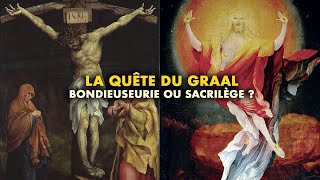 Season 12 · 1 Apr 2024The quest for the Grail, sanctimony or sacrilege?