Dominique Pagani gives a close reading of the Discourse on Method and the Meditations on First Philosophy. He sees the Discourse's opening sentence, "good sense is the most evenly distributed thing in the world", as a revolutionary bomb, an absolute democracy of reason1. He takes up the project of making man "master and possessor of nature" through mathematics that eases human labour, and he defends it against those who find it scandalous, Heidegger in particular2. On the other hand, he faults the dogmatism of the "long chains of reasons", which set no limit on knowledge and which Kant brought down3. In the analysis of the piece of wax, he considers that Descartes raises the question of identity and then closes it too quickly by asserting that the wax remains4. He links the cogito to the philosophy of the subject, and the dualism of thought and extension to the intellectualism of the rising bourgeoisie. He describes him as the last man of the Renaissance, who advances masked after Galileo's condemnation. Finally, he holds that mechanism's disenchantment of the world fulfils Christian transcendence5.
Summary produced automatically from 150 of the passages below, to be reviewed; the numbers link to the moment in the session.
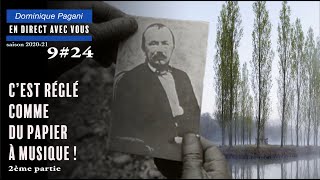
Who is this?
René Descartes ( day-KART, also DAY-kart; French: ; 31 March 1596 – 11 February 1650) was a French philosopher, mathematician, and scientist whose work was foundational to mathematics and modern philosophy. He connected the previously separate fields of geometry and algebra into analytic geometry and introduced a systematic method of inquiry that became influential in early modern philosophy. He made major contributions to epistemology and philosophy of mind as well as metaphysics, and influenced the development of modern science. […]
15:55Founder of the philosophy of the subject: the cogito validates what is true. He is the first to formulate the principle of inertia philosophically.
19:53He inaugurates modern philosophy but remains binary: thought and extension.
43:45Meditations on First PhilosophyIn the first meditation, he finds no conclusive sign distinguishing waking from dreaming. He is a gentleman and a man of war.
51:53Meditations on First PhilosophyAn all-powerful God could make it so that 3 and 5 do not make 8: this is a concern to preserve freedom.
1:00:40Meditations on First PhilosophyThe evil genius and "let him deceive me as much as he will": the cogito emerges from the paroxysm of doubt.
28:52A warrior and man of action, who brings pirates back to port at swordpoint; yet he makes doubt a fundamental category.
30:16Meditations on First PhilosophyThe piece of wax, known through all the senses, changes entirely in the fire; the question is whether the same wax remains.
42:33Meditations on First PhilosophyHe rushes to affirm that the wax remains, then admits that words stop him and that ordinary language deceives him.
52:39Meditations on First PhilosophyHe distinguishes seeing and judging: at the window one sees only hats and coats, and it is the judgment of the mind that recognizes men.
58:03Meditations on First PhilosophyHe advises reading the first two Meditations, from doubt to the cogito.
27:00Discourse on the MethodFormulates the principle of inertia discovered by Galileo; the Discourse appears in 1637, after Galileo's condemnation.
37:42Discourse on the MethodAdvances masked; his four rules replace the scholastic principles; he decides to deem false everything merely probable.
43:42Discourse on the MethodThe long chains of reasons state determinism: everything knowable links together like geometry, excluding freedom.
49:54Discourse on the MethodUnites the geometry of the ancients and the algebra of the moderns, invents coordinates; but "all things" opens the scientist temptation.
16:37Discourse on the MethodPublished a year after Galileo's condemnation, the Discourse presents itself cautiously as a fable: larvatus prodeo, "I advance masked."
48:39Discourse on the MethodHe delights in mathematics for the certainty and evidence of its reasons and is astonished that nothing more has been built on these foundations.
1:02:58Discourse on the MethodThe long chains of reasons of geometers make him hope that everything is linked in the same way: this is the extravagant hope of dogmatism.
1:32:51The WorldHe provides the metaphysical edifice of the new conception: nature is matter, governed by laws in a homogeneous space.
39:46The master of doubt also gives in to habit: his biology is delirious, this is not the Descartes of the cogito.
46:32Meditations on First PhilosophyThe first meditation starts from what has been received from the senses; the Discourse in French is a political decision.
1:24:08Discourse on the MethodHe advances masked; he sees in mathematics a means of easing men's labor.
1:35:15Discourse on the MethodThe "long chains of reasons" extended to all things: the chain of causes goes on to infinity.
23:52The cogito designates what maintains itself and that one does not see: the subject is the one who can say I think.
1:09:02Meditations on First PhilosophyThrough the window he sees only coats and hats: reflection of the self into itself.
1:10:23Discourse on the MethodPublished in 1637, one year after the condemnation of Galileo: the scientific revolution.
1:13:48Meditations on First PhilosophyMethodical doubt, up to the evil genius, makes the first positivity emerge at the heart of negation: I am, I exist.
2:53His dream of making man master and possessor of nature.
26:21Discourse on the MethodReading of the fifth part: two certain means distinguish true men from machines, speech and reason.
36:43Discourse on the MethodHe speaks of signs, not signals; reason is a universal instrument; he denies reason to animals, not their feeling.
1:05:17Meditations on First PhilosophyIn the First Meditation, no sensible sign distinguishes waking from sleep; the evil genius leads to "I am, I exist."
50:38In him, revolutionary potential coexists with the class knowledge of the nobility of the robe.
53:23Meditations on First PhilosophyHe raises the question of the permanence of the piece of wax, then locks it down with a "certainly" that is hardly Cartesian.
56:51Discourse on the MethodHis first sentence is a revolutionary bombshell: common sense is equal in every man.
8:20Targeted by Pascal for the divine flick of the finger at the beginning of the world.
55:47For him, eternal truths do not impose themselves on God: freedom is placed above truth.
1:02:34Freedom, a practical concept, has for him a value superior to truth, which is theoretical.
1:07:44Discourse on the MethodHe delighted in mathematics for its certainty and saw its true use in facilitating men's labor; the last humanist of the Renaissance.
6:33"I think, therefore I am": for Heidegger, the flash in which the being becomes an object for a subject and technology begins.
10:58Discourse on the MethodWhat is scandalous for this current is the sentence on mathematics useful for making men's work easier and rendering man master and possessor of nature.
1:22:27Discourse on the Method"Good sense is the most evenly shared thing in the world": equality of right, differences do not come from birth.
1:58:35Meditations on First PhilosophyAfter the madmen, he recognizes that his own dreams are just as extravagant: a self-humiliation that carries negativity into the subject.
26:01Meditations on First PhilosophyThe Latin title takes up Aristotle's expression "first philosophy".
46:03Principles of PhilosophyThe tree of philosophy: metaphysical roots, physical trunk, branches of medicine and morals; there remains imperialism in it.
57:42Discourse on the MethodThe four rules of method express the optimism of knowledge; he formulates the principle of inertia discovered by Galileo.
35:40Meditations on First PhilosophyThe cogito and the dualism of the two substances, thought and extension; to become master and possessor of nature.
43:30Meditations on First PhilosophyThe argument of madmen, then that of the dream, then the evil genius: Descartes makes a "someone" emerge, without going as far as Freud in placing it within himself.
49:52Meditations on First PhilosophyHe excludes madmen, then acknowledges that in dreams he is as extravagant as they are: no sign distinguishes sleep from waking.
1:36:00Discourse on the MethodThe long chains of reasoning of geometers make it possible to reach everything that can be known.
29:29Meditations on First PhilosophyThe First Meditation rejects deceptive senses, then, through the dream argument, removes any sensible criterion for distinguishing waking from sleep.
13:35Meditations on First PhilosophyDraws the philosophical conclusions of mechanism; on seeing coats and hats, one judges that there are men, who could be automata.
5:33Meditations on First PhilosophyHis hesitation before ordinary language; he rules out the infinite for ideological reasons; the piece of wax shows that sensation is a judgment.
33:37Reminder of the white wax and its smell of honey.
39:32Discourse on the MethodLong chains of reasons: nothing so hidden that it will not be discovered; more the last of the Renaissance than the first of the classical age.
1:22:44Discourse on the MethodWe have all been children, guided by our appetites and our tutors.
1:26:37Relation of the cogito and the res extensa.
24:15He combines the geometry of the ancients with the algebra of the moderns. His treatises still mix a good deal of everyday language with equations.
15:34Meditations on First PhilosophyThe piece of wax changes all its qualities, yet I judge that it persists; I also judge that coats and hats are men.
31:09Discourse on the MethodLong chains of reasons show that things follow one another. He denounces the unconscious animism stemming from childhood, guided by appetites and tutors.
48:09Discourse on the MethodHe wants to apply mathematics to the mechanical arts to ease men's work and make them "as masters and possessors of nature."
22:56Meditations on First PhilosophyAnalysis of the piece of wax: raises the question of identity; he freed us, a thing is true because I have thought it.
9:31Meditations on First PhilosophyThe Discourse in French for wide distribution, the Meditations in Latin for scholars, followed by replies to objections.
53:56Discourse on the MethodThe long chains of reasons: remove one link and everything collapses.
20:45His good sense corresponds to the understanding.
1:24:35Discourse on the Method"Good sense is the most fairly distributed thing in the world": the faculty of distinguishing true from false, that is the understanding.
3:40Discourse on the MethodHe enjoyed mathematics but was astonished that nothing more elevated had been built on them, while morals and politics rest on sand.
5:56Meditations on First PhilosophyHe writes the Discourse in French for popularization; the first meditation calls the sensible into doubt with the piece of wax.
43:46Discourse on the MethodTo make man master and possessor of nature.
58:44Meditations on First PhilosophyThe piece of wax: its sensible qualities disappear near the flame; "does the same wax remain?" — that is where man begins.

 Season 2 · 10 Mar 2016#2.4 Between crisis and war: Philosophising?