English translation of the French transcript, made with AI and not yet proofread — click a paragraph to jump to it. Show the French original
A serial between substance and subject 0:00 The aspect of the spirit, hubris, chrematistics, hubris, chrematistics, hubris, chrematistics, hubris, chrematistics, hubris, chrematistics, hubris, chrematistics, hubris, chrematistics, hubris, chrematistics, hubris, chrematistics, hubris, chrematistics, hubris, chrematistics, hubris, chrematistics, hubris, chrematistics, hubris, chrematistics, h... modern times. So we're going to circle around this plan, if you will.
0:35 But I'm even going to start in the middle, just to make things harder for myself. But don't worry, we'll go back over everything each time. There's a first misunderstanding I want to warn you against, which is believing that — for once, that's nice, thank you very much — for once I'm going to do a big chapter of history of philosophy, since we're taking things from the beginning, starting from the origins, Plato, who is after all the first strictly philosophical system, written, that has come down to us.
1:07 You know that before that, it's hearsay, the pre-Socratics are a sentence here, a sentence there, a page sometimes, when we're lucky, in Aristotle. And there you go, Aristotle, Descartes, Hegel, Rimbaud — I mean, we're no longer in the philosophical corpus, but one might get the impression, no, we're not going to do the history of philosophy in two hours, that wouldn't be serious. We're not even going to take into account, just for Aristotle, the time it would take us to get through it — good evening, Pierre — to make our way through the maze of the Aristotelian corpus, just that.
1:47 So, I want to say right away what this plan is for. It's a little serial of the evolution of the relations between these two concepts, substance and subject. So I told you that they converge in antiquity and diverge in modern times, to go fairly quickly. That's what we're going to detail, because put like that it's a bit abstract, so not very interesting. Abstract in the bad sense of the term. Now, in every case, whether they converge or diverge, I'm making an opposition, and you can see how much I will never repeat enough that the everyday language which is that of philosophers...
2:27 We're not mathematicians. Not speech. Speech is a bit more complicated than the language of Libé, or than... It gets twisted sometimes, over there. But... The proof is that there would be no philosophy if this language were univocal, that we wouldn't need, as Mallarmé says about poetry — you know that's the common point — that the philosopher gave a purer sense to the words of the tribe.
3:01 That's it. When Socrates says, what do you call...? What do you call what? Everyone knows what a table is. Yes, yes. So when there's this rebound, this reflection on what seems to be the most ordinary, the most familiar, that's when we begin to understand what Hegel meant when he repeats that what is well known, because it is well known, is not known. And that can be said of more or less the expressions we use every day.
3:33 And a proof — and I'm getting to it now, I'll finish my introduction — of this difficulty in using this language which philosophy cannot escape, moreover — I'll come back to this too — in order to produce a formal language, as other disciplines rightly do for the purposes they pursue. Good evening. The proof is that substance and subject, which we're going to join and disjoin depending on the period, the authors, etc., are etymologically the same word, you see, to complicate matters even further.
4:07 Except that one comes a bit more from Greek and the other a bit more from Latin. But it's the same word. I mean, both — that's where we see that etymology is a false trail for philosophy. It can be useful sometimes as an indication, it can give a lead, but it very quickly reaches its limit. Let me give another example, still on the subject of etymology, when we reflect on the notion of bureaucracy.
4:37 That can happen. Not so much on my side, it's more on the MEDEF's side that people talk about bureaucracy. It always means the civil servants, if you look closely. It means the public sector. I worked for a big private group, the octopus, not to hide it from you, AXA. I've never done so much paperwork in my life. And at the photocopier, the files, the manuscripts, the forms, the regulations. I wonder why bureaucracy is only associated with the public sector. I'm telling you that the offices at the headquarters of a big insurance company — it's frightening, the paperwork that piles up, paperwork in the literal and figurative sense, even if it's now on a hard drive.
5:20 So, where am I going with this? Understanding the essence of bureaucracy is not a matter of appealing to etymology. Who knows a bit of the etymology of bureaucracy? Bravo! Who said that? You, one can tell you were raised by priests. Yes, it's the burlap robe of the monks. They were the only literate people at the time, you see? And so, there wasn't, like now, the blotting pads, the gadgets, the keyboards — they put their burlap robe there, on the wooden table, in their cells, and, fortunately for us, they wrote.
6:05 They tried to make the connection between what I was talking about a moment ago, the superb foam of Athenian philosophy, of the great Athenian school, Socrates, Plato, Aristotle, and us. It's not the burlap robe that's going to help us understand what bureaucracy is, you see, that's too far removed. Especially since afterward it's all metonymies. Bure gives bureau, the piece of furniture, then it becomes the name of the room. You know I have a bureau, a study, in my apartment.
6:36 And then afterward it becomes the offices of the Société Générale, you see, it's a false trail. Let me come back to substance and subject to show that it would be even more a matter for misunderstanding to start with etymology. Substance — well, that speaks for itself, actually, I don't know, you need a bit of practice. You all know what 'to remain' means in all the Indo-European languages, whether it's the State, Staat in German, yes or no, a railway station, statute — it's everything that doesn't move.
7:08 A statute. Friot is right to insist on status. Given the times we're living in. It stabilizes a bit, it gives some security to the worker. It happens. And when I say a bit, that's an understatement. The statue, the station, the State, and even the city — cité, that's civita, a contraction of civitas.
7:40 If you look closely, linguistically, it goes very fast. Doesn't it? Jean, you're telling me — he's very good, Jean, in Old French. He's always surrounded by spies here. Well, for now, Erwan is in Berlin, that's fine, he'll correct my mistakes in physics. Yes, and sub, you all know what that means, it means underneath. So what is substance? It's what stands underneath. Here you have to take it literally. That's not etymology, that's the word for word, what the word says.
8:13 If the words don't speak, who's going to speak? Let's stop chattering around them and look, listen to what they say. It's what stands underneath. So one wants to say, but underneath what, for heaven's sake? The saucepan — what's it underneath? Underneath the paws, underneath the water, underneath everything you put inside. That's it. I often think of a saucepan when I think of substance. You think I'm thinking of metaphysical things. No, the saucepan, the vessel, that's it. A vessel to contain, God gives forth my work.
8:46 A fragment of Hölderlin. A vessel to contain — understood, the poet's word. As Rimbaud said, to understand my word, it must flee and fly. Well no, sometimes you have to contain it on a sheet of paper, for example. It has to reach us. What stands underneath, underneath what, now regarding the subject, of substance, since we're there? Well, you guess, the attributes. The rose is faded. I take 'faded' and place it on 'rose'.
9:16 But there is 'rose' underneath. So I can say, it is faded, it is vulgar, it is cheap, whatever you like. You were taught that these are attributes when the verb 'to be' comes before them. We're not in action, even though there's a verb. These are false verbs. They're not action verbs, they're state verbs, as they say in grammar. As much as reference to etymology can trap us, reference to grammar always pays off when you start exploring a concept.
9:48 So, what stands, what doesn't move while everything else moves, because the rose was fresh, it became faded. All of Ronsard's poems on that theme, right? Beautiful things last but a time, this rosy world does not endure. So, what stands underneath. But 'subject' means the same thing. You need to know your verbs a bit better. Su — what verb is that?
10:18 What infinitive? The su, su, subject — it's the sub. The B got contracted, but otherwise. Ah, that's not obvious. Sorry? No, it's not far off. It's a related verb. Come on, I'll tell you, because it will guide you. It's a verb that isn't used in all moods and tenses. Yes? It's 'gésir' [to lie]. Bravo. That's it, 'gésir.' Because that one doesn't get used much.
10:50 There's the infinitive, bravo, 'gésir.' But most of the time it's used — well yes, there's the third person present tense in cemeteries. 'Ci-gît' [here lies]. It's like substance. It's what is, rests there. Where? Sub, underneath. Su, gît. It's what lies underneath. It's the same word. And now I move on to the first division of my plan, there — Hegel's.
The true as subject; reflection, empiricism and scholasticism 11:20 You see? It's a little bit before the end of the plan, I believe. A sentence, there. According to my point of view — I'll give you the exact quotation — according to my point of view, which will only be substantiated in the work that follows — meaning, this here is only a preface, so it's not here that I'll demonstrate it — everything depends on this essential point. You have that, I believe, don't you, on the plan? So here I'm not giving you a text, just this sentence.
11:50 To apprehend and express — knowledge, Spinoza and Hegel — to apprehend and express the true not merely as substance, but equally and precisely as subject. Now there, that's an outright opposition. Between what? Between two terms which, originally, say the same thing: what is underneath, what stands beneath, beneath everything we say. You see? It goes without saying that it's this period that's going to interest me particularly.
12:27 You'll have noticed that the great turning point in all my workshops was when I introduced the poem 'The Cracked Bell.' It wasn't a philosophical text that made us take that great turn. Let me open a parenthesis. Does philosophy exist in secondary education, for how much longer? In the final year of school. That is to say? It's not stupid at all. The idea is that students have accumulated enough positive knowledge in the other disciplines, in mathematics, physics, history, geography, biology, whatever you like.
13:03 In literature. And that it might be time now to step back a little and reflect on it. Which can only be done in this final phase. You see? I'm closing this important parenthesis to recall that if there's nothing in front of a mirror, since I'm talking about reflection, there's nothing inside it. If there's nothing in front, there's nothing inside. Otherwise, the famous scholastic axiom — there's nothing in the mirror — is the manifesto of empiricism: there is nothing in the mind that has not first passed through the senses.
13:53 That's a Latin translation of what I just said, rather the other way around. There is nothing in the mirror if there wasn't first something in front of the mirror. There is nothing in the mind that has not first passed through the senses. That comes straight from Aristotle, the first of the great empiricists. If you don't first have the senses, you have nothing. And Kant, even Kant, will confirm much later, that all our knowledge begins with experience. And immediately Kant adds: which does not mean that all our knowledge derives from experience — and he underlines, in capitals, 'with' and 'from.'
14:30 A little reminder. I say this because he's the great absentee from my plan, Kant, Kant. I'm catching up a bit. And yet it's an important articulation, precisely, these subjects — but not for what concerns us this evening. So, the fact that reflection presupposes there is something in front of what reflects, in front of the mirror — you remember what I said about the subject at the start, imagine a projector.
15:01 You see, we're staying with optical metaphors. When we want to talk about the subject, it's curious — the projector, the mirror, to which — I don't have my diagram here — I've added the prism. Let me recall, the old-timers remember, but I'm saying it also for the newcomers, who kindly join us. The formula I just recalled, which is a scholastic formula, which, like all of Aristotle's teaching, from the moment Saint Thomas Aquinas — who is a great politician — said to himself, uh-oh, there are intellectuals starting to proliferate in Christendom, the free-thinkers, as they'll soon be called, it's time to — it's no longer enough to say outside the Church there is no salvation, you listen to what the priest tells you, and that's it.
15:46 You have to argue. Annoying, but you have to argue. People are starting to be a bit educated even before the printing press. But still, there's a threat. So, we're going to use a great philosopher of Antiquity. But the problem is he chooses Aristotle, the less Christian of the two. It's extraordinary. The most Greek, the most pagan, the most, in a profound sense — and that's what we're going to see with his theory of substance.
16:17 That's why I'm not straying off topic, I'm right in the middle of it. So, this sentence, scholasticism — scholasticism is the Aristotelian vulgate from the moment Saint Thomas Aquinas puts it into the manuals and everything. If you want to go into the priesthood, you have to know your Aristotle. That's going to be the foundation, one of the foundations of theology. You know, in the Middle Ages they said, philosophia — yes, go ahead.
16:55 Ancilla, it's the handmaiden. Let's speak French. It's philosophy the handmaiden of theology. That's a conception of the time. Now, on the other hand, let me open a parenthesis. Because time is pressing, and the more time presses, the more we need to take our time to recall things, because we may not have time later to be precise. Middle Ages, modern times. The Middle Ages end with the Renaissance.
Antiquity, the Middle Ages, modern times 17:25 It's almost a tautology. And the Renaissance — historians, you know, it's simple, you always have to divide into three first, it's strange, but that's how it is. Antiquity, the Middle Ages, modern times. Or rather Antiquity, modern times — two extremes, and everything else gets put in the middle, the Middle Age. It's convenient. The big difference is what? It's that in the Middle Ages, the fundamental bond between men, in the ideology — sorry — that structures the ideological discourse, is the vertical bond of man to God.
18:05 You can well imagine, it's an extremely religious era. Our cathedrals, after all, our abbeys, our little Romanesque chapels in Corsica. We had no money in Corsica to build big cathedrals, but there's a host of lovely little chapels. From the Renaissance on, it's the relationship of man to man. The vertical relationship is called religion. The truth of what is here below lies beyond. From the Middle Ages on — think of an author like Machiavelli — it's the relationship of man to man that becomes fundamental, and it's the political that becomes the fundamental problem in ideological discourse.
18:41 And it's Rabelais and it's Montaigne. You see, all that prepares the Enlightenment. Which prepares the Revolution. That's why I make these divisions. It's a real thriller when you look closely, when you follow the serial. No, but I'm serious. Come on, let's translate into social terms. What is the Middle Ages in Marxist terms, now? It's the peasantry, feudalism. As a social class. The clergy is not a social class.
19:12 A small parenthesis, but a humorous one — Clouscard let me in on the confidence of a few words he exchanged with Sartre. When Sartre couldn't attend his examining board, he said, well come see me in Montparnasse. And I waited for him downstairs. Well yes, at the time, one went to see Sartre. He was the god of Paris, like Lacan later, you see. A different style, to say the least. And so he comes back down. He asked me a strange question. He said to me: is the Church a social class? You see?
19:43 Not a dumb question, Sartre. So, in class terms, there's the one who works the land and the one who wages war. And he wages war to protect the fief. No, no, I'm not joking. I'm not embellishing things. For a certain period, it was justified. The proof is the borough, as they say in the Germanic countries, which are the essence of the medieval world, including in France. The French — well, they weren't thinking of the main Germanic tribe at the time. Quite simply.
20:14 They come from Nuremberg. A little greeting to Erwan, if he's listening to us. Because he's currently strolling around Bamberg, over that way. So, to avoid saying Franzenland, because there would be confusion with France, we say Franken, Franconia, we say in French, to avoid confusion. Nuremberg, one of the most Nazi places, in fact. The brown triangle: Nuremberg, Bamberg, and Munich to the south, but that's Bavaria. So, the peasant works, the other wages war.
20:47 Yes, when there's a danger, one takes refuge. And the danger comes from the neighboring fief, at the time. The neighboring lord decides to raid the harvest, there, because it came in before his own. And so the village, the peasants, take refuge in the borough, in the castle. He has a function, the lord. I mean, he's not just a parasite. He'll become a parasite when the kingdom starts to unify, to become pacified. You might say, unfortunately, the church, of course, has an enormous role.
21:19 The lord, as I just said, protects. He protects the peasantry in its material goods. Protects the bodies, if you want to speak in theological terms. The clergy protects the peasants. From the devil! Ah, but that's important, at the time. Yes. And then there's one who works for the other two, that's the peasant. Someone has to till the soil in the meantime to feed the previous two. That's the feudal order.
21:50 No, but I don't want to caricature it. It has a structure. All three have their functionality. The serf is no longer a slave, we're no longer in Antiquity. Proof of that is the enormous movement of the communes, you see. And the number of free towns, Freiburg, free town, all that means the same thing. Free town, where you pay less in taxes. Ah well, one shouldn't...
22:22 It's the freedom of the fox in the henhouse. Well. So, there are only extremes. The peasant, the lord. And then, there's in between, in isolated valleys, because there are some that pass through very isolated valleys, they make everything on site, there's no monetary circulation, fiduciary as they say for money. But from time to time, all the same, even the peasant needs — no, not yet to bring trinkets back to his wife, that's a bit early still — but to bring back a tool.
23:00 He has to go down into the valleys, there where the roads cross, you see, between the different valleys. And that's what will give rise to the market. Because you have to walk to get there. No, but I'm serious. And there begins an embryo of a third term, which is the bourgeoisie, you see, which is still embryonic at that point, which doesn't carry any weight. But look at the importance—that's why I'm making this long detour through the middle term in dialectics. It's this middle term that will bring everyone into agreement in '89, that will drain the peasantry, do away with it by sending it to the factories, and that will liquidate feudalism.
23:43 So, speaking of that, people talk about other feudalisms of money, but that's figurative. There, that's more the historical sense. So when I say that the relation of man to God defines the Middle Ages, the relation of man to man—we're not yet talking about intersubjectivity, but look at the importance of education, the relation of teacher to pupil in Rabelais, in Montaigne. The most often commented-on passages in Rabelais are how Gargantua, Pantagruel, must conform to the new enlightened education, that of the Renaissance.
24:20 We're not yet talking about the Enlightenment, but you see, how he must eat vegetables and not only meat. That's the barbaric age, the Middle Ages. It wasn't vegan. Rabelais studied at Montpellier, he was trained as a physician. It's interesting, things start to become humanized in the sense of Renaissance humanism. You need knowledge, a technical skill, not just a relation of force.
Luther, the Bible in German and the pedagogical 24:51 So the relation of man—look at the importance of going back to the sources, the whole humanist movement lies there, going back to the sources. Before, people said the sources, the sources, that's the priest, that's all, that's where you start. The rest is pagan, not good. What is Luther's greatest revolutionary act, the one that initiates modern German history, that got it started, for better and for worse? It's the translation of the Bible into German.
25:24 Imagine a guy—well, there weren't many, but literacy was starting to spread at the time. We're now after the printing press, that's it, there's the printing press, so it starts spreading like wildfire into homes, there's the Bible. That's the first thing that gets printed. I read—it's more difficult—Gertrude, come read to me, I don't understand anything—it is harder for a rich man to enter the kingdom of heaven than for a camel to pass through the eye of a needle. It's been ten centuries since the priest had said that.
25:56 But it's not possible, but it's incredible, really, all the same. That's the bomb, that's a bomb. You understand, that outside the Church there is no salvation, watch out. But yes, these are enormous mutations. When I say relation of man to God and man to man, it's not just to make formulas. I'm talking about the pedagogical relation of man to man here, but as I told you three years ago, I believe, the pedagogical is the antechamber of the political. Why do pedagogical theories have so much importance at the time?
26:27 It's because it's a matter of shaping an exemplar of the city one wants, of the human community one wants. That's the meaning of Rousseau's Emile. That's the meaning of Rabelais's novels. That's the meaning of Montaigne. When he says it's better to have a well-made head than a well-filled one. Because in the Middle Ages, it was all rote learning. And that's what gave us the word 'kyrielle' [litany]. Before, people would say versus Kyrie eleison, they said kyrielles, you see, they didn't understand anything at Mass, in fact. I'm in favor of the Mass in Latin.
26:59 I'm telling you, that surprises you a bit. But on condition that we understand it. On condition that we don't abandon the teaching of Latin. Nor Greek. And that we add Arabic. There. For the rest, modern languages have their place. So now that we've seen with Hegel this disjunction—there isn't an opposition between substance and subject. Apparently, yes, in Hegel's sentence. We must no longer apprehend the true as substance, we must apprehend it as subject.
Hegel: the movement from substance to subject 27:30 And he says everything depends on this essential point. I'm coming back to this quotation, I'm not losing my thread, to point out how exceptional it is for Hegel to say 'here's the essential thing.' I'll keep hammering it home: Hegel, like Marx moreover, doesn't like the little magic formula, the aphorism, which is fashionable. Nietzsche, all that, you know, 'in three lines you have more richness, more content than in ten volumes of Capital.' No, no, it's not that—seriousness, suffering, patience, and the labor of the negative, as Hegel says.
28:04 It was that breath, because it's the preface, it's the Phenomenology, where he says 'I will substantiate this afterward in what follows, otherwise it doesn't hold.' But it's rare for him to say 'essential,' just as it's very rare for Marx to say 'the result I arrived at can be briefly summed up as follows: in the social production of their existence.' And there you have it, that's the 1859 preface, of which I've often told you that it contains the most Marx in the fewest lines. Now, you have to read carefully: there is a passage from substance to subject, it must no longer—that means for a long time the true was apprehended as a substance.
28:41 Look at Spinoza—we'll get to him in a few moments—God is a substance, no wait, he is not a substance, in Spinoza there is only one substance, it is substance, there's only one substance, there's only one thing that doesn't move, and that's God. Right? So Hegel is not for substance or for subject, he's for the movement that goes from one to the other. But it's not a movement like a straight line, it's a vectorial movement, metaphorically speaking, that is, an oriented line.
29:14 We're not going to make returns to substance—one can do that, it's called being reactionary. No but listen—now, remember, last time, the time before last, sorry, when I began the course on the subject, I had brought up Althusser, and for once as a positive reference—it doesn't happen often—I had mentioned a very good text by Althusser, available in the Hommage à Jean Hyppolite published by Presses Universitaires de France.
29:51 After Hyppolite's death, there was a series of articles, among the most philosophical of the time, paying homage to him. And Althusser takes the opportunity to return to the Hegel-Marx relation. It's his obsession. Except that most of the time he satisfies this obsession by decoupling Marx and Hegel. You'll be hard pressed to find a text more anti-Hegelian regarding Marx.
30:22 To understand Marx, you have to forget Hegel. Roughly, that's what he decides and keeps repeating. If you know his major work a little, Reading Capital, quite simply. And on top of that, he says we have to give up dialectics, whereas Marx says very clearly, including in his last writings, you see, the preface to the reprint of Capital—so this isn't the Marx who could do better, that's the Feuerbach period—Marx says if there is one thing that cannot be taken away from Hegel, it's the dialectical method.
30:58 That gets thrown in the trash. I'm not even talking about Deleuze, who speaks of the 'infamous dialectic.' There. That's the generation of the time. Why am I bringing up Althusser again? Because Althusser actually performs his self-critique, saying, well, I'm exaggerating, I say Marx owes nothing to Hegel—if he owes anything, I told you, it's a minor detail. It's enormous. The notion of process without a subject. There, how does that bring us back to our subject? Hegel invented the notion of process without a subject.
31:29 There is a movement, a process, universal history for instance, but there is no subject. There isn't an invariant sitting there called providence, which fulfills itself over time, with everything programmed like a computer program. We get the impression that men have follies, fantasies, but there is a necessity. That's how Hegel is often read, or caricatured in textbooks. Well, that took something of a hit with Éric Weil's great thesis, Hegel and the State, which we know, where he shows that Hegel is not merely the spokesman for the Prussian administrative monarchy, and he's not someone who...
Plato and Aristotle: transcendence and composite 32:05 So, process without a subject. A movement, I don't know, of which we don't even know what container gives it unity. That's really quite incredible. So now that I've problematized these notions a bit, I'm going back to a chronology to give you a bit of a rest. You'll have noticed that I start with Plato. People might say that's not complicated—obviously, there's nothing before him. That bothered me a bit, I won't hide it from you.
32:36 I would have preferred to start with Aristotle. To make an exception to chronology. Why? Because there's a logical order that chronology doesn't quite conform to. I told you, I told you a few minutes ago, Aristotle is more settled within the Greek world, whereas Plato, as has often been said—and I'm not the only one—stands at the edge of Greekness. In terms of the relation between what Hegel will distinguish as being and essence.
33:07 That is to say that for Plato, already, the truth is not of this world, to borrow a Christian formula, if you like. So he already anticipates. Transcendence matters much more in Plato than in Aristotle, who is a philosopher of immanence, like Spinoza moreover. I'll clarify these notions. But in Plato, the sheet of paper—all sheets of paper participate in the idea of the sheet of paper, which lies somewhere beyond, beyond anything the senses can perceive, beyond what can be seen, what could never be seen.
33:50 So it's not something you can see, the idea, but only conceive. Thank you. It's very easy to think of a circle, the locus of equidistant points, that's a discourse, not a sensible reality. You don't see words when you say 'circle.' You see round shapes in your head. Yes or no? We're all spontaneously empiricists. We need forges of images, representations, representations.
34:21 So in Plato, the true is transcendent to what is here below. I'll nuance that afterward, but I don't want to complicate things to the point of confusion. Whereas in Aristotle, there are both—in Aristotle there is indeed a distinction between form and matter. In every object there is the form, here, the rectangular form for instance, and the matter, the paper pulp. That's not incidental—I could have made an enormous wrapping sheet with the same paper.
34:56 Matter and form are quite distinct, aren't they? And conversely, there are rectangles apart from paper. But neither one, and Aristotle saw this, neither one is separable. I can't put the form in my left hand and the matter in my right hand. But that's what needs to be understood clearly to move on to the subject. You see? I can't. There's no matter that isn't some form or other. Even what my wife—my ex-wife, sorry—used to play with.
35:27 Do you know the film Forbidden Games? A magnificent film about children playing during the war in conflict zones. Truly children. Kids. She told me she lived through bombardments in Rouen. She used to tell how they collected bomb fragments after the bombing, the children in the streets. You see? You should have seen the shapes those shattered bomb fragments had.
35:59 They put them in boxes and made collections. So even the most formless matter has a form. Even a crude one. Even a rough one. That's interesting. Even a chaotic one. So there's no matter without form. And then there's no rectangle floating in the air that's neither wood nor paper. Where would you find that? So Aristotle—and here I refer you to the definition of the soul, I'll tell you from memory, that one I know—Aristotle is the first to write a treatise on psychology in the proper sense.
36:35 Psyche means soul. It was taught by all the philosophers of the Middle Ages. A man like Giordano Bruno, you know? The Nolan, as he's called, because he was from Nola in Italy. The Nolan who was burned at the stake in public because he affirmed what we can all now say freely without risking being burned—that there are several worlds beyond our own in the universe. He was burned for that. He wasn't as cautious as Galileo. Galileo, good Italian that he was—'yes, yes, I said nonsense, that's possible'—while leaving the palace.
37:12 Eppur si muove. And yet it moves. No, no, Giordano Bruno was an extraordinary man who taught in Paris, at the Sorbonne, in Spain, in Toulouse. What did he teach? Two things: the treatise on the sphere, cosmology, and Aristotle's De Anima, the treatise on the soul. You see, these are books with real historical weight. I'm a bit solemn because these texts have been commented on for 25 centuries. For 25 centuries people have said, 'Aristotle said this,' but some interpret it differently.
37:45 You see, you don't improvise on things like this, it's enormous, there's a whole critical apparatus. So this treatise on the soul—I'll clarify right away, and this ties directly into what I was saying about the subject—that at the time, the soul, forgetting the Christian reference, is not the soul opposed to the body, it's not something immaterial, it's quite the opposite. It's a treatise on biology, if you prefer. Among the Greeks, there's no separation between psychology and biology.
38:15 And you still find it in language now with the word 'animal.' What does that mean? That there's a soul that is animated, that moves. That's not it. That's inertia. Whereas the animal moves around. The plant doesn't beat about, but it grows. And 'physis' among the Greeks, the term that gives us 'physics,' nature, comes from a root, 'phuein,' an infinitive that means to grow, to sprout, in the biological sense of the term.
The soul in Aristotle and immanence 38:47 We must forget our modern references. It's not an inert world with galaxies of ammonia. No. It's a world for ecologists. Where there is providence, where there is life, where there is... well, there's soul, so to speak. It's not like in the city. The Greek world, that's ecology plus intelligence and culture. No, no, I'm being silly there.
39:17 So, seriously, it's a treatise on biology. There's a vegetative soul, I don't know, also a soul in the liver, well, anyway. I don't want to dwell on the details. What matters is that the first three parts, the first three divisions of this treatise—there are many—begin by saying: let us first recall the ideas of our predecessors on the question. Now there we're lucky. Aristotle, the first historian—you know that extraordinary passage on philosophy.
39:50 Yes, so, Anaximander says that man, whatever, Heraclite, fine. So we get a whole summary like that, and then you have to wait for the fourth part for him to suddenly say, solemnly, a bit like in the Metaphysics—you have to wait for the fourth book for him to say that there is a science of being qua being. There it is, we're tackling ontology. You have to wait for the fourth book. Same thing here. To tackle what? The definition of the soul. When we talk about the subject, this has a certain interest. The subject—who is it, remember, that's where we started.
40:22 Who is it—it's someone. There's no soul in there. Once again, you had to know that. In these times we live in. 'Who told you, sir, that there's no soul?' 'Who told you, sir, that animals don't speak?' The students. You keep repeating that all the time now, you know? Because documentaries tell them that animals are intelligent but that man, he's driven by his instincts. It's an inversion. It's extraordinary where we've gotten to now. Cognitive science makes you believe it's stimulus-response that determines us.
40:53 On the other hand, in the tree, there's thought. Well, I'm dwelling on this so you understand what apparently abstract words mean, but which take on concrete weight here—immanence. In Aristotle, there is indeed something that cannot be seen. The pure form, the rectangle that is neither wood nor paper, the rectangle, the form, the ideal rectangle. Only, the difference from Plato, is that it's not in another world.
41:24 It's there, behind. Immanere, manere, 'to remain'—that's where it comes from. It's what remains there, but a bit hidden underneath. The form. So, in this definition of the soul, he attacks solemnly and he says, how does he attack it? By saying: substance is in the first place—and bam. He begins, good evening, he begins by attacking the notion of substance. At the moment of defining the soul, he recalls the definition, he tries to recall what the meaning of the word 'substance' is.
41:58 And he says—there's no one more systematic than Aristotle. Alpha, beta, gamma, firstly, secondly, thirdly—careful, this isn't a Pagani, there are no detours. It's serious. He tells us: substance is, in the first place, matter. What doesn't move here? Whatever the object, there's always matter. A few changes that occur. Matter, you know, nothing is lost, nothing is created, everything is transformed.
42:31 Only the form changes, you see, everything is transformed, the form changes. And if you prefer poetry to physics, that's fine, Ronsard says the same thing. Matter remains and form perishes. Yes indeed, it's a rather pessimistic thought, Ronsard—we find the Greeks again, mortality, there's no beyond, no life after death, you see. So, mademoiselle, yield to my seduction because—gather ye rosebuds while ye may—you won't always be young, you see. Like that.
43:01 Well yes, it all goes together, all that. You know, 'when you are quite old, in the evening, by candlelight'—you know it. I'm citing the most well-known texts each time, to make it inexcusable that you ignore them and forget them. Definition of substance—as soon as he tackles the definition of the soul: matter remains and the form—matter is what remains.
43:33 Even in death. I won't have time, it would take too many texts, but I'll give you the reference because all this is on Wiki. Look in Plato—I'm not leaving Aristotle, don't worry—but look in Plato, in the Phaedo. There, as often in Plato, who is the greatest artist of thought, as I've already said, there's always a prologue before the serious philosophical discussions, the demonstrations—you have a prologue, a setting of the mood, and an epilogue that's even more crafted, literarily, poetically so to speak.
44:07 Well, in the Phaedo, where they exhaust themselves trying to prove that the soul is immortal—it's a bit mean of his disciples to have chosen this subject for the moment when he's about to drink the hemlock. Can you imagine if he fails to demonstrate that the soul is immortal, that would be quite a blow all the same. Funny, Plato. Well, so, I had cited that passage for you where one of them, Simmias—it's Cebes, the two interlocutors of Socrates in the Phaedo, in the cell, there, even the jailer, who's a decent fellow, we're not in Rome, we're among the Greeks, took off his chains so he could discuss calmly with his friends in his last conversation.
44:49 One of the interlocutors, after the third demonstration of the immortality of the soul, says, yes, listen, Socrates, I'm not entirely convinced because your demonstration is very strong, but I can't help thinking that at my death my soul will dissipate like smoke. Remember I had cited this passage. I never make a detour by chance, it's not for the pleasure of the anecdote to make you laugh, even though it is funny, because what follows is brilliant. Socrates says, fine, all right, I'll take up the demonstration again, but then we must say a prayer to Aeolus so there's no wind that day. So Plato is flatly asserting there that as long as we look for the soul in a material way, as Aristotle does, we're on the wrong track.
45:29 That's the seriousness of the matter. It's not that smoke is a subtler kind of matter than something else. Smoke is no less material than steel. It's obvious for any scientist, what I'm saying. And a wave is no less material than a particle. That took time. It took Lenin to make that enter people's minds. But yes, read Materialism and Empirio-criticism, which is an immense work of philosophy. That was the era when the notion of field had just been discovered in physics.
The Phaedo and the materiality of the wave according to Lenin 46:04 Field, magnetic field for example, with Lorentz's equations, Maxwell's. I'm not mistaken, that's roughly right, the field equations. And people said, you see, this proves materialism has been defeated. The field is not a material notion, so there are physical realities that are immaterial. In other words, they had already decided that matter could only appear in particle form. And that once there are no more particles, there's no more matter. It's really extraordinary.
46:34 Whereas a wave, you hear it, the boom of a supersonic jet when it passes, it can break windows. I say to myself, that's material, even a wave, all the same. Wave. Have you read The Yellow Mark, Blake and Mortimer? Some of you have read it. That pleases me. Who's read it? Mega Wave, the secret weapon, the mega wave that's going to crush the skyscrapers of New York. Then, elevated.
47:04 Yes, so, but, good evening, but that other passage, so, at the end, in the postlude, speaking musically, excuse me, in the epilogue of the Phaedo, where Plato returns to the question of the immortality of the soul.
47:35 It's interesting because it's before the Parmenides, and in all the dialogues that come before the Parmenides, Plato does not try to force the result upon us at all costs. If people aren't convinced, we remain in an aporetic attitude, as they say. We stay there, the question—we've made progress, we don't go back to zero. And the anecdotal side, as in every epilogue, is that Crito—Crito is a bit like Saint Peter among the disciples, a bit—not an idiot, let's not exaggerate, Saint Peter isn't stupid, but he's a bit—no, but I say this with a lot of affection—he's got the faith of a simple believer, as they say in the language, you see, he's someone spontaneous.
48:16 who can never imagine that he will betray Jesus, even though he betrays him as soon as—you know, you know the story. He's pure, Peter. So it's no accident that he's entrusted with the keys of the Church, not the intellectual, John. The only Gospel written in Greek, it begins by saying that in the beginning was the Logos.
48:46 Come on, it's not love, it's Logos. Eros, Logos, Mythos. Come on, what does he say, Crito—not Saint Peter—he says, that's not the point, Socrates, because we've been talking for a while now, but you haven't told us how you want to be buried, how you want to be buried. The sacred funeral rites—don't forget we're in Athens, where Antigone was performed, where the problem is burying, not leaving the corpse to wild birds, your Lucretius, not being torn apart by beasts of prey.
49:27 And Socrates answers, however you like, Crito, bury me however you like, however you all like, he says to his disciples, on condition that you can catch me. You see how we stay within the theory of the immaterial soul in Plato. Whereas, in Aristotle, it's exactly the opposite. The soul is animated matter, in Aristotle. That's what an animal is. Animated matter. There's no separation.
49:57 I've just distinguished immanence and transcendence. You see that another distinction combines with it. I'm not confusing you, quite the opposite, it's to reassure you. It's the same divisions. Monism, dualism. In Aristotle, there is a monism because matter on its own, as we saw earlier, doesn't exist. Form on its own doesn't exist. Otherwise it would be a dualism. Two things existing that are also opposed. That would be terrible. No, no. Both fuse in what he calls the sunolon, which we translate as the composite. All that exists—all this around me, you, me, the computer—these are composites of matter and form.
50:38 In other words, the Platonic idea is there, in Aristotle, but it's there, it's not beyond. There is no cosmos noetos, an intelligible world, notion. There is no cosmos noetos beyond the cosmos aisthêtos, the sensible world. Anesthesia is what suppresses the senses. There you go. So you already see the oscillation between substance and subject. By far the most substantial and substantialist is Aristotle.
51:11 It's no accident that he begins the definition of the soul by defining substance. So, there are two passages I recommend you look up on Wikipedia, because Aristotle's work is enormous. Start right away with the second part of De Anima. From the second part onward, he tackles the definition of substance. In the order I just told you, substance is first of all matter. I didn't say it, but I'll specify it now. That is, what by itself contains nothing determinate. Matter, if we exclude form, has nothing determinate.
51:43 It's chaos. It's not chaos in the everyday sense, it's the Greeks' proper name for it. Before the gods put order into the universe, it's chaos. What are we saying here? We're indeed in the Greek world, the world of the logos. It's what cannot be named. Because as soon as you name something, you give it a determination. This is a table, this is a chair, this is a computer. We're not far from Cartesian clear and distinct. There, now we're talking. We distinguish. We cut.
52:13 Within the chaotic continuity of being, we cut. Man cuts. So the composite of matter and form is monist. That is, there aren't two realities, two existences. There's only one existence that has two aspects.
To distinguish is not to separate; the magic of words in Kipling 52:44 After all, I can put an ashtray there and it could have two sides, if it's cubic. So, monism, dualism, a third distinction, but one that digs into the same divergence—try to follow me because it seems complicated, it isn't. The distinction between distinguishing and separating.
53:14 Distinguishing—distinguishing well, distinguishing from separating. Aristotle is a genius. He's a tremendous teacher, you can see it clearly here—and precise. We can distinguish, we must, we can distinguish matter and form since I can find this rectangle apart from the paper. But we cannot separate them. The distinction is logical, the separation is ontological. The distinction is not on the order of being, it's on the order of words.
53:47 Come on, I've become a bit of a dispenser of justice, you know, I'm in a mood of good feelings, I'm even going to do justice to Foucault today. He was right to title his most famous work The Order of Things—Words and Things—because there is indeed a cut there, we see it clearly. It's not because you have the word that you have the thing. Otherwise, those lovers, they could have the magical use of speech, which is what children dream of, and the childhood of humanity, the primitive magic with which we all began.
54:20 The more materially powerless one is, the more one grants oneself magical power, right? You know the story? Do you know that collection of Kipling's tales called Just So Stories? Some of you know it. You know everything. Do you know it? Some know it—the one that makes me laugh the most is Kipling, he's British. He lived almost his whole life in the Empire, in India.
54:51 He spent his childhood there, somewhat mysterious. Anyway, let's move on. But he made a collection that, if you have children—but especially for you—it's like Tintin, from age 7 to 77, Just So Stories. It's on Wikipedia too. The story of the butterfly that stamped its foot. You don't remember that? No, it's to illustrate what I'm getting at. The power one gives oneself—the weaker one is, the more power one grants oneself. In fact, we're in Solomon's palace.
55:23 Solomon is tired because he has 2000 wives who are always squabbling. He can't take it anymore. That's the Oriental world. He's there and he goes out onto his terrace, into his garden, to try to breathe in a bit the scent of a juniper tree at sunset, something that's a change from the shouting and the din of the wives squabbling. But he's being watched by the beautiful Balkis, the queen of the morning. That queen of Sheba about whom Nerval almost wrote his masterpiece.
55:54 And Balkis is sad because she sees that her master is sad. And Solomon passes near the juniper tree because there's wind and he hears murmurs and he leans in and sees a pair of butterflies having a domestic quarrel. The female butterfly says I've had enough, and the male butterfly replies I warn you, if you keep this up I can stamp my foot and the whole palace of Solomon will disappear.
56:28 And there Solomon, who had been sad, bursts out laughing, a burst of laughter, a burst of laughter—Balkis has heard the butterflies. So she picks up the butterfly with her finger like this, brings it over, listen carefully, you're going to repeat that—but yes, she's terrible, she's unbearable, yes okay, you're going to repeat that to her, okay, you're going to repeat it to her, stamp your foot—Solomon being the prince of genies, the prince of magicians, when the—yes, oriental tale, okay—the weaker I am, the more strength I give myself, me, I stamp my foot, I make the butterfly disappear. Just So Stories, he said, it's wonderful, you'll get the whole story of the alphabet, the origin of the alphabet, how the letters appeared.
57:39 with the carp that has an A like this with the bar across the A there, and the cat that walked by himself—no, it's the admirable pages, and The Beginning of the Armadillos—well, we'd never finish just with the titles, it's a whole program, and you'll understand why the elephant has a trunk, you shouldn't tease the crocodile too much, who pulled on the nose, on the nose, there you go. So in childhood we are all substantialists, everything around us is animated, and parents add to it and even reinforce it in us—when we bump into a table, you know, they hit the table saying naughty table, have you already heard that, okay, because I happened to do it myself, because we're all a bit doting when we're parents, that's possible, I don't remember doing it, it's possible—well, anyway, I've often heard it around me, and so nothing could be better or worse for embedding in a child's head the idea that there's a soul in the table, and a nasty soul on top of that, okay, so you see, that's it.
58:49 immanence there, behind—not beyond, there, behind, not visible—well, when Kant tries to find a concept that is a synthesis between the beyond, the transcendent, and the sensible, the physicist's experience, what we see with the senses, he arrives at the concept of the transcendental—for example, space and time. There they are, look—how could I see this if it didn't occupy a space? It's not a beyond, quite the opposite, there's nothing more here below than space and time. Everything around us, what Kant calls the phenomenon, appears against a ground of immanence, which presupposes, in order to appear to us, what he calls a priori forms of sensibility—in very precise language, Kant, it's not even categories—a priori form of sensibility presupposes two frameworks without which nothing could appear: space and time, but which themselves do not appear. Everything that appears to us is within them—within space, an insignificant sound.
Commented reading of the preface to the Phenomenology 1:00:00 but of such brevity, a thirty-second note played at a hellish tempo, still occupies a duration in time, however small it may be. There, I don't want to dwell on that too long, we've gone past eight o'clock, but it's to show you how one must indeed start with substance in the sense—so I'll still try. Hegel—I'm telling you what comes right before the passage I'm going to read to you—he has just been scandalous for his generation, at the very peak of German Romanticism. He says: it is in the concept alone that truth finds the element of its existence—at the time that meant, and not in intuition, in the ineffable, in the concept rigorously. And so of course, and it's good that it was poorly received—I know well that this assertion appears to be in contradiction with a certain representation and its consequences, a representation as pretentious as it is widespread in the conviction of our time; an explanation regarding this contradiction does not therefore seem superfluous to me, even if it can be nothing more here, that is to say.
1:01:10 in a preface, than a gratuitous assertion, exactly like the representation against which it is directed—so let's go into this representation, I'm adding this—if precisely the true exists in that which, or rather as that which is called—sometimes, you'll see how topical this becomes—intuition, sorry, yes, sometimes intuition, sometimes immediate knowledge of the absolute, religion, not being, but the being at the center of divine love, but the very being of this center—man—well, from this point of view, it's rather the opposite of conceptual form that is required for the presentation of philosophy. The absolute must not be conceived but felt and intuited. Look at a dog's nose, how mobile it is—not its concept, but its feeling and its intuition must have the floor and be expressed—and there.
1:02:21 he adds this: if one grasps the emergence of such a demand in its most general scope, and if one considers the stage at which—and attention, this is underlined in the text—the self-conscious spirit presently finds itself—that means, if we suddenly remember that we're in 1807, there, just a few years from the French Revolution in temporal terms, okay, which had an industrial revolution in England, a political revolution in France, and us, in Germany, we're here escaping into a world of daydreams, of phantoms of life—but what is that?
1:02:59 so this is to give you the resonance—if one considers this demand at the stage at which the self-conscious spirit presently finds itself, one sees that this spirit—and we see clearly what spirit means in Hegel, the consciousness of the present time—is beyond this substantial life which it led within the element of thought, beyond this immediacy of its faith, beyond the satisfaction and security arising from the certainty which consciousness possessed of the reconciliation of spirit with essence, and of the universal presence—reconciliation of spirit with essence and universal presence, intelligent design, and yes, that's not so old, he's right, Hegel stopped there apparently, we keep rehashing it—not only has spirit passed beyond this state into the other extreme—so it's that the other extreme of the immediate, of intuition, is reflection—we're no longer in the immediate, it's the mediate, it's through the mediation of reflection—it's the same thing, to reflect.
1:04:09 it's not the same thing—not only has spirit passed beyond this state into the other extreme of reflection—listen carefully now—deprived of substance—you see the very particular meaning Hegel gives from here on to substance, but knowing well the whole history of philosophy, what was substantial was this immediate relation to the world, you find it in French when we say I had a substantial meal, I got my money's worth, okay, I could use a little glass of Vichy water, you can stretch the point—substantial, a substantial love, does that still exist?
1:04:54 I'm asking questions, excuse me—so, no, spirit has passed beyond this state into the other extreme of reflection, deprived of substance for itself, in itself—spirit is still there, history goes on, but we're no longer under the old regime, they used to say outside the Church there is no salvation—well no, there are people who say, who reflect—you see, it's terrible, we can't stop them—deprived of substance for itself, in itself—but still, spirit has gone beyond even that—spirit, that is, modern collective consciousness aware of itself and its course, that is, which takes not only the result but takes its whole becoming along with it—but it has gone beyond even that, into the shadows—look at all these losses, listen—not only, this makes twice now, its substantial life is lost to it—there you have why it's hard to fight ecology, the whatever, the thing, or to speak of gender as a substance—gender, we speak of gender in the Anglo-Saxon way—or of race as a substance, as the Nazis thought, right, as an ontology, the law of blood.
1:06:04 as opposed to the law of the soil—that's still valid in Germany, the law of the soil—my ex-wife told me you can't lose German nationality, that's fixed, did you know that? She's the one who taught me that. If tomorrow I naturalize as Australian, I lose my French nationality. In Germany, you can naturalize, you can change what I said, okay, but you cannot leave your German nationality. It's metaphysical, as they say in Germany, it's metaphysical, you can't—so deprived of substance for itself alone, but still it has gone beyond even that too—not only is its substantial life lost to it, the old regime, I insist, at a time when there was a place for everything and everything in its place—Baroque music, you've heard it, I love it, I'm not saying anything bad about the music, I'm saying something bad about the discourse that supports it today—oh how beautiful was the music before the French Revolution, roughly speaking.
1:07:14 so not only is its substantial life lost to it, but it is also self-conscious—in other words, you now know too much to believe—which brings us to Hölderlin at the same period, Hegel's university comrade, who said King Oedipus has one eye too many, no doubt you know that Oedipus tears out his eyes when he learns the truth, eyes that had served for nothing since the eyes sought the culprit outside himself—but it is also conscious of such a loss, and of the finitude which now constitutes its content. You see he didn't wait for existentialism, Hegel, to say that what characterizes modernity in its truth is consciousness and finitude—it's stated in so many words. So I go on, I continue, sorry—reacting to its abjection, confessing its misery, hurling imprecations against it, as we hear in the verses—spirit demands from philosophy not so much the knowledge of what it is, which should be philosophy's task.
1:08:24 not so much the knowledge of what it is, as the means, through philosophy, of restoring this lost substantiality—the goal of philosophy—there we're in the intellectual world, the world of knowledge, that's to operate—and here he takes a political term, what one calls a restoration—I'm not interpreting, on the contrary I'm taking the text literally, I repeat the sentence, good grief, restoration is indeed a political regime, it's even a period in French history, the Restoration, you have a nice piece of Restoration furniture, well yes—I've already had occasion to say that we are not living through a revolutionary period, we are not living through a counter-revolutionary period, we have been living, since the storming of the Bastille, in a permanent conflict, a back-and-forth between revolutionary advance and counter-revolution and retreat, and we have spent far more time under a counter-revolutionary regime, if you measure it in number of years, it's not when we were advancing—like the government of the Convention was greater than any country has ever had, in '93 the.
1:09:34 the grandes écoles etc., the Paris Commune, that was too brief unfortunately, the Liberation, the Popular Front, these are advances—you see how topical this is, how they try to go back—now they even openly want to go back, don't they, to daily toil soon. So, I repeat: confessing its misery—that's the romantic consciousness, the unhappy consciousness, as he'll call it in a chapter of the Phenomenology—hurling against it—against its misery, that means unhappiness, that's the Latin sense—imprecations, it's not material poverty—spirit demands from philosophy not so much the knowledge, underlined, of what it is, underlined—Hegel here parallels Spinoza—philosophy's job is to deal with what is and not with what ought to be—Hegel and Spinoza have that in common, we're not here to give lessons but to take lessons from what is—that's exactly what Marx is going to do, he's not going to say here's how society ought to be once communism.
1:10:44 is in power—no, he's going to study how capital functions, what is, and afterward, if some want to get rid of it, that will be part of it, it'll be easier once we know how it works—freedom is the intellection of necessity—to bring this task to completion, excuse me, I repeat: philosophy demands not so much the knowledge of what it is as the means of restoring, through it, this lost substantiality, and listen carefully, the compact solidity of being—you see that solidity, look at the metaphors, substance, the compact solidity of being, all of that goes in the same direction, all that is solid, that which—sub stare—substance, that which stood beneath, has slipped from under our feet, we haven't—we're caught in the whirlwind, what would he say, a word one understands—I said it earlier—as soon as one understands my word, it flees and flies away—then he said, worse, we'll get to it later with I and an other—so, to bring.
1:11:54 this task to completion—you see, he uses the word 'task,' it's a task, politically, morally, restoration demands from philosophy not to say what is—the truth, reality—but to say what would suit me—there are things for that, there's booze, there's weed, that's nothing—to bring this task to completion, philosophy must not so much resolve the compactness of substance—resolving that is the philosopher's job—and raise this substance to self-consciousness, so one must start from it, careful, the substantial is the serious, that's where one starts, entirely from the concrete, but it must be raised to self-consciousness—it must not so much do that, than what—it must not so much—this continues—lead chaotic consciousness back to the order of thought and the simplicity of the concept, than—now listen carefully—blend the distinctions of thought, suppress the differentiating concept, and restore—second time, you understand why I wanted the exact text—and restore the feeling, underlined, of essence.
1:13:04 not knowledge, the candle, the feeling, what's at the tip of the dog's nose—except that for the dog it's serious business to smell, otherwise it dies of hunger—the feeling of essence—it must not so much provide intellectual penetration as edification—the beautiful, the sacred—that's what comes in there—the eternal, religion, love are the bait required to awaken the desire to bite—oh, that's modern, the bait required, that means we no longer feel like biting, that's what it is to be modern, well yes, what do you want, it's not my fault, okay, in any case we no longer have the desire—it's changed form, well, there are those who want to go back to the old form—so we need the bait required to awaken the desire to bite—that says exactly what it means—asking reality to vamp consciousness—well that's it, awakening the desire to bite is vamping—so, I don't know what a vamp is—the beautiful, the sacred, the eternal, religion.
1:14:14 these are the terms you find every other line in the Romantics—love are the bait required—I say that because I knew someone who never had—they were already the mulberry, he's a Catholic—are the bait required to awaken the desire to bite—not the concept but ecstasy, not the cold and progressive necessity of the thing—you'd think it was Spinoza, you see, necessity of the thing—but the flaming enthusiasm must constitute—you see, it doesn't matter, you have to read it as matter—must constitute the force that sustains and spreads what?
1:14:51 the richness of substance. Good, you're starting to feel, to intuit what substance is, all the same, there. But no, you see—so if I'm dwelling on this modern conception, with Hegel, of substance, or the substantial, whatever you want to call it, you might say to me, then why did we waste time with Plato, Aristotle, and antiquity—because we need it, in order to properly distinguish red against a green background, because, you see, you know the Rothko painting there, red on a pink-orange background, magnificent, but it's whatever it's worth to you, but that's not where I best distinguish red from other colors—I can even distinguish blue from turquoise, all that—I've never known, on turquoise, blues or greens, you know, maybe—I'm colorblind, I don't know, never known, I have a son who's colorblind, sometimes we say tell me, starting on the screen, because color, so I.
1:16:04 I'll finish this development—it's what's called the great anger, you can feel he's holding back, and it's his break with his comrade Schelling, who reigned over—who was the emblematic Romantic philosopher—corresponding to this demand for restoration is a painful labor, an almost burning zeal to tear the human race away from its captivity in the sensible, the vulgar, and the particular—bunch of consumers—but listen, this is so topical—well, still, we talk about the end of the world, we talk about your miserable end of the month, aren't you ashamed—that's the Romantic, well yes, that's already how you have to read it—corresponding to this demand is a painful labor, an almost burning zeal, isn't it, Greta, to tear the human race from its captivity in the sensible, the vulgar, and the particular, and to direct its gaze toward the stars—and there's a profound sentence—as if men, entirely forgetful of the divine, were on the point of satisfying themselves, like the earthworm, with dust and water—trust.
1:17:15 in man, don't worry about that, the sacred, the whatever, there's always enough of it in man, that's even what it is to be human, no need to tear you away—who's to say that when the other person drinks their booze, they're not in the sacred, for them—they have the right after all, Dionysus—is it by constraint? Yes—so there was a time when men had a sky endowed with vast treasures of thoughts and images—it's not astrology, the constellations and images—so the meaning of everything that is under the order of the sky was found in the thread of light that attached it to the sky; instead of dwelling in the presence of this world, the gaze slipped beyond, toward the divine essence, toward, so to speak, a presence beyond the world—doesn't that remind you of someone, a modern thought criticizing those who seek a truth beyond the world? Yes, of course, Nietzsche, of course, it's the famous Nietzschean critique of afterworlds—for Nietzsche, one should not waste time with afterworlds, all the same—and yes, I don't have the same Nietzsche.
1:18:25 of Deleuze, Foucault and Derrida—I quite like this Nietzsche, not the irrationalist and the aesthete but the opposite, the one who says: I am tired of all the poets, they trouble their waters so that they may seem deep; it was by constraint that the eye of the mind had to be brought back to the earthly and kept within the earthly; it took a long time then—this is in the Middle Ages, I'm summarizing here—before introducing that clarity possessed only by the supra-terrestrial, in the narrowness and confusion in which the meaning of the here-below found itself, before granting any value or interest to attention to what is present as such, an attention that was then called experience. He sums up Bacon, the beginning of modern science—that's it. I wanted to make this long development so that you understand here what the archaic side is, which Hegel places—it's a very rich concept, substance, it's not pejorative; what's pejorative is living it in the present, is wanting to know nothing of the loss that we have.
Desubstantialization and enchantment 1:19:36 as moderns—but an enriching loss. If I empty your pocket of all your money you'd say, well that's Macron for you—no, but if I empty you of money that was counterfeit, I haven't robbed you. So the demystification, the desubstantialization of the world, isn't meant to leave you in loss. That's a bit like the question Léo—thank you—had asked; it's unfortunate, you always ask a bit the same question, a very deep one, you see what I mean—how is it that we have to wait for the modern world, for progress—you can ask it again a little—it was the same one you had asked two sessions apart, roughly, let's say the last time, when you said—the time before last, actually the last time I had asked how it was that the further we advance in history the less we tattoo ourselves, decorate our bodies, the less we need
1:20:47 the symbolic order. I think even Pauline had answered you by saying—saying what, right, that's the expression—less need, that's what Pauline had come up with—that there have been substitutions, so it's not a dry loss, far from it, and also that our demarcation from the natural world is clearer, so we don't need it. Anyway, for me that's it, it's that all the technology we have among us, it's obvious that we distinguish ourselves a lot from our natural, including animal, side, whereas the less technique had developed, the more the symbolic, the differentiation of man, had to be marked. That's what confirms what we said earlier about magic, for example—we need the magical relation to the world less, necessarily. But careful, I am not praising disenchantment.
1:21:57 On the contrary, there has perhaps never been so much occasion for enchantment as since enchantment lost its counterfeit-money side, if you will. There is a truth to religion that we now see through the whole theory of alienation—I'm not developing what I'm saying, it's not nonsense, we had to go through it, there's a necessity to it. It's even said in the Gospel: 'And as Moses lifted up the serpent in the wilderness, even so must the Son of man be lifted up.' You go through this strange ordeal—the Son of man is man, in the Gospel it never says the Son of God. The Gospel—it's curious, yet for 2000 years the priests said it was the Son of God—in the Gospel you never find that, it's the Son of man. Well, that's not our problem, I'll finish just with this sentence, you'll see why, because of the drop of water I care about—now, today, it seems we need the opposite of experience. Meaning has taken root so deeply
1:23:07 in the earthly that it seems an equal violence is needed to lift it up. The bourgeoisie spreads, the spirit shows itself so poor that, like the traveler in the desert longing for a single drop of water, the spirit of today seems, in order to comfort itself, to long only for the meagre feeling of the divine in general—anything, so long as it's a little religious, a little mystical, a little Zen, a little whatever—that's good, it'll do. I've even seen conferences of, what do you call it, when you gather all the religions—thank you, ecumenical. I've even seen officials of the Roman Catholic Apostolic Church say: but we must let the African priests perform the magical rites—yes, the ones tied to cannibalism, so we're there too, I mean—because all that is preferred to materialism, the meagre feeling—how does Hegel put it—the meagre feeling of the divine in general. No, religion is serious, more serious than mysticism—mysticism, mystification, not far apart. I'm simplifying a bit, but you must never forget that it's not far off. Mystery, you know—
1:24:17 I go to a galaxy at a speed faster than light—that doesn't exist. I come back, I have a box and I tell you: look, I'm going to show you an object no one has ever seen. There's nothing in my box, nothing—look at the mystery I'm creating: already everyone's looking at the box, you see—mystery, mystification, false mystery. For centuries some have reigned that way, through false mystery—the magi, you know. But yes, when I was teaching I tried to keep a small link with teaching, even when I had a lot of administration to do, when I was project manager—thanks to your taxes—of the Centre for Musical Training and Promotion in Niamey, Niger, funded by the European Union, I repeat it every time, it's shameful for me, I lived well off it, I paid myself well—I tried nonetheless to keep a link with transmission, with initiation into musical analysis, and I had entrusted to what they call there tâcherons, small local contractors who work very well—I was a bit surprised that usually one hires expatriate European companies and I had hired a Nigerien—they worked very well—to build an auditorium for the street kids
1:25:28 for the Friday—it's a Muslim country—so they could make whatever music they wanted, in short, recording and all that, and the contractor—I had become a god to him because I had given him the contract—and by the ease with which the mind satisfies itself, you can measure the extent of its loss. And the funny thing is he told me: I have to tell you, you shouldn't teach the way you do, you shouldn't give me pedagogy lessons—interesting, no? But you surprised me, he told me, because you're doing good to your enemies, because yes, I'm passing on knowledge, so I'm impoverishing myself, I'm giving away my weapons. There's such scarcity in the traditional economy of scarcity that all the chiefs, the kings—our kings in the Middle Ages likewise—had their magi, their tricks, their magicians. Do you remember that cartoon with Merlin the wizard against the fairy Fata Morgana—yes, I'm showing my age—the duels of magicians, each with his own trick
1:26:39 and you keep the secret—if there is a secret it's because there isn't much to it, you know. Today's science, if it kept secrets, could shut up shop. It's through communication, through constant publication, that science progresses. There can be secrets about a few technological applications but not about the fundamentals. Even at the worst of the Cold War, I can guarantee you that the Soviets and Americans hid nothing from each other on the fundamentals, in particular concerning something that greatly preoccupies leading researchers today, that is, controlled fusion, as it's called, which will solve all our energy problems, on which ITER is working—I believe that's the name of the project, in the south of France—and well, the international term, in the international scientific world, for the most advanced method of confining the plasma, as it's called, because there are terrible temperatures involved, so you need materials that withstand those temperatures—this method is called the tokamak, a Soviet name; you still hear about the tokamak now, there you go, for example, so you see
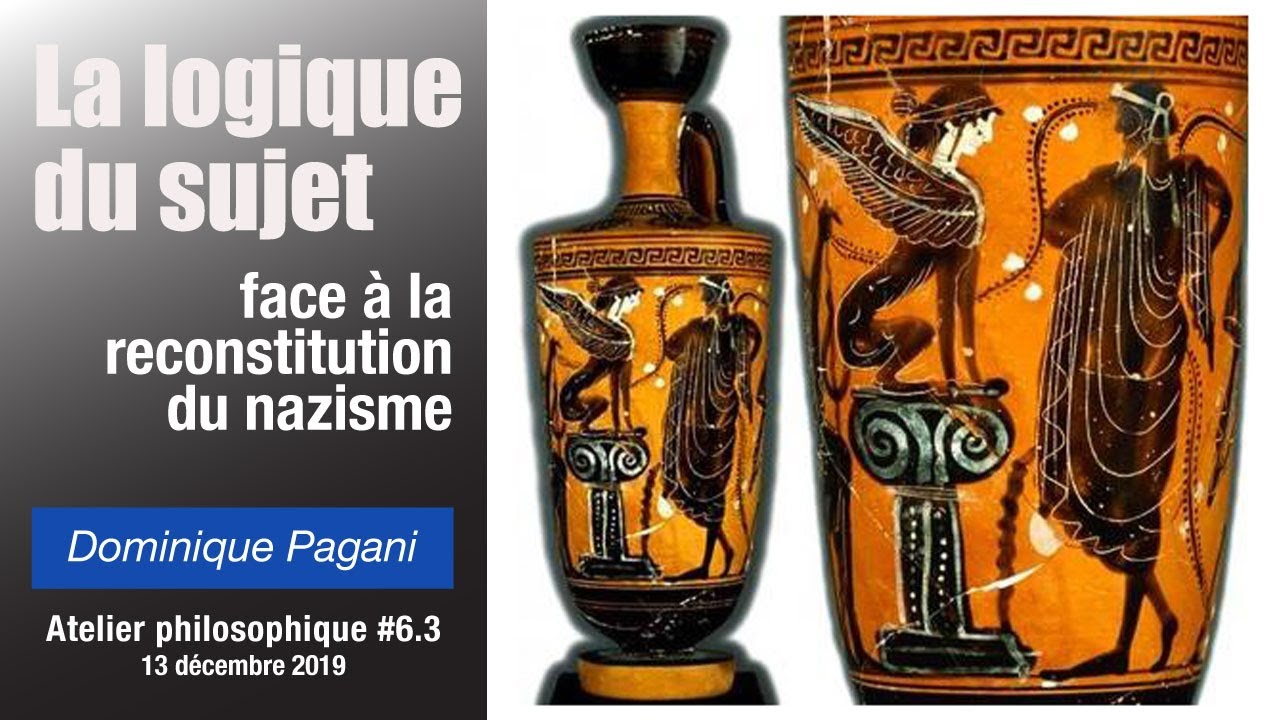
False mystery, mystification and the sphinx 1:27:49 if you hide something, if you make it a secret, if you shroud it in mystery, it's because it's poor—it's a bit harsh what I'm saying, not aesthetically, aesthetically it's splendid, a mystery is beautiful. No, but it's true, Hegel says something profound in the Aesthetics about the sphinx, since I'm talking about mystery, the figure of the enigma—he even goes so far as to say the sphinx is the symbol of the symbol, the mysterious symbol of the symbol—today we'd say the signifier of the signifier. That's the sphinx, he says—me too, watch out, implicitly he's always aiming a bit at those little Romantics, his contemporaries—watch out not to attribute to the Egyptians—you know, you've read like me how they could have built the pyramids, these extraterrestrials, not with laser beams—you've read all that, there's a whole literature on it, it's terrible, the poor kids when they get it into their heads—not only kids, it's there, but on the internet in my day it was in books—it was Charroux, you know that author?
1:28:46 Charroux, yes, 'The Mystery of the Great Pyramid'—no, that's serious, that's Blake and Mortimer—no, no, those are the books where they explain all that to you, that we would have found the pyramids resting on their tip—now that I would have said, chapeau, that's the simplest, you feel the widest at the bottom, the smallest at the top, still. Me, I admire the Easter Island statues—how they transported them—we go looking for laser tricks but the truth is overwhelming: how they moistened the ground to roll logs of wood—by the way, this is going to be funny for once, that actually deforested the whole tree flora of the island, didn't it, on Easter Island. You see, when you know the truth it's much more overwhelming to see human engineering, with limited but significant means, how enormous statues weighing hundreds of tons stand up on the desert sand—you dig the sand and it tips over. You see, it looks all simple but you had to think of it, no need to go looking for Martians, so, all that
1:30:00 which I mention in passing—and so aesthetically, why do I refer to Egypt as soon as I speak of mystery and aesthetics? Because perhaps the essence of all ancient Egyptian art lies in this mystery. There isn't a Greek art more beautiful than Egyptian art, there isn't—no, the aesthetic criterion isn't tied to that kind of evaluation. But the misreading against which he warns his contemporaries is believing that the Egyptians held the key to the enigma, the initiates, you know, the initiates—no, he has this striking sentence: the sphinx was a mystery for the Egyptians themselves, that's why they represented it so well, they themselves were, as we can clearly see, hypnotized by the figure of mystery, of death, of life after death, all that. There you go. And since I'm talking about initiation, I'll tell you about Clouscard, as an anecdote—here's the first time I visited him in Gaillac, when I had a 6-month-old child in the car
1:31:10 overheated—I won't dwell on the details—in an old Peugeot 403, I was a bit broke anyway, and in the provinces at the time you could buy for 300 francs—300 francs, not even euros—a Peugeot that still ran quite well, and so through the Massif Central you had to stop at the passes, radiators boiling and all, you don't know that anymore, good for you—and we finally arrived at Gaillac through the roads of the Massif Central, and having arrived at Gaillac, my German wife stops to go pee, so she sets the basket down—you put babies in little wicker baskets—on the table, bam, damn kid rolls right over the edge, head first, the head is heavy, the baby's head, and it falls on its head, oh, she panics, we call a doctor, he'll say where—you'll see a doctor arrives, so what they tell me, it's an old, well-known family doctor in Gaillac, you know, we were at school, without more detail—the doctor looks, he looks at the eyes, no problem, he hasn't vomited, it's cartilage, at that age it's like ping-pong balls, it's not serious, fine, very well
1:32:21 and Clouscard, who has the misfortune of coming out with: you know Pagani knows jazz—jazz, he knows jazz—and the other guy was supposedly a jazz lover, he'd stopped at Panassié, I don't know if that means anything to you, the Hot Club de France, prewar jazz basically—Parker, Monk, oh that's horrible, that's decadence, that's cerebral, real intellectual stuff. Well, I try to say a few things anyway, but politely, I'm not at home, he's a friend of Clouscard's, and the other one, the doctor, unfortunately—these were notables, doctors in those parts back then, family doctors were the kind who told you at the end of the consultation who to vote for in the next election—so I give him the 32 bars of blues, that the structure of blues—but it's not a structure, the blues, you have to be Black to understand the blues, you understand—the guy was as white as you and me, and I tell him: but you've been initiated, you see why 'initiated' is interesting—so you, you're the only white man who can talk about the blues—he's rather stuck, since according to him you have to be ontologically Black to understand the blues
From the Lutheran chorale to gospel and blues 1:33:32 He had forgotten that the blues never appeared in Africa—without Africa the blues would never have appeared, careful, I'm being precise, but it didn't appear in Africa. The blues is impure, that's the splendor of jazz, its impurity, isn't it—when they were forced—if you read, if you watch the short film 'La Fausse Note,' I say this masterfully thanks to the direction of Ali Ocha, let's be fair—so in a few minutes when they had to force—you, the Black man there, I'm speaking like a Texan of that era—you're going to shed your rags, put on your Victorian dresses with frills down to the ankles, right, you're going to stop being half-naked all the time and go to the temple to sing what, the Lutheran hymn, the evangelicals, right, in which the choral form, the magnificent choral form, plays a fundamental role—and what did the Black people make of it? They made spirituals, gospel, something never heard before. That's the form—excuse me—that's the African form of resistance, they did what they were told
1:34:46 they had no choice, but they made something of their own out of it, you see—so where did the blues come from? From a way of singing off-key by European standards—the European scale, the do, the C-D-E-F-G-A-B-C—whereas they have a pentatonic scale, I don't want to be too technical, but I mean the mixing of the two, the overlay of what they spontaneously felt, the pentatonic, onto the diatonic scale they were made to sing, gave rise to the blues scale—it's a miracle. And that scale inspires everything made musically up to rap, up to anything you like, you see—it's fantastic that the music that freed music, contemporary musical creation, from the impasse it found itself in, particularly in classical music at the end of the 19th, beginning of the 20th century—when I say impasse, I myself am a great lover of that, this may shock some of
1:36:20 Slavery was banned, there were control ships, they'd throw them overboard with their irons into the ocean, you know, quickly—they were all chained to each other, they'd open the holds, bam, you see. But yes. And it's from that that music's liberation came. It's an extraordinary story. So there you go. There you go. Initiation—we shouldn't attribute.
From "Know thyself" to "I is an other" 1:36:50 We shouldn't have a substantialist view of the knowledge of the ancients. No, but I read astounding things, that all problems date, roughly, only since my generation. Humanity's problem, in the extreme, had all been solved before, so there we are. So there you go. So, I'm in the process, as I told you, of circling around the plan. The plan begins with Plato.
1:37:22 Know thyself. Yes, that's my fall line. Know thyself—you agree that this is even the mark of identity? No, I'm closing my loop. And at the other extreme you have Rimbaud saying 'I is an other.' The reflection on the subject has led us from a privilege granted to identity to a privilege granted to alterity. It's no coincidence.
1:37:55 Now, the two pages of Hegel that you have in hand, in the same paragraphs a bit further on—I haven't included it here, there was a small photocopying problem, I think, Romain—there's a passage where Hegel says that the last step speculative philosophy still had to take in order to rise to truth—understood as after what was avant-garde in his time, that is Kant and Fichte—was to introduce the scission into the subject.
1:38:29 You see, we're not far from Rimbaud. Alterity within the subject, which used to mean identity, that which does not move. Remember that the subject is what does not move. Everything that moves is the attributes. Pagani—he's young, he's old, he's tired, he's in great shape—all that moves, those are attributes. But there is the subject, the one or the thing being talked about, it doesn't move, and that's what Hegel says: to be modern is to institute the scission within the subject itself. It's stated in so many words in the Philosophy of Right, paragraph 8.
Marthe Robert, Kleist and Kafka 1:39:06 So, allow me to be a bit solemn here, because I don't understand why the connection isn't made. And I'm surprised, because I'm dealing with cultured people, even more so than me, that happens quite often—and that the connection isn't made between Rimbaud's 'I is an other' and Hegel's introduction of the scission within the subject. On the contrary, even—people tend to oppose Rimbaud's avant-garde side to the conservatism of the Prussian philosopher. There you go.
1:39:36 What do we have? Almost a quarter of an hour for questions. That's fine. You'll have to stop me at 20 past. We'll signal when it's 20 past. No, but the outline was a bit heavy today, still. Tell yourselves we have time, don't hesitate to ask substantive questions. I'll pick up from there next time.
1:40:23 I didn't talk about Nazism today, on purpose. All right? But I talked about German Romanticism, for which I have admiration—they're extraordinary creators. All right? But what are they? How did she put it—Marthe Robert? Does anyone here know Marthe Robert? Yes. She's not a minor figure. Marthe Robert, 'Origins of the Novel and Novel of Origins.' She's a literary scholar.
1:40:53 Superb. She's a reference. So, an immense reflection on genres. In particular on the novel genre, which is the modern genre par excellence. The oldest is poetry. It was oral before it was even written. Mostly for reasons of memory—it's easy to retain, it's rhythmic, syncopated, etc. We all have grandmothers or great-aunts speaking in provincial dialects with proverbs, maxims, but rhymed.
1:41:24 And then theater, that's as old as the dithyramb of Dionysus, etc.—the dramatic, the lyric. But the novel, on the other hand, had to wait for the modern era to reach its golden age, moreover. In particular French literature, you see, Balzac, Stendhal, Flaubert. Well, that's no coincidence—'Origins of the Novel and Novel of Origins.' The novel is an estuary of civilization. That's when it's the end of the river, it carries everything along.
1:41:54 You see, in a novel like Joyce's Ulysses, for instance, you have theater, you have excerpts of poems, you have everything in it, carried along like that, within the novel genre. So why do I bring up Marthe Robert? Well, I was talking about the German Romantics, saying they were a bit—I didn't finish my sentence—con, con [idiotic]. That was her phrase. Let me explain a bit, to excuse myself first, I was a bit of a teenager. And I had enormous admiration for the greatest writer, playwright, among the German Romantics—there's only one great dramatist, that's Kleist.
1:42:24 You know, he's the one who wrote a reflection on the marionette theater. And she, Marthe Robert, is known as an immense translator of Rilke, Kafka, and Kleist—three authors in the German language. And I love your translations of—you know, when you're a groupie, I was young. I love your translations of Kleist. She said, oh yes, thank you, that's kind. And then she was there to bring Adamov to his psychoanalysis session, the poor man, he wasn't doing well at all.
1:42:59 He was quitting alcohol, he was in a terrible state. So I tell her, still, he's an extraordinary man, Kleist. She said, yes, he was a bit of an idiot. It did some good, it was wholesome, you see. It shocked me at the time, since I had such admiration. So when I say 'that great idiot Nietzsche,' I sincerely mean it—that he's a great ego, fabulously subtle and skillful and agile in his thinking when he wants to be, but completely blind on a whole host of problems that concern us in politics, basically a good old reactionary German bourgeois, as there were so many at the time in the Reich.
1:43:39 But, once again, it does good—it's thanks to Marthe Robert that I've been able to call Nietzsche a great idiot, to him too, since he's the great stripper-away, the great demystifier and deconstructor, while we're at it. There you go. Did I answer? What, no? Nazism. Ah yes, no, I haven't said the essential thing. Now, Kleist is an 'armored poet,' as they say in Germany.
1:44:12 He wanted to enlist in the army—that is, it was already the Panzer Divisionen—he thought everyone was betraying Germany by not fighting Napoleon's armies. He was so furious that he ended up wanting to volunteer for Napoleon's armies. He came to the camp at Boulogne, and he was sent packing. And that reminds me of a Kafka story you may know, not far off, 'In the Penal Colony.' Has anyone read that?
1:44:42 You know, in Kafka there are isolated stories like that, and then there are collections of stories. 'The Great Wall of China,' a series of stories including 'An Imperial Message,' which we've already discussed together. And 'In the Penal Colony,' which takes place—I think it's the only Kafka text set in a French-speaking context. It takes place in a French colony in the desert. Kafka never went there, he did research. It's called Algeria, it's called Niger, etc. Where we witness a scene, a punishment of a Black man who did something wrong.
1:45:14 He must be punished. And the whole interest of the story centers—4-5 pages and a bit more, it's 8—centers on the punishing machine. That's pure Kafka—a machine with spikes and metal, all that. The man has to be strapped in. And it's a machine that inscribes it into his body with spikes. You see the drops of blood, all that. 'You shall respect the law.' You see, the law inscribed in the body—these are themes more easily developed in literature. Very interesting.
1:45:44 But that's not my subject. Except that the one demonstrating it to the dumbfounded travelers watching, the narrator, the one attending all this with the sun and the governor there with the women—so it starts when? The courtesans. The other tells him, yes, it's a machine, nobody cares. Anyway the governor pretends to be interested in my thing, nobody cares. I made this machine, it's a masterpiece—well, he does the sales pitch for his machine, the torturer. The Black man understands nothing, he smiles, he laughs, he's illiterate, he comes from the bush, he sees the machine, he looks at it like that, there's a gag there so he doesn't vomit from the pain, it's terrible.
1:46:23 And actually, to go quickly, the machine starts running and it breaks down. You know, have you seen Modern Times, Charlie Chaplin? You know, the machine that ate the corn, there? Same thing, it slips, it skids. So you see, it's like Kleist wanting to enlist, he sees the outcome in Napoleon's armies at the end—he decides to put himself, drives away the African, takes his place and tortures himself, dies on his own machine. It's extraordinary.
The reactionary and narcissistic wounds 1:46:53 Kafka is a Jewish writer of Czech nationality writing in the German language. That explains a lot of things. It explains a distancing that few writers achieved. There you go. I'm in the process of showing all the little streams, the watershed, as I said, my geographical metaphor, that will form the river of Nazism. But you understood very well, and I confirm it, that the main cause of Nazism is not conservatism.
1:47:29 It's not the conservative—it's the reactionary who is the Nazi. The conservative has always existed, there's always... we're all a bit conservative, why should we change that, I was fine as I was. No, the reactionary is the one who got scared and so became mean. You see? Fear. Don't forget that with the 1929 crisis, the crisis of the '30s, there's the rise of working-class and proletarian forces. It's the horde that threatens, you know? Schopenhauer used to call the police, in 1848—I'm going back—for the barricades, the rioters are there.
1:48:01 That was the horde. There's a proto-history of Nazism, including a philosophical one. I'm talking about the most fashionable philosophers. It's crazy, the success of Schopenhauer among the youth. I like very much—not what I'm doing here—Horde, they say, is about music—no, I'm not mixing spheres. The question is good. The unhappy consciousness, that's him indeed. Yes? Pauline? So, I thought this was the closing session, of the session next year on this theme, is that right?
1:48:34 Closing? I thought it was three by three. On the logic of the subject? Yes, because I didn't understand your conclusion on the scission within the subject. I'll come back to it. But wait, I'm interested that you go right up to the confusion. Maybe it's me who caused it. That I stop now on the subject and we move on to what afterward? To nothing, but I thought it was... No, no, no, but it's interesting because I raised the hypothesis—I've been asked so much to do, well, a history of music, that for the next 'Copéla Poirant' I had said maybe we'll do the logic of the subject in the first term.
1:49:07 So I thought you were alluding to that—close today and then start the history of music afterward, or else I would have repeated the same things anyway. But there you go, so let's go for the scission of the subject. That remains to be seen. Well no, but if you start again from there next time, I have no scission. Ah yes, of course, of course. I mean, I don't see what that... Do you mean by that as... You don't see... You don't see toward what? Does it orient things? Yes. The scission of the subject, or else we act as if there were no scission, we suture everything at all costs and that gives what Mehdi says.
1:49:41 What Hegel calls restoring the compact solidity of being. There's no more wound, no more narcissistic wound, no more... Freud said that psychoanalysis was the third great narcissistic wound inflicted on modern humanity. The first being the Copernican revolution—learning that we are gravitating at the periphery and not at the center of everything, all right? I'll draw you a picture of how much that's tied to Narcissus. Secondly, well, go find it.
1:50:14 Yes? Darwin. The theory of evolution, roughly speaking. I thought I came from God, and now I'm told I come from the ape. That's hard, isn't it. Well, still. I look at myself in a mirror. Do you know what Nietzsche says in Zarathustra? What is the ape to man? An object of shame and mockery. So must man become to the overman. An object of shame and mockery. So you're starting to see the connection.
1:50:45 Not even starting to. Yes, but generally speaking. Narcissistic wounds. To reconstitute the unity of the ego, everything is permitted. Including horror. That's what Nazism is. Because you're not saying narcissism and Nazism. We're all narcissistic. I'm not saying that. The subject? As what?
1:51:17 Nation. But of course. No, no, but you're right. No, but you've got it. The real problem — you raised the concept of the individual. I haven't talked about it much. I was talking about the subject. I was talking about substance. I can't talk about the hardest thing. That's why I'm keeping it for later. The individual. We said that the whole gigantic effort of Aristotle and of elucidation by philosophy aimed to give an ontological status to the individual. To the concept of the individual. Right? So it's... In the individual, there is the indivisible.
Nazism as the destruction of reason according to Lukács 1:51:47 It's a bit too soon, I don't want to, but I'm keeping it for later. No, you're raising... Yes, all of that is there in germ. Right? But remember, it's not by chance that I distinguished — distinguished and separated. You can make divisions without them being tearings-apart. Right? I can give up a certain image I have of myself without ceasing to be myself. Goethe always used to say, 'Stirb und werde' — die and become. You're depressed, my dear — die and become. Yes?
1:52:17 I have a small question to ask you about François Plain, as you were saying, that at noon I gather the river, the waters that carry the river of innerness until gathering... The novel. The novel is also Romanticism, so there it's a bit about aesthetics, etc. And I just wanted to ask you the question about the philosophical part where you were saying: re-weld the split subject at all costs, with the epistemological aspect you talked about regarding Nietzsche. The aspect? The epistemological aspect you talked about with Nietzsche, and you also talked about Schopenhauer.
1:52:47 Right, I'm making a nod to The Destruction of Reason by Lukács. It's true, indeed, what happens in aesthetics happens the same way there... A small parenthesis, I say this for those who don't know: Georg Lukács, the immense Hungarian philosopher — there's a website devoted to him online, 'The Friends of Georg Lukács,' which I recommend by the way. And the essential part of his work — far from being all of it, but the essential part — is published by Éditions Delga. His most emblematic work no doubt bears this significant title, which picks up exactly what Hegel says there.
1:53:20 The destruction of reason — that's what Nazism is. This effort to destroy the point that had been reached, where we had begun to lift our heads out of the water, out of the substantial, the magical — you see what I mean? We understand better now, the destruction of reason. He shows that it begins as early as the French Revolution, from the counter-revolution, of course, from the counter-revolution triggered by the French Revolution, with a philosopher like Schelling, for whom I have great admiration, subtle though he is — I'm not saying, I keep telling you a thousand times, the right has done the work.
1:53:54 It's not my brother-in-law, the right, nor the far right. That's left-wing narcissism, thinking that your opponent is a redneck. You have to hurt a little, you have to say to yourself: well, he knows more than me, damn it, I need to work harder. Yes, that's already better. Not especially. There's even someone who says, 'I lived with those blacks, I know how to handle them.' There, he doesn't know much.
1:54:25 So, there, yes, exactly. It's that, it's that — this term of epistemology, the same thing happening on the terrain of epistemology, is re-welding the split of the subject by rationalist means; everything that was substantial slips away, as you say, at every level — at the moral level, at the identity level, right? At the aesthetic level, at the scientific level. There, we've found everything, the key to everything, it's the atom, we thought that was it, that was modernity. And then when you look afterward, damn, there are lots of things in the atom.
Relation, the truth of substance 1:54:57 There's already a nucleus, electrons, oh damn, the nucleus, there are all sorts of things. It never ends, and then in the end there are gluons, nucleons, charms, colors, quarks, I don't know, I'm not listing them in order. Right? So the subject evaporates every time. It's relation that wins out over substance. There, I'll end on that. The term most opposed to substance — that is, to what is by itself, in itself and by itself — is relation, that is, what is by another.
1:55:30 Yes, what is by another. Next time we'll talk about the dialectic of recognition. There. Thank you for your question. Thank you. And let's salute all those who are struggling.
1:56:04 Thank you.