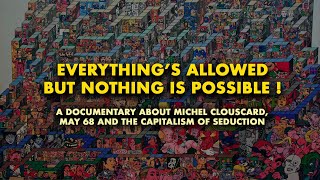
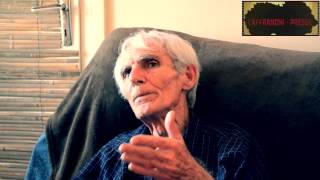
Dominique Pagani speaks of Henri Lefebvre almost always in connection with Michel Clouscard, whose thesis Lefebvre supervised. He presents him as one of Clouscard's first allies, and Clouscard as his "protégé" in sociology12. He describes him as a Marxist pillar of the university and of the Éditions sociales, valued by the Situationists, and who was also boycotted3. What he takes from him is a way of thinking Marxist concepts in concreto, linking relations of production to everyday life, which in his view shaped Clouscard's phenomenological approach4. He cites La Vallée de Campan as a monograph that captures a "here and now" over the long term5. He often returns to Lefebvre's seminar at the École pratique des hautes études, which dealt with how capital absorbs whatever claims to be avant-garde or subversive67. In connection with the Critique of Everyday Life, he also mentions a criticism of Bourdieu, accused of flattening the social and doing away with the possible8.
Summary produced automatically from 19 of the passages below, to be reviewed; the numbers link to the moment in the session.
Who is this?
Henri Lefebvre ( lə-FEV-rə; French:; 16 June 1901 – 29 June 1991) was a French Marxist philosopher and sociologist, best known for furthering the critique of everyday life, for introducing the concepts of the right to the city and the social production of space, and for his work on dialectical materialism, alienation, and criticism of Stalinism, existentialism, and structuralism. In his prolific career, Lefebvre wrote more than sixty books and three hundred articles. […]

 Season 12 · 28 Feb 2024Clouscard by you - Answers to your questions