English translation of the French transcript, made with AI and not yet proofread — click a paragraph to jump to it. Show the French original
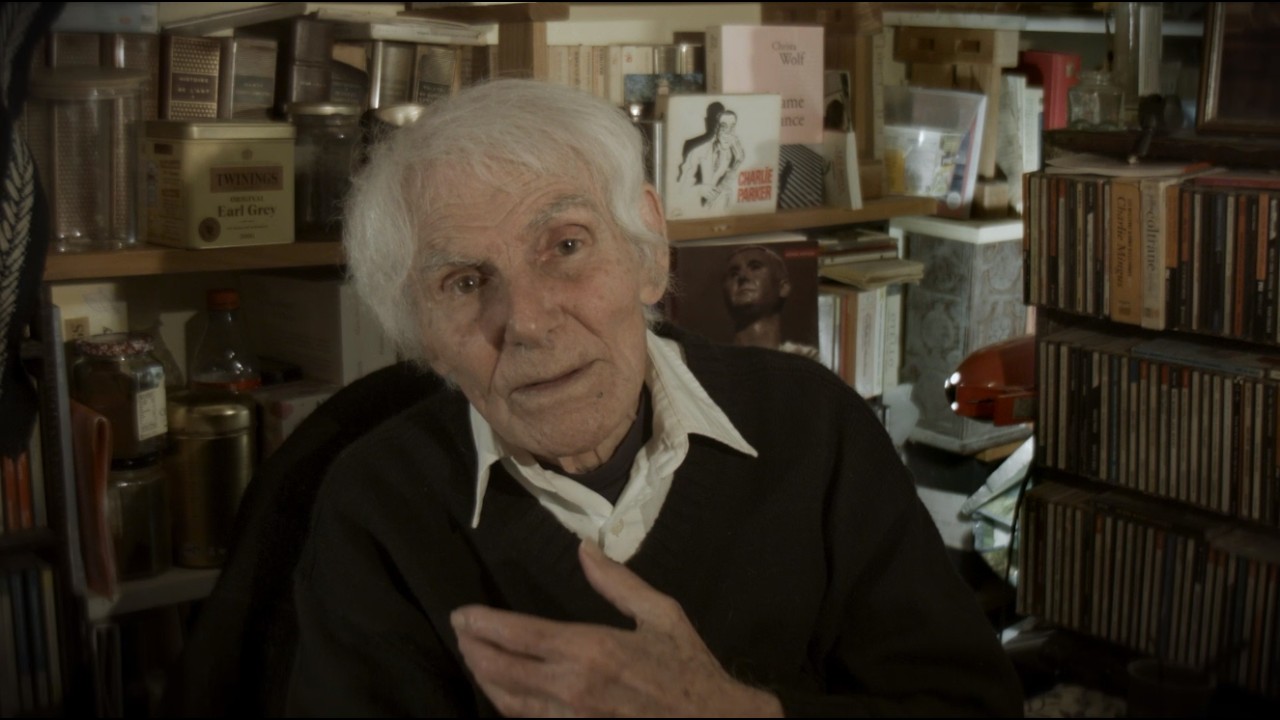
Return to the nature and origin of philosophy 0:00 Look, look, look. So? Like that, huh? Come here, dear. You're not a neurotic cat, are you? Huh? Yes, that's fine. I didn't insult you, did I? Dear friends, dear comrades, dear members, good evening.
0:33 Several times now, the segment I've had the pleasure of sharing with you, my little talks, have been swallowed up by the staggering amount of information and the acceleration of political, geopolitical and international current events. I won't draw you a picture. Everyone can imagine what I'm talking about. And I thought it might be time, since we're not going to solve that in the hours to come, you can well imagine, nor even in the days, nor even in the weeks ahead, I'd still like to refocus on our main task, which is of the order of philosophy and not merely commentary on current political events.
1:26 And to do that, I'm going back a bit to the foundation of my talks. Don't worry, I'm not going to start from zero again. But I'm still going to do some reminders, for those who weren't there at the beginning, on a very specific theme, which I isolate a bit from the others, and which I'm going to address in the first part of my talks, almost a dozen years ago now, which was, as is often the case when you begin a cycle in philosophy, the nature and origin of philosophy—nature in the logical sense, nothing to do with the natural world.
1:59 That means definition—what is philosophy, what distinguishes it from science, religion, literature, what is specific to the properly philosophical field? Someone might say, it's not for you to decide what's really philosophical. That's not the point. The point is, regardless of the enormous differences that may exist between one philosopher and another, to set aside a bit the fighting that some stir up between, I don't know, between Descartes and Spinoza, between Hegel and Kant, between Nietzsche and progressives and democrats, and Christians, right?
3:00 He was so Christian that they defended themselves against it. But let me go back to the beginning about the importance, in order to situate the originality of the philosopher, to be very precise about where I'm returning to—I recall a small detail that we tend to slide over a bit too quickly in our conversations, but which I'd like to repeat and insist on, because one gets the impression people will shrug their shoulders when they hear what I mean, because it seems obvious, as if I were pushing at an open door, and yet we always forget to take it into account, namely that every time we make distinctions—what distinguishes philosophy from other fields of intellectual life, and what characterizes it as such—when you're asked, or when there's a need to make a distinction, it's not between two things that are obviously different.
4:01 We're not going to waste time distinguishing a ladybug from an elephant. But between an African elephant and an Asian elephant, can you tell me the exact difference? Yes, I know some have big ears, bumps on the forehead, that's fantastic. Well, it's between things that are close and resemble each other that there can be confusion. And that's where distinctions need to be made. That's what I wanted to recall. Now, people often say Hindu philosophy, Chinese philosophy, understood as traditional philosophy.
4:37 Hindu, Brahmanism for example, Chinese, Taoism or Confucianism—these are not philosophies, let me quickly remind you, because we shouldn't have to start from zero every time—these are not philosophies, they are wisdoms. Confucianist wisdom, Taoist wisdom, Brahmanic wisdom, Buddhist wisdom, these are different things. But still, I'd like to point out, there's confusion here when people say all this—they're philosophies, that doesn't bother me, in the ordinary sense, why not.
5:15 But still, if there's a consensus among philosophers to have philosophy begin with Socrates, that is, roughly, among the pre-Socratics, Socrates, between the 5th and 4th centuries BC, so at a time when there had already been centuries of thought—and here I'll be honest, I would a thousand times rather have a profound thought, a profound wisdom, than a superficial philosophy.
5:47 I'm not making value judgments by saying that Taoism or Brahmanism don't hold a candle to philosophy—that's not my point at all. I'm saying these are not the same approaches. And the main difference, to sum it up, to condense it, since I don't want to repeat everything each time, is that wisdoms, non-philosophical thoughts, begin right away with being, with the object being discussed.
6:18 What is nature? What is God? What is life? Well, people didn't wait for Socrates to reflect on all that. There are vertiginously profound thoughts in the Hindu tradition, in the Chinese tradition, in the tradition of Japanese Zen, even among the griots of sub-Saharan Africa. So it's not a value judgment. But the big difference is that the philosopher is less concerned with the thing than with the words by which we speak of these things.
"What do you call?" rather than "what is it?" 6:51 Let me recall, I often repeat this phrase, I recall it because I need to go back to this very important beginning for you to understand my talk today, this evening. Let me recall the very simple example: what is a star? That's not a question of philosophy, it's a question of physics, astrophysics, astronomy, whatever you like.
7:25 The fundamental question in philosophy is not what is it. It's what do you call it? Look at all of Plato's dialogues, the first great system of philosophy transmitted to us thanks to Plato's writing, since Socrates, his master, didn't write. It always begins, if it deals with love, as in the Symposium, with eros, with love. What do we call love?
7:56 That's very different from what is it. Because when I say what is it, being is already given. I'm no longer asking whether it exists or not, whether it is or isn't. I'm asking: well, it is, but what is it that is there? The question doesn't bear on existence, that's taken for granted. What is being, meaning being is—right? But what does it consist of?
8:28 In other words, it's no longer existence that's in question, it's essence. What is it? When exactly am I speaking of being in truth? So, I don't want to stumble tonight. I want to recall that the fundamental question being what do you call it—the advantage is that I'm really starting in the most radical way. Because I don't even know if the thing being talked about exists or not. We don't know enough to know.
8:58 But I notice that around me there are people talking about it. I don't know, virtue, eternity, life, time. If I say what do you call time? It's the same as what is time? Because time is complicated. But what do you call time? There, I really get to the root of the question. I don't even know if time exists. There are many physicists today, at the cutting edge of their discipline, who say that time may be only an illusion that doesn't exist. I'm not deciding. It's not my field.
9:28 I'm telling you what is said in the field of the hard sciences, often as a hypothesis. And that time doesn't exist. But in any case, the important thing, in order to decide whether it exists or not, is that we agree on what we call time. I'll quote here a very well-known formula from Saint Augustine, so I'm going far back in time, to around the 4th century of the Christian era, where Saint Augustine said, 'Time—when no one asks me what it is, I know what it is.
10:01 But as soon as someone asks me, I no longer know.' You see? So the question 'What do you call it?' is one that always surprises because it's more radical than the question 'What is it?' Let's not forget how philosophy began, with Socrates's interpellations—he didn't leave a single line, but all the witnesses, all his disciples, testify that he walked around Athens questioning the specialist in some competence, for example, 'What do you call courage?'
10:32 He would go ask that of a soldier who had distinguished himself in the war against the Persians. 'What do you call beauty?' He would go ask a painter, a sculptor, a creator of beauty. And the great surprise was that the interlocutor had trouble answering. For example, take beauty. 'What do you call beauty?' I imagine the interlocutor in Athens, in the 4th century BC, replying, 'Beauty is the Parthenon.'
11:03 There, you see. I say, 'And a sunset? Isn't this sunset beautiful tonight?' 'Yes, yes, it's very beautiful, but it has nothing to do with the Parthenon.' 'Ah yes, you're right.' You see, there's confusion. It's the same word for different things. What's common between a sunset and a temple with columns? And it doesn't stop there. Because we also speak of the beauty of a beautiful actress or a handsome young man, whatever.
11:33 And sometimes of the beauty of an argument. Things that have nothing to do with each other, neither for the eyes, nor for the ears, nor by definition. And we arrive—I'll stick with the example of beauty to make myself understood for now about the radicality of the question 'What do you call it?'—namely that we always arrive at two categories of answers.
The dogmatist and the skeptic faced with beauty 12:03 The answer of two characters whom I'll recall before continuing and opening tonight's session—this is a bit of a prelude I'm giving, an introduction. Two characters who have always accompanied the philosopher, who existed before him, who are not part of philosophy, but who are always marking him closely, in the football sense, you know, like marking a player closely. Two completely opposed characters who are the dogmatist and the skeptic.
12:37 You can't get more opposed than that. The dogmatist, faced with the question of knowledge, answers that he knows everything, and the skeptic is the one who answers that nothing can be known with certainty, implicitly. So there's the one who, when Socrates asks what is beauty, the dogmatist who answers right away, it's the Parthenon—that's the dogmatist.
13:08 And then there's the skeptic—neither of the two is in philosophy for now, you'll see why. And the skeptic will say, no, wait, when you go to South Africa, there are the callipygian women, as they're called, you know, with enormous shapes—that means beautiful buttocks, callipygian, literally. It's the complete opposite of the Venus de Milo, or of Brigitte Bardot, sorry, I'm a bit old, there will be more recent cinematic models of beauty.
13:42 And you have the right to find her ugly, that's not the problem. But—and the skeptic will say—everything is fine, here we call this beautiful, elsewhere we call exactly the opposite beautiful, so beauty doesn't exist. Here you have a fine example of thesis and antithesis. Why do I say now—I seem to be saying it a bit bluntly and somewhat arbitrarily—that neither of the two is a philosopher, neither the dogmatist nor the skeptic? Because for both of them, the essential thing in philosophy, that is, the work of research, is absent.
14:16 I don't need to search when I'm a dogmatist, since I know that beauty is the Parthenon. There, I've found it, I spare myself the research. And the skeptic isn't going to look for something he says doesn't exist, that there are as many beauties as individuals, roughly speaking. So it doesn't exist, so it's a moot question. I'll continue and finish my little parenthesis with the particular case of beauty, of the question what do you call the beautiful.
14:47 Socrates intervenes between the dogmatist and the skeptic to ask, what makes you say that the Parthenon is beautiful? Well, look, it's the eye. The two have something in common even though everything seems to oppose them. One says everything can be known, the other says nothing can be known. You can't get more opposed than that, apparently. Let me recall in passing that I'm recalling one aspect of dialectics, which is to see what is common in two theses that appear to oppose each other in the most radical way.
15:23 So, those who have been listening to me for some time no doubt recall what is common between the one who says beauty is the Parthenon and the one who says beauty doesn't exist, or that there are as many beauties as individuals. The common point is that they seek beauty outside themselves—as I said, with the eye, roughly, except that one of them hasn't traveled much outside Athens, so for him the Parthenon is the unsurpassable model of beauty, and the other, who apparently went to Africa, elsewhere, etc., has a bit more basis for comparison, is a bit less crude than the dogmatist, if you will—that's the difference.
16:06 The common point is that it's the outside that decides. Here, the criterion of beauty is the Venus de Milo or the Winged Victory of Samothrace, these sculptures. And the other will say, no, that doesn't exist, look, here there are women who weigh 120 kilos. So what's the antithesis to seeking outside? How do we send both back to back?
"Know thyself": the beautiful object knows more about me 16:38 Well, it's through the phrase inscribed above the pediment of the temple at Delphi, where people came to consult the oracle, the most sacred place in Greece, and which Socrates gives as an example in the Apology of Socrates, written by his disciple Plato who, fortunately for us, recorded it—namely, know thyself, stop looking for the definition of beauty outside yourself. And there's the demonstration.
17:09 And that will be the end of my reminder through the particular case of beauty. When I say of a thing, whichever it may be, whether it's the Hottentot callipygian woman or the Greek model, when I say she is beautiful, that means she pleases me. For now, we're in mathematics: A implies B. If she pleases me, it's because she makes me feel a pleasure.
17:41 For now, I'm being rigorous. I can go much further because I'm pushing at open doors. If she pleases me, it's because it gives me pleasure. And if I feel pleasure, it's because this object—woman Y and woman X—comes to satisfy that without which there is no pleasure, comes to satisfy a desire. The pleasure of drinking is never as intense as when one is thirsty.
18:16 You all know as well as I do. When you're very thirsty after running in the heat, whatever, and you finally get home, you open the fridge, a cold bottle or spring water, even better—the first sip is paradisiacal, the second a bit less so, the third even less, and finally, if I keep drinking when I'm no longer thirsty at all, I get insulted by Captain Haddock who, through his torrents of insults, often hurls one called 'Drink without thirst.'
18:56 All this to remind you that if I feel pleasure, it's because a desire has just been satisfied. Not at all, this pleases me but I desire nothing—I didn't say a conscious desire, what do you want me to tell you? So, that a handyman feels pleasure using a hammer that works wonderfully, that is, doesn't fall on his finger, with which I can drive in a nail to hang a picture on my wall without it breaking, without the head flying one way and the handle the other, that's a pleasure that has nothing aesthetic about it.
19:36 But when I say, in a shop window, that shirt over there pleases me, it's beautiful—someone will say, that shirt pleases me, I don't really see the desire—ah, there you go! I say, there's no pleasure without desire, but this desire is rare, and in the aesthetic domain, it's practically extremely rare for this desire to be conscious.
20:07 I can't say I like this shirt because there are cowboys on it chasing Indians—that's not it, it's not the content, sometimes it's a plain shirt or one with stripes, abstract things. And so I arrive at this strange conclusion that closes my example of beauty, which is that regarding 'know thyself,' I feel a bit humiliated, I have the impression that the object contains the secret of a desire I'm not conscious of, in other words, it knows more about me than I know about myself.
20:40 Well now, the beautiful object—every time you say a thing is beautiful or something is beautiful, you're dealing with an object that knows more about you than you know about yourself. That's quite fascinating. You have a striking illustration of this in one of Baudelaire's most famous poems, 'Correspondences.' I'll just recite the first quatrain because it will suffice to illustrate and help better understand everything I've just said, that the object knows more about me than I know about myself and knows better the desire it comes to satisfy.
21:13 Here is that quatrain. 'Nature is a temple where living pillars sometimes let out confused words. Man passes there through forests of symbols which watch him.' Careful, not 'qu'il' with an apostrophe. 'Qui,' Q-U-I, watches him, watches man. It's a bit unsettling, symbols watching man. It's not man watching the symbols. 'Man passes there through forests of symbols which watch him with familiar looks.'
21:46 That is, man walks through mysteries surrounded by symbols. For him, it's the opposite of familiar. It's strange, it's interesting. There are mysteries to be unraveled. But for the symbols, man is familiar. It's almost unsettling. Man passes there through forests of symbols which watch him with familiar looks. Man—it's more than the subject of. It's still surprising.
22:16 So why did I take this... Let's recall the coherence of what I've said since the beginning of tonight's talk. There are two characters who flank the philosopher throughout his journey and in whom philosophy gets lost, either by excess or by default—it's the dogmatist who believes he knows and therefore doesn't need to search. You don't go looking for the money you already have in your pocket, after all.
22:46 And then there's... what did I say? The skeptic or the dogmatist? There's the dogmatist who thinks he doesn't need to search because he knows the truth. He knows right away how to answer the question what is beauty? What do you call this? What do you call that? Justice? And then there's the opposite, the skeptic who says nothing can be known, it depends on each individual, etc., everything is relative. And we've seen that the second has traveled a bit more than the first and is therefore inclined to despair of a universal, true and objective judgment on the question put to him.
Defining: genus and specific difference 23:25 I recalled these two figures to say that what is properly philosophical is the search itself. The search presupposes that there is a goal to be reached, which goes against the skeptic who says there's no point in searching since there's no truth—there is a truth, but it is never immediate. And in the question 'what do you call?', we are sent back—and here's the notion I'm introducing that will occupy us tonight—there's a relation to language, the naming, that belongs to the order of words, of language.
24:04 Am I right to call this a feline and not a cetacean? Let me take the example of the cheetah—yes, it's classified as a feline, right? It's a big cat after all, except, what do we call felines? Mammals? There I'm going too fast, I'll go back a bit. We owe to Aristotle the merit of having given us, no small thing, the definition of definition.
24:41 Under what conditions can we say that I have defined a thing? I'll give Aristotle's answer, and translate it afterward because it's a bit abstract: to define is to indicate the genus plus the specific difference. You see, with the adjective 'specific,' which comes from 'species'—you must give the genus: felines are animals, that's the genus, the animal genus. But within the genus, the specific difference of felines from other animals is that they have retractable claws, for example—the cat can extend or retract them and walk on velvet paws, as we say.
25:21 But then the cheetah has everything of a cat, yet it has no retractable claws. It's not always easy to define things. And mammals are so called because of the mammary glands, because they nurse their young, which is not the case for birds, nor for reptiles—there's no milk in snakes or blackbirds, is there? And yet, as you all know, in Australia an animal like the platypus has fur, which looks very mammal-like, but lays eggs like a bird and has a duck's beak, doesn't it?
25:57 So there you have it. So I'm casting doubt on what words designate, aren't I? And the questioning of words, the answer to the Socratic question 'what do you call?,' is never as important as when it concerns things that seem obvious to us, that seem most self-evident to us—we're so used to them that it never occurs to us to translate them into a question.
26:34 Which leads Hegel to say that magnificent sentence, well known, in the sense that it is well known—what is well known, because it is well known, is not known. We must take a distance from the habit we had, mustn't we? If, for example, I ask for an example of immobility as opposed to movement, fixity, I'll point to the ground, to what's called the solid earth, terra firma.
27:04 It's not to say 'there, that's solid, that's sturdy, it doesn't move, everything else passes, but there's terra firma'—it's not water, it's not a flowing river. Yes, except I have the impression that the floor doesn't move whereas that floor is in my house on the earth which turns around the sun at 30 km a second, if you please. But yes, why don't we fall, why aren't we thrown over at such a speed? It's because all objects move at the same speed. When you're in a train or a plane, you get the impression that nothing in the carriage or the plane is moving, except when there's turbulence.
27:43 But when the speed is constant, that is, when all objects move at the same speed, there's nothing distinguishing movement from immobility. To the point that physics, starting with Galileo, who is after all the founder of scientific physics, shows that it is absolutely impossible—it's called the relativity of motion, don't confuse it with Einstein's relativity, which is much more recent—the relativity of motion, namely that there's no difference between rest, in the sense of the negation of movement, and the fact of there being a rectilinear, uniform motion, as we say in physics, where everything moves at the same speed without accelerating, without slowing down or speeding up, in the ordinary sense.
From the astronomer to Socrates: from monologue to dialogue 28:26 if you like. So, this brings me to the problem of language, which is central—the fundamental philosophical question is 'what do you call?' Now, I notice that in the comments I receive, or received at the time when I approached this beginning of the situation of philosophy in relation to other disciplines—to sum up—I recall some people saying, 'Oh dear, you seem to attach a lot of importance to the difference between what do you call and what is it?'
28:56 'Isn't that splitting hairs a bit?' as we say in French—one could be even coarser, as you know, about flies. And now I'm just going to show you how enormous the difference actually is. Take the astrologers who thought they were studying the stars by climbing what were called, in Mesopotamia 2000 years before Christ—Assyrian, Babylonian, no matter for now—towers a bit taller than most houses, as if, by climbing 20 or 30 meters, don't forget we're in Babylon, Babel, the Tower of Babel, as if, with a 30-meter tower, I would see better, right, what a star is.
29:54 Well then, the astronomer up there looks at the star and asks himself the question, what is a star? You see? That's not philosophy. But at the foot of the tower he climbed to contemplate the stars, there's a little bearded fellow, a bit potbellied, you recognize him, Socrates, who doesn't address the star, who doesn't question the star, but who sees someone speaking, who asks the question, what is a star?
30:26 For, once again, that's an astronomer's question, not a philosopher's. In the first case, the astrologer who looks at the star and wonders about its nature has no answer—the star isn't going to tell him, 'Ah, I'm not a planet, I'm a star.' No. There we have a subject addressing a mute object, a speaking subject, a human being, addressing a mute object that doesn't answer him. But the little fellow, Socrates, at the foot of the tower, is going to address not the star, which doesn't answer, but the astronomer, saying, 'By the way, what do you call a star?'
31:06 And once you've defined it better for me, I'll then say whether the moon is a star or a planet, and so on, whether its light comes from itself or is simply a reflection of the sun's light, etc. So you see, at first it seemed like I was splitting hairs, what do you call versus what is it, sort of the same thing? No, but the gap widens further. In the astrologer's case, looking at the star—I come back to it to compare again with the philosopher—I'm in a monologue, it's never the star that's going to answer me.
31:43 In the philosopher's case, he asks the question 'What do you call?' to someone who can answer him. And there, a dialogue begins, and from dialogue to dialectic, it's not far. I wanted to recall this intimate complicity of philosophy with a distance taken from what Mallarmé, in a famous poem, calls the words of the tribe, the words of everyday language. We're not going to do like Pagani and ask 'What do you call?' We know perfectly well, if suddenly I come to a crossroads and there's a car coming that's going to run a stop sign, and I say to the driver, 'Watch out, there's a car running the stop sign.'
32:27 He's not going to say to me, 'What do you call?' 'What do I mean by that?' That's not the moment, in the midst of action. Isn't that so? I agree. But we don't have the excuse of the urgency of action when we step back and have the leisure to take a distance from what seemed self-evident until then. And someone like Aristotle—that's the second time I quote him, even though I'm a bit closer to Plato, but, forgive me, that's personal, not very interesting.
33:00 Aristotle stayed 30 years at Plato's school, he knows him better than I do, let it be said in passing, better than us, myself included. Aristotle said a sentence about this, about the fact that one must not be caught up in urgent action to begin thinking rigorously—it takes time, time, detour, knowledge. He says it's in Egypt that mathematics began to develop because there, I quote him, the priestly caste enjoyed leisure.
33:39 A pre-Marxian sentence, it's extraordinary. Well yes, the priests had the whole Egyptian population bringing them, every day, for the sacrifices, for the gods, sheep, goats, oxen, grass, armfuls of wheat, whatever you like. Right? So they had leisure. It wasn't like the peasant on the banks of the Nile who worked like mad to grow his wheat between two floods of the Nile, it wasn't like that.
34:12 So mathematics, that is, research, began to develop among the priests, because in Egypt, because there, the priestly caste enjoyed leisure. In other words, philosophical research takes place in what a much more recent philosopher, Husserl, linked to the current called phenomenology, which was very fashionable in the 1950s-60s, between existentialism and structuralism, called the epoché, or if you prefer, the bracketing.
34:49 There has to be a moment when we bracket the urgencies, in order to begin to dig into things from a rigorous, theoretical point of view. That's why I admire those who solve unfathomable problems—life, death, God, atheism, belief—on the contrary, I mean, whereas true scholars, mathematicians, sometimes write pages and pages of proof to demonstrate that A equals A. No, I'm not joking, look it up.
35:19 Or that if A equals B, then B equals C—well, implies that B equals A. Yes, I can't manage to say only that it's simple, that it seems simple. That's twice now I've been caught up in mathematics and the sciences. I was talking about the astrologer, then the astronomer. And so I had arrived at this conclusion with which I finish my reminder of what philosophy properly is. I haven't forgotten my subject. What does it have that's particular as a discipline, that mustn't be confused with what resembles it.
Mathematical rigor and the metaphor of natural language 35:54 sometimes literature, sometimes religion, sometimes science, you see? What distinguishes it—and now I'm taking one more step forward to finish this recap—is that the philosopher seems to be a mediation between two extremes. So here I bring in three characters, each of the three has a relation to language.
36:26 That's why I took this long detour. To the word, to the name—that's the mathematician, who takes care to have a language where there's no confusion, no ambiguity. And at the other extreme, the poet, who only speaks through images, right? More or less clear. The philosopher would like to have—I'm summing everything up now—the rigor of the mathematician, which the mathematician obtains how?
36:58 By leaving behind the ambiguities of everyday language to forge a language such that, as soon as you open a mathematics textbook, you see these are no longer words. What's most abundant are signs that we call, as you like, algorithms, mathemes. You see? But they're not words. Why is the mathematician wary of words? He's quite right, well, for his purpose. Why is he wary of them for his purpose? His purpose is knowledge. Because everyday language is never solely intended for knowledge.
37:38 Words—the first men who spoke, who babbled language, it wasn't to know the distinction between a planet and a star. No. It was to hunt, to threaten, to forgive, to seduce, to condemn. In short, purposes, interests. That's not knowledge. The aim here is not objective knowledge.
38:08 Let me give you an example that shows that everyday language, precisely because its primary purpose is not knowledge, makes you, me, most people who speak the language I'm speaking right now, which is not mathematical formulas. Here I'm talking about what linguists call natural language—no doubt by antiphrasis, because there's not much that's natural about language—but the language that isn't formalized into abstract formulas. Namely, when I say the day is breaking, well, the day is breaking.
38:40 I'm not dealing with complicated formulas, I'm not in philosophical abstractions. But what am I saying there? I'm doing astronomy when I say the day is breaking. The sun is rising. I'm doing astronomy. That's scientific, as an utterance. I'm not saying it's false. I'm wondering, is it really rigorous? It doesn't rise. It doesn't set, the sun. Besides, it's not the sun that moves, it's us. It's the earth which, turning on itself, makes it so that suddenly things tip over and the sun reappears or disappears once it has made its turn during the day, disappearing toward the west, right?
39:21 But it's not serious, because it comes back the next morning in the east. Which leads Nietzsche, whom I quote often—pejoratively, I more often quote the Nietzscheans pejoratively than Nietzsche himself—but anyway, he has a beautiful phrase where he says it's always a new sun that rises each morning, but it's always the same one that sets in the evening. So there, the day is breaking, the sun is rising. These seem like simple, objective, material, practical sentences.
39:51 No, it's poetry. The day is breaking is an image, it's a metaphor, as we say. That's why the mathematicians were right from the very origin, a little over 2500 years ago—they had the intelligence to set aside everyday language and to develop a language, a discursive discourse. Mathematical statements where there are practically no words—if I tell you the discriminant of the second-degree trinomial in algebra.
40:27 minus B, plus or minus the square root of B squared minus 4ac, over 2a—if I remember correctly. There's not a single word in there. Of course, there are things that refer to things one could name with words, but the formulation—that's what interests me. The language spoken there is a language without words. To find the roots of the equation, you must apply the discriminant, symbolized by the symbol delta, the Greek letter delta, which gives us our D, namely minus B, plus or minus the square root of B squared minus 4ac, over 2a.
41:05 There's not a word in there. There's no 'that's pretty, that's not beautiful, that's good, that's bad.' No, none of that. And as a result, we can move forward in complete safety. There are none of the ambiguities of 'the day is breaking,' where you never know whether you're in poetry or in astronomy. So much for the mathematician's relation to language, wanting a language—alright, I'll say the word now—univocal, where there's no ambiguity in the terms of that discourse, of its statements.
41:39 And then, at the other extreme, there is—as I was saying, we're being poets without knowing it when we say the day is breaking, because it's an image, it's a metaphor. So there are the two extremes in relations to language. The mathematical relation to language, with rigor and abstraction from everything subjective in language, and then, at the other extreme, the poet. Well, the philosopher is the one who tries to keep the rigor that is the mathematician's first requirement, but without leaving everyday language.
42:18 Rigor with words, and not with the absence of words that there is in 'root,' in minus b, root of b squared minus 4ac over 2a, plus or minus root of b squared minus 4ac over 2a. So, it's foolish. I don't see why we should be bothered with the philosopher—the philosopher should do as the mathematicians do, if everyday language isn't rigorous, if it mixes a bit of metaphor, tricks and our interests to the detriment of objectivity.
The non-purely cognitive aim and Kant's questions 42:51 He has only to do as the mathematician does, abandon it. Ah, but no, it's not that. It's that the mathematician and the philosopher don't have the same object. That's where we've arrived tonight. The mathematician and the scientist in general—the biologist, the chemist, the physicist, all the more so the mathematician, without whom there would be neither scientific physics, nor chemistry, nor biology—aims, I'll use a word that sounds a bit learned but is actually quite common and easy, aims first at a cognitive purpose.
43:40 What he wants is to know, to have knowledge. So, as I said earlier, the primary purpose of language in general is not knowledge. Once again, I use it to seduce, I use it to threaten, I use it to forgive, I use it to beg. You see? It's closer to action than to knowledge. And most of the time, moreover, action directed toward our fellow human beings. I don't know—it's frowned upon, someone who talks to himself.
44:10 I don't know. When we enter a room and someone is talking to themselves, we start to worry. We've made progress there. We understand why the philosopher cannot and must not, with regard to his own aim, leave everyday language behind, with all its ambiguities, its metaphors and its images—this language which really seems not to be the tool we need in order to know.
44:41 Now, the philosopher's aim is not knowledge alone. And here I recall that Kant, the philosopher Kant, who is the crowning achievement of the Age of Enlightenment, the second half of the 18th century if you prefer—Kant, whatever one may think of him, had the merit of rendering philosophers in general an immense service by summing up the philosophical program in three fundamental questions—but of the three, I'll drop the third, what may I hope for, and set it aside—but two are fundamental: what can I know, what must I do?
45:19 That sums up the program of all philosophy. Now, what can I know—the philosopher does ask himself that, of course, I haven't said the philosopher is indifferent to knowledge—but there he's not alone, because mathematicians, physicists, chemists, biologists, in short the hard sciences as we say, exact sciences, hard sciences, depending on the era, natural sciences—except there's mathematics, which has nothing to do with nature but which we need in order to understand nature—they too seek to know, where are they, the mathematicians, the physicists, the chemists, at Jussieu, or at the CNRS, the National Center for what?
46:11 for Scientific Research—science comes from a verb, scire, which means to know, that's where it comes from, scio, I know, right, scientific research means research is a form of knowledge, that is, be careful, the opposite of what one finds at the corner café—I have nothing against the corner café, arguing about football, showing off, buying the round or getting it bought for you, it's an impersonal game—namely, there, at the corner café, it's not knowledge that's aimed at, it's opinion, everyone has their opinion, you know, they say France has 65 million football coaches, doesn't it—everyone has their own idea, I would have picked so-and-so, I'd have put him at three-quarter wing, no, sorry, that's rugby, I'd have put him at center forward, and the other one, I'd have put him in goal—well, that's opinion, that is, a discourse that doesn't know how to justify itself, doesn't it, which can sometimes tell the truth but without knowing what its foundations are, that is, it can happen that opinion, doxa in Greek, can sometimes be orthodox,
47:21 that is, have the right opinion, the true opinion, but which most of the time, isn't that so, is the language of passions, which is far removed from truth—so let's leave the corner café here, the scientific world seeks to know too, just like the philosopher, so, two questions by which Kant defines the program of philosophy, essentially, namely, what can I know and what must I do—the first, he is not the only one to ask, so it's not there that we'll find what specifies—you see, as I've been holding my thread since the beginning—what specifies and what properly characterizes the philosopher, and him alone.
What do you call duty? Eating and stopping at a red light 48:02 It's the second question, what must I do? I'm obliged to make all these reminders because it's going to take us time, even after dealing with science tonight, if you look closely. For the two questions, what can I know, what must I do—you ask me why I repeat them? Because you haven't noticed that it's not only the two verbs, to know and to do, that oppose them, or rather distinguish them and even oppose them. It's that there are four verbs, not two.
48:33 Look closely: what can I know? There's indeed the verb "can" there. And what must I do? And there, it's the verb "must." So the two questions differ each time by just two verbs. For such short statements, that's a lot. So let me train my spotlight — what do you call — on the verb "must," what must I do? And I'll ask you a very simple question.
49:06 What do you call "must"? In everyday language, we might say, I must eat to live, for example. I must obey the red light. Eating to live — is that the same sense? Each of you can sense quite well that it's odd for it to be the same word, because they're really quite different. Eating to live — is that really a duty? "I must eat to live," as if I had a choice. Whereas obeying the red light — that is a duty.
49:36 The difference is that I cannot live without eating. It's an impersonal "I." It's not even specific to man. It doesn't define man that one must eat to live. I'm not saying I'm a materialist. If I don't eat, I won't stay alive. Especially if I don't drink. But that's not what defines man, because the earthworm, the mosquito, protozoa too, amoebas, plants, all must feed themselves.
50:15 This beautiful phrase from the German poet Novalis, who speaks of the meditative plant that is all suction. You get the impression that it's still, calm — the plant — yet it's constantly sucking up the mineral salts in the soil, the liquids, or absorbing sunlight through photosynthesis, and so on. It's feeding itself. So it means nothing to say "I must eat to live." That's presumptuous. It doesn't depend on me.
50:45 It's not a duty. Whereas the red light — I repeat, I cannot live without eating. We agree on that. It's a rule an earthworm could just as well follow. Whereas, I must obey the red light — there, the opposite is possible. I can run it. Careful, you shouldn't do it. But well, we're in France, three in the morning, no cop on the left, no cop on the right. Never do it.
51:15 Never. Clouscard came so close to death — the accident he had in a taxi where the driver died and he himself stayed in hospital for a very long time — not because of failing to yield right of way on Rue de Rivoli. I can run the red light. So there, the verb "must" is properly used. It applies when there is the possibility of doing otherwise.
51:45 In other words, when there is room for freedom — we didn't expect to end up there. Suddenly we see the stakes of these distinctions. In what seems like abstract chatter, it's actually very concrete. I can run the red light, but I must not. That's where we see the importance of the verb "must." I can cheat on my wife, but I must not, in principle. In matters of custom — "morale" comes from "mores," customs.
52:20 The verb "must" only takes on its full force and meaning insofar as there is choice. If there's no choice — I can't choose to live without eating. Well, for a limited period, that's called Lent, at Easter. It's that season, it's coming soon. It's called Ramadan among Muslims — that just ended. There's fasting in Buddhism, in Brahmanism, in every human culture. There's always an oblative element, as we say in anthropology, that is, a sacrifice.
Freedom and determinism 52:53 But still, you know, at some point one has to come back to food. Whereas, I repeat, I can run the red light, but I must not. So what have we seen this evening? And I'll stop there, because the subjects are so important — this topic I wanted to approach — and tonight's review lets us frame it a bit.
53:28 Just as one steps back to view a forest before entering it and getting a bit lost among the trees and branches — since it's often said that the trees hide the forest — one must first step back. What we've just seen is the importance of freedom in the specificity of philosophy. Philosophy, by asking the question "what must I do," presupposes that I can reach a point where it is I who decide. Between two contradictory aspirations, I think I should opt for solution B rather than solution A, for example.
54:07 So this presupposes a certain freedom. The opposite of freedom is determinism. Now, in the world of the sciences, the hard sciences, there's no point looking for freedom there. You can't imagine the Moon saying to itself, "I'm getting a bit tired of orbiting the Earth, for a change I'll go orbit Saturn instead, that'll do me good." No, it has no choice.
54:38 The Earth's mass being greater, and so on — go ask the astronomers, they're more qualified than I am. It's a relation of force there, it's not... it's a relation of necessity. There's no freedom. So philosophy presupposes freedom. Careful, I haven't just said that freedom exists. It's not because one thing implies another — in other words, because there's a logical link. For example, when I say "dog," I imply "mammal."
55:10 In the definition of "dog," "mammal" is already given. The dog is a mammal which, with such-and-such specificity, is a carrion-eating animal, like coyotes, like the whole family, like wolves. In fact, Tintin's Snowy is always tempted by a bone between his teeth, a reminder that the canid family — dogs, wolves, etc. — like to go after creatures in difficulty or outright dead ones, don't they?
55:47 If I say an angel is a celestial creature with wings on its back and a halo above its head, for now I've given a definition that roughly matches the representations, whether pictorial or theological, that we have of angels. But that doesn't prove that an angel exists. The logical link is coherent — what I've said about the angel matches the image we have of it — but the logical link doesn't provide ontological certainty.
56:25 I'm not necessarily dealing with being, with existence. In any case, I have no proof that it exists. In the same way, it's not because philosophy presupposes — as we've just seen — a margin of freedom in asking the question "what must I do," that freedom therefore exists. In other words — watch how I suddenly make it fragile — the whole destiny of philosophy hangs on the possibility of freedom.
56:55 No freedom. If freedom is impossible — which is what determinists think, there's one like that who says that everything I say, everything I think, everything I do is governed by physico-chemical processes, brain imaging, very fashionable these days. You can guess I'm resuming my critique of neo-positivism, which is the dominant ideology. I'm not criticizing the sciences when I say that. I'm criticizing those who want to reduce the field of knowledge to this model of knowledge, which is excellent and best suited when studying galaxies, but perhaps not when studying the difference between love in Neanderthal times and love in The Princess of Clèves.
Reading of the introduction to Lavoisier's treatise 57:46 That's where we see that when we speak of human beings, there aren't only natural determinations, there are also historical determinations. So there, I'd like to leave it there for this evening, and if you find that I'm giving too much importance to the problem of language when there are more urgent matters, I'd like to end tonight's session with an admirable text I'm borrowing — not, as often with you, from literature, from poetry, not even a philosopher's text, but a text by a scholar, and not just any scholar, since it's a chemist, and not just any chemist, since it is none other than Lavoisier, who in the 18th century, just a little before the Revolution where he lost his head, founded the discipline — well, turned what we now call chemistry into a science; before that it was alchemy, and what people wanted...
58:47 He made it a science, the first to do so, and so, I wanted — let me find my documents, I'll try to be modern with a laptop, there, well for you, you were born into this, but for me it's new every time, these gadgets. There, that's it — oh no, the next page, excuse me, there.
59:22 I'll extract the quotation I'm going to present to you from a work by Lavoisier which is the first treatise on chemistry; it's in the introduction that we find this passage about the relations between science, knowledge, and language. Sorry, let's not go too fast, excuse me, there.
1:00:04 "It is in working on this task" — he's addressing the reader in the introduction, he too is offering a prelude — "that I felt more strongly than I had before the evidence of the principles laid down by the Abbé de Condillac." Condillac is the father of the sensualist philosophers, those who broadly say that everything comes to us first from sensations, that it's from sensations that we arrive at ideas, at thought, but that at the outset we have a body like animals do. So, in some of his other works he establishes — and here Lavoisier quotes him, it's underlined, in italics — "we think only with the help of words."
1:00:45 You see how, with a chemist, we arrive at language by the fifteenth line, don't we? "That languages are true analytic methods, that algebra, the simplest, most exact, and best suited to its object of all ways of expressing oneself, is at once a language and an analytic method; in short, that the art of reasoning reduces to," I quote, "a well-made language." And indeed, while I thought I was only dealing with nomenclature, he thought at first he was merely giving a definition of all the words used in chemistry — what a gas is, what...
1:01:29 "Whereas I had no object other than" — what is the synthesis of water, of air, or the analysis — myself, while I had no object other than to perfect the language of chemistry, my work transformed itself imperceptibly in my hands, without my being able to prevent it, into a treatise on chemistry. The impossibility of isolating nomenclature — look closely at this word, in "nomenclature" there is "nomen," that is, the name, the way one must say this is a donkey, this is an ox.
Nomenclature and science: Plato, Aristotle, and the name 1:02:04 In Scripture — I'm leaving science aside — in Scripture, in the Old Testament, in Genesis, it's said that God gave Adam, gave man, the privilege of naming the creatures. Let me open a quick parenthesis, just for those who dig a bit deeper into all this and are somewhat more familiar with the philosophical corpus. If you look closely at the first great distinction between philosophers, that of Plato and Aristotle, the first chronologically, right up to today — it's the two sides of philosophy.
1:02:44 Plato, who is in the intelligible world, and Aristotle, who is in the sensible world, as shown in Raphael's famous painting where we see Plato and his disciple, the young Aristotle, coming down the steps of the Academy, the school founded by Plato because it was a district he had bought near Athens called Academos, quite simply — where we see Plato, older of course than Aristotle, raising a finger toward the sky, toward the world of intelligible ideas, and Aristotle, with his hand held out like this, telling him, "Let's not forget the ground, all the same!"
1:03:17 I'm not deciding between the two for now. But let me reopen my little parenthesis before returning to the text — it's often been said, I say this for those who are a bit more specialized in philosophical research, that Aristotle's whole effort bears on judgment — think of his theory of syllogisms — whereas Plato's whole effort doesn't bear on judgment but on the concept itself, on the word, the name. You want to see the difference? It's simple: "lion" — I say "lion," that's an isolated word, a concept. What do you call a lion?
1:03:57 "Lion" — but "the lion is a mammal," that's a judgment, it's the relation between two concepts, that's Aristotle. Whereas Plato will ask, what do you call Eros, love, in the Symposium; what do you call a just city, in the Republic; what do you call the art of oratory, rhetoric, in the Gorgias, etc. Each time it bears on the name. Let me close the parenthesis — that's why in "nomenclature" there is "nomen," the name. The impossibility of isolating — I go back to our chemist's text, Lavoisier's — the nomenclature of science from the science of nomenclature. So there, he says very clearly that there is no science without a reflection on language: he holds that every physical science is necessarily made up of three things — the series of facts that constitute the science, that's the objective world; the ideas that recall the facts; the words that express the ideas.
1:04:58 I'll skip a passage to get to... There. Excuse me, I... since it's a small screen... there. "The word must give birth to the idea, the idea must depict the fact; these are three impressions of one and the same seal; and since it is the words that preserve ideas and transmit them, it follows that one cannot improve language..."
1:05:34 Here is the sentence with which I end this quotation and tonight's session, this quotation from Lavoisier, founder of chemistry: "...it follows that one cannot improve language without improving science, nor improve science without questioning language." And it is here that I break off my quotation. I hope I haven't been too abstract — I've tried each time to give some concrete examples — and we've opened up an important line of inquiry here that we'll try to pursue next time.
Thanks and difficulties of the association 1:06:12 Thank you very much to you, and enormous thanks to Adrien, who — it got chilly overnight — came by bike all the way from Aubervilliers to Cachan. I say this every time, to convey how lucky I am to have such volunteers, and I'll take the opportunity — these are my last words tonight — to apologize, so as not to gloss over, how should I put it, the fraying that our association is going through in terms of the difficulties it faces.
1:06:48 I've benefited, as is the case with Adrien, whom I'll never thank enough — just as I'll never thank enough Pierre-Alain, Philippe Moreau, who was the first to record my videos in a somewhat more fleeting way, though I never forget even those who did it only once, like Médie Chentouf, or those who came every Saturday with Philippe Moreau — I'm thinking of Hugo Chiez — I'll never forget everything I owe, I never forget everything I owe to these volunteers I benefit from, if only — and it's not only that — for the posting online of my ramblings, but I also don't forget all the questions I leave unanswered, because so-and-so who was the association's treasurer, or who was its secretary — I knew these young people as students, and now here they are married, with children, and they're no longer in Paris, and so...
1:07:58 I find myself a bit at a loss, which is why I'm so grateful that Adrien, to take this example, is kind enough to come all the way from Aubervilliers, several times a month, and I don't forget the questions I leave unanswered — don't think I'm neglecting you. I'm thinking in particular — let me just check the most recent ones — wait, there's Laurent Denave, I say from memory, who sent me a wonderful essay inspired by what happened to the Unabomber, you know, the eco-anarchist bomber — let him not think that because I haven't responded, I'm not deeply troubled; it's just that the difficulties our association is facing paralyze me a bit, but I'll find it here, so let me look... there, yes.
1:09:09 I recently received a text from Émile Monsaint — these are people I've never met, whom I only know through the comments they leave on my ramblings, and who raise precisely the difficulties I'm alluding to. "Dominique Pagani mentioned in the last published videos the lectures he's been invited to give around France." I had said a while back that I hadn't made videos, I'm sorry, but I had health problems, and then I had to leave the Paris region. I've been invited to give a few talks in the provinces, even beyond, since I went last December, to Leipzig, quite close to the Polish border, far in eastern Germany — Leipzig, the city where Bach died and where Wagner was born, that's Germany for you, among other things. I thought I'd die before seeing those parts again, and I was very glad. In short, I can't be everywhere at once, and so...
1:10:19 He tells me this: "Dominique Pagani mentioned in the last published video the lectures he's been invited to give around France," and there — between us, I would have liked to know how to keep informed about upcoming lectures. I've searched in vain for a schedule on the association's page, I can't find any information." You see, I'm struggling to read this — well, it pains me. "I also tried to join, but the site informs me that it's no longer possible to pay dues," — my arms just dropped. I inquired, but unfortunately our treasurer isn't in France right now, I'm waiting a bit for his return to sort things out — apparently there's, I don't know, a membership-dues campaign that was closed by the bank in question. I'll look into it, and I'm sorry to end on a note that's not exactly pessimistic but worried — and if there are volunteers to take care of even just what we're most lacking...
1:11:29 The secretarial work, which was well handled not so long ago — it's not a lot of work, it's not much at all, it's even me who'll do most of the work: I'll send a text to whoever volunteers to be secretary — I dream — and that person just sends a text, there, like "this needs to be posted on Facebook to announce the next video, which will take place Friday at 9pm," there, for example — the work will be chewed up for them, it's nothing at all, it's next to nothing, but I can't be in two places at once. I have less and less strength to attend to my own immediate concerns, and... and so, all this to say that I wanted to thank Adrien for coming, and I'd love it if a few comrades gave us a little hand, following his example — the example of Pierre-Alain, of Philippe Moreau, and others — and...
1:12:39 ...of those who stepped in to help me but who are now far from the Paris region and have grown children, and whom I'll never thank enough. Thank you to you all, first of all, and until next time.