English translation of the French transcript, made with AI and not yet proofread — click a paragraph to jump to it. Show the French original
Private, domanial: state and state apparatus 1:59 And Community in Hegel, published by Delga. And today we're going to do an abecedary, a bit like the one Gilles Deleuze did some years ago. That's it, but I don't know if we're actually going to be Deleuzian today. So the first letter for this abecedary is also connected to this book on Hegel, where the figure of Antigone is quite present. So what does Antigone evoke for Dominique? Is Antigone really the element that opposes the State?
2:35 Ah, what a question — one can't say it lacks topicality. Who isn't opposed to the State today? And the anarchists, well, that's a bit their function, to be against the State, we can't really blame them for it. All the way to MEDEF, who spits and rails against the State. Every time they speak, too much State, too many regulations. And I'll answer for Antigone. But first let me just make a small distinction, since we're in this autumn setting, which is the season not only of hunting but also of gathering.
3:10 Hunting and gathering. The old wildness, like branches. I'm thinking of mushroom gathering since we're in autumn. And when the walker sees a sign saying "private property, mushroom picking forbidden," well, that's not the State — that's the opposite, that's the private sphere, meaning "tough luck, go pick them elsewhere." I'm deprived of it. In fact, "private" means "I deprive you of it." On the other hand, if I see a sign saying "Forest of the Ermenonville domain" — but whose domain is it?
3:44 Ah well, it's yours and mine and his, it's ours, it's the general will, it belongs to us. We can go there. That's not the State the anarchist has in mind, that's the State that extends my freedom rather than the one that oppresses it. Both exist. But watch out for words — that's what I mean. And I propose a distinction I often discussed with Michel Clouscard, who was very attached to it. It's the distinction between State and State apparatus. To go quickly, before speaking of Antigone, I'd say that today we live under, we are witnessing, we are controlled by the most monstrous State apparatus ever seen, which is normal given technological solutions, cameras, the internet, wiretapping.
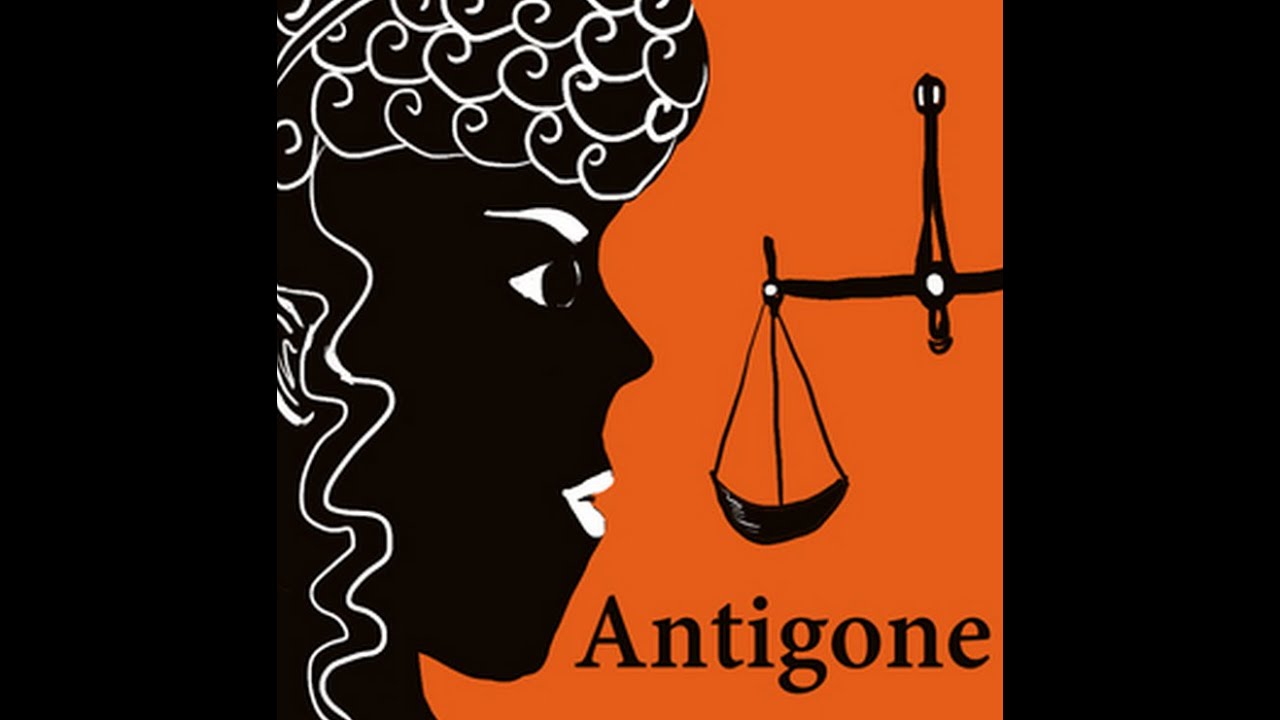
Hegel and Antigone, against a leftist imagery 4:20 We are prey to the most oppressive, the most enormous State apparatuses, the most instrumentalized State apparatus ever seen, for the benefit of an absence of State which is the private sphere. That's it. So, Antigone — I take the opposite view following my reading of Hegel, for whom she is a central figure in his thought. I recall that his relationship with Antigone spans his whole life. He translated Antigone at fourteen, at the Gymnasium, the equivalent of high school, at Stuttgart.
4:53 Afterward he talks about her for whole evenings — I would have loved to be a little mouse listening in — in that small room sheltered in the Stift, the seminary for trainee theologians in Tübingen, where he shared a room with Schelling and Hölderlin, the two greatest philosophers of the time, along with the greatest poet, perhaps one of the greatest of all time, in the same room — I would have liked to be a little mouse. And there he spoke especially with Hölderlin about Antigone, the admirable last text, wrested from madness by Hölderlin, his remarks on the translations of Oedipus and Antigone which he had just completed.
5:31 And finally, in the Aesthetics and in the Philosophy of Right, the works of maturity, of the old Hegel of Berlin — in the Aesthetics he has this cry, there's no other word, before this student, of all the masterpieces of Antiquity and the modern world, and I know them all, and he adds all the same, to be modest, "and everyone can and must know them, Antigone seems to me the most perfect, the most serene." A kind of prize-giving at the summit, everyone gets one. And finally, in the Philosophy of Right, which is his political testament, we're far from tragedy, from aesthetics — he evokes the conflict between the private and the public that is found in the tragedy of Antigone, and he says: here we are dealing with the supreme ethical opposition, and therefore the most deeply tragic one.
6:15 It remains valid in all places and at all times. A tremendous exception for a philosopher who, before Marx, said that every aesthetic production is a function of the historical moment of its time, of the moment Spirit is living through then, to speak in Hegelian terms — and yet here is an exception, the tragedy of Antigone, which holds for all times. So, already, Hegel's relationship to Antigone. Yes, and thanks to Hegel, I was able to take the opposite view of an imagery that has taken hold, which makes Antigone into the little leftist of service, and a feminist to boot, as we'd say today, who defends the rights of the individual and of the private sphere, regionalist, leftist, feminist, against the oppression of society.
6:53 A Hannah Arendt avant la lettre, so to speak. What a total misreading. It's not an individual against the community — let's read Sophocles properly — it's a community against a community. There is a traditional community, that of the family. It's a Corsican speaking to you here. Traditions are powerful. When the blood is struck, all those in whom that blood flows are supposed to take part in the vendetta, in vengeance, and are affected. The individual has little place, as Hegel says in his analysis of the ancient city.
Family and city: the sacrifice of the citizen and the sacred 7:25 Here the individual is an ineffective shadow. We will never know, reading Sophocles, whether Achilles preferred potatoes to water, or had a beauty mark on his left nostril. In Balzac, we'll know all of that. That's modern, that's more modern. Not so at the time. So there is a traditional community, the family, blood, as they said at the time — the blood, the whole set of my kin in whom the same blood flows — and then, facing it, a more political community, the city, whose bond is less natural. Neither the family nor the city is natural, contrary to what some say — we're in anthropology here, since the family presupposes institution, not instinct: marriage, and not merely sexuality, etc.
8:01 But the family bond, the parent-child bond, or the bond among relatives, is a bond in which nature plays a decisive role, whereas the bond of citizenship is higher, more spiritual. And so this is the conflict between the archaic world and the new world, quite simply — the passage from the genos, the clan — again, it's a Corsican speaking to you when I speak of clan — to a broader society. That's why this encounter with the figure of Antigone in Hegel's thought struck me.
8:37 I'm beginning to understand why his whole life was preoccupied by this figure, for she remains relevant, insofar as this conflict between the private and the public remains relevant. That is to say, there is always a sacrificial part to be carried out in order to be a citizen. When Rousseau speaks of alienation in the Social Contract, one must alienate part of one's natural freedom, as is stated in the social contract. That's what allows me to go left, right, into the forest — yes, but not too far, because I'll soon be hungry. That too is nature. That's natural law. And there, there's no exception.
9:07 One must eat to live. I can't go against that. I cannot live without eating. On the other hand, I can — I'm supposed to respect the red light, yes, but I can run it. I can go against it. If there are no cops around, at night. That's it. That's the big difference. That's it. We fall for a con when we believe we're freer in nature than in society. There — I've tried to answer rather quickly about this unforgettable figure who confronts Hegel, whom we always think of as the philosopher of the State, of the collective. And in some way, he is fascinated by the one who unforgettably defended the rights of the private sphere when the State betrays itself, when the State oversteps its own mission and attacks what?
9:49 Death, the corpse, which falls under the private sphere. And he says very well that the citizen, as long as he is alive, belongs to the city. And his life belongs to the city, which sends him off to fight — against the Persians, for instance. But once he is dead, it's a matter for the family. The funeral rites. And that, since Cro-Magnon times, funeral rites belong to the sacred. The sacred is private. That's why this figure is unavoidable.