Dominique Pagani links Hannah Arendt first of all to Heidegger, whose pupil, disciple or "groupie" she is in his view12. His main reproach concerns the notion of totalitarianism, which he considers abject: forged after the war to serve the Cold War, it puts communism and Nazism on the same footing and places the liberal on the side of the good34. He takes the opposite view to the definition that follows from it, that of the individual crushed by society. It is on these grounds that he refuses to make Antigone "a Hannah Arendt before her time": that would be a misreading of Sophocles5. In a 2020 session devoted to her works, he presents her as a propagator of the Heideggerian view of modernity. He also places her within the conservative revolution, following Burke against the French Revolution. Finally, he notes that in The Human Condition only those freed from labour gain access to political action67.
Summary produced automatically from 38 of the passages below, to be reviewed; the numbers link to the moment in the session.
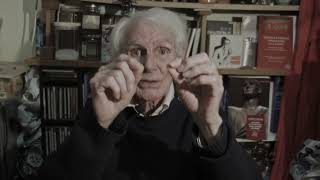
Who is this?
Hannah Arendt (born Johanna Arendt; 14 October 1906 – 4 December 1975) was a German and American historian and philosopher. She was one of the most influential political theorists of the twentieth century. Her works cover a broad range of topics, but she is best known for those dealing with the nature of wealth, power, fame, and evil, as well as politics, direct democracy, authority, tradition, and totalitarianism. […]
0:54The Life of the MindPresented as the advocate and propagator of the Heideggerian vision of modernity, who seeks to dismantle philosophy and its categories.
12:00On RevolutionHer early texts place her among the authors of the conservative revolution; she follows Burke against the French Revolution and rejects egalitarian democracy.
15:44The Human ConditionFor her, work no longer humanizes; only those freed from work gain access to political action: an isonomic concept of the political.
33:29Eichmann in JerusalemShe builds an exonerating apparatus: the thoughtless executor on one side, Heidegger the "secret king" of thought on the other.
1:15:29The Origins of TotalitarianismAmerican preface read as a Cold War protocol, close to Schmitt's Nomos of the Earth.
5:44She elaborated the concept of totalitarian in political philosophy since the war; she was the student of the most Nazi of philosophers, which is troubling.
.jpg)
 Talks · 24 Sept 2020Arendt and Heidegger: the destruction of thought