 Season 12 · 1 Apr 2024The quest for the Grail, sanctimony or sacrilege?
Plotin
Appears in 8 videos · 9 passages.
What Dominique Pagani says
Dominique Pagani mostly refers to Plotinus indirectly, through a passage by Gracq in which his name appears among the so-called "concrete" philosophies1. He returns to this text several times between 2016 and 202223. In 2024, in a session on the Grail quest, he notes that these more concrete philosophies are the ones preferred by the character Albert4. In the same session, he presents Plotinus as a Neoplatonist who speaks of procession5. Elsewhere, he places him as a stage in the history of the beautiful as Hegel traces it6. He also names him among the standpoints from which one can philosophize7. Finally, he mentions him in remarks on the present state of philosophy: studying Aristotle and Plotinus seems useless from the standpoint of the cognitive sciences8, and Plotinus is put on the agrégation syllabus for the first time9. None of the passages gives a close reading of a work by Plotinus.
- 1Hegel Plage 1/51 Feb 2016 · 1:44
- 2#13 • Retour aux logiques du sujet9 Jul 2020 · 12:54
- 3"La parole est la meilleure et la pire des choses" (Esope)19 Oct 2022 · 34:19
- 4La quête du Graal, bondieuserie ou sacrilège ?1 Apr 2024 · 1:17:25
- 5La quête du Graal, bondieuserie ou sacrilège ?1 Apr 2024 · 28:59
- 6Musicosophie 15. Platon, Rouseau, Hegel et la musique9 Feb 2021 · 1:18:53
- 7#2 - Les Attelé(e)s de la Confinitude30 Mar 2020 · 8:55
- 8#2.7 Entre crise et guerre : Philosopher ?1 Aug 2017 · 46:53
- 9Hegel et les gilets jaunes (1ère partie)13 Feb 2019 · 1:14:57
Summary produced automatically from 9 of the passages below, to be reviewed; the numbers link to the moment in the session.
_-_BEIC_6353762.jpg) Who is this?
Who is this?Plotinus (; Ancient Greek: Πλωτῖνος, Plōtînos; c. 204/5 – 270 AD) was an ancient Greek philosopher, born and raised in Roman Egypt. He is widely regarded by modern scholars as the founder of Neoplatonism. Plotinus was a student of the self-taught philosopher Ammonius Saccas, who belonged to the Platonic tradition. Historians in the 19th century coined the term "Neoplatonism" to describe Plotinus and his philosophy. This philosophical tradition was vastly influential during late antiquity, the Middle Ages, and the Renaissance. […]
Read the article on WikipediaText: Wikipédia, CC BY-SA 4.0, excerpt · Portrait: Paolo Monti, CC BY-SA 4.0
Season 12 · 1 Apr 2024The quest for the Grail, sanctimony or sacrilege?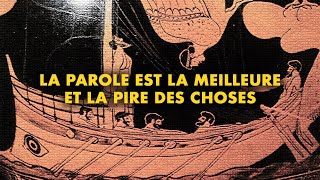 Season 11 · 19 Oct 2022"Speech is the best and the worst of things" (Aesop)
- 34:19Quoted in the Gracq passage.
 Series · 9 Feb 2021Musicosophy 15. Plato, Rousseau, Hegel and music
- 1:18:53Stage in Hegel's history of the beautiful.
 Season 8 · 9 Jul 2020#13 • Return to the logics of the subject
- 12:54Cited in Gracq's text.
 Season 7 · 30 Mar 2020#2 - Harnessed to Confinitude
- 8:55Cited among the standpoints from which one can philosophize.
 Talks · 13 Feb 2019Hegel and the yellow vests (Part 1)
- 1:14:57Put for the first time on the agrégation syllabus.
 Season 2 · 1 Aug 2017#2.7 Between crisis and war: Philosophising?
- 46:53Working on Aristotle and Plotinus seems useless to cognitive science.
 Series · 1 Feb 2016Hegel on the Beach 1/5
- 1:44Cited by Gracq among concrete philosophies.