 Talks · 14 Jul 2022From Plato to world revolution, by Dominique Pagani
- 44:01Compared to Socrates unraveling puzzles.
Appears in 5 videos · 5 passages.
Dominique Pagani mentions Hercule Poirot a few times between 2021 and 2022, almost always to compare him with Plato's Socrates. He calls Socrates Plato's Poirot or Sherlock Holmes1 and likens him to the detective who unravels riddles2. He also draws on the figure of the investigator to describe the work of thought: the investigator senses determinability before finding the determination3. He does, however, point out the limits of this comparison. Discussing the Gorgias, he makes clear that Socrates is not a detective who gets everyone to agree at the end4. In the session "Philosopher sous la menace" ("Philosophizing under threat"), he notes that Poirot is a detective whose author always makes him triumph5. Depending on the session, the comparison therefore serves sometimes to shed light on the Socratic approach, sometimes to set it apart.
Summary produced automatically from 5 of the passages below, to be reviewed; the numbers link to the moment in the session.
.jpg) Who is this?
Who is this?Hercule Poirot (UK:, US:, French:) is a recurring fictional Belgian detective created by the English writer Agatha Christie. Poirot is Christie's most famous and longest-running character, appearing in 33 novels (starting with The Mysterious Affair at Styles), two plays (Black Coffee and Alibi) and 51 short stories published between 1920 and 1975. […]
Read the article on WikipediaText: Wikipédia, CC BY-SA 4.0, excerpt · Portrait: Yoni S.Hamenahem, CC BY-SA 3.0
Talks · 14 Jul 2022From Plato to world revolution, by Dominique Pagani Season 10 · 27 Jan 2022#8 Philosophising under threat
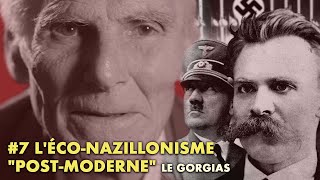 Season 10 · 23 Dec 202110#7 "Post-modern" eco-petty-Nazism - Plato's Gorgias
 Season 9.2 · 9 Jun 20219 #23 "Ruled like music paper!" • Bach • Nerval • Lévi-Strauss
 Season 9.2 · 7 Jan 20219 #11 How can sciences of history be real?