Summary
Dominique Pagani conceives of the imaginary as a genus that includes several species. In 2015 he counts four: imagination, memory, dream and myth. Later he keeps only three: imagination, nocturnal dream and memory, understood as an internalised image1. These representations populate an "inner night"2 and, unlike sensations, which are received passively, we project them outward as onto a screen3. For him, imaginary does not mean arbitrary: there is a realism of the imaginary, in which truth takes refuge while waiting for reality to change, and that is its sacred function4. He gives as examples Rousseau, who re-centres the island in the lake according to his fantasy, and Nerval, whose speech absorbs the setting of Senlis. He nevertheless contrasts this imaginary with a deadly imagination. In power, from Nuremberg to May 68, the imaginary becomes the opposite of reason5. Trying to bend reality to what does not exist damages it, like Procrustes' bed, and causes millions of deaths6.
- 1#4.3 Angélique (de Nerval)11 Dec 2017 · 10:13
- 2Naissance et carnage - Le massacre des Innocents22 Dec 2023 · 1:25:12
- 3#5 • Les Attelé(e)s de la confinitude18 Apr 2020 · 1:03:53
- 4Y comme Yonville8 Jan 2015 · 6:03
- 5JE ne suis pas celui que vous croyez - L'identité introuvable4 Jan 2024 · 1:20:19
- 6P comme Peuple30 Dec 2014 · 11:11
Summary produced automatically from 15 of the passages below, to be reviewed; the numbers link to the moment in the session.
 Season 12 · 4 Jan 2024I am not who you think I am - The elusive identity
- 1:20:19Imagination in power, from Nuremberg to May '68, is the opposite of reason; one must produce unity rather than imagine.
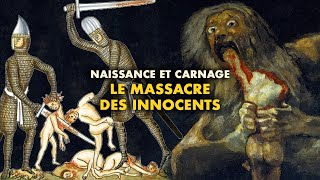 Season 12 · 22 Dec 2023Birth and carnage - The Massacre of the Innocents
- 1:25:12The inner night is populated with representations; imagination, memory and dream are the three species of the imaginary genus.
 Season 10 · 6 Oct 202110#2 Dialectics of identity and difference
- 2:06:14The real is never as damaged as when what does not exist brutally seeks to obtain existence there; this is the bed of Procrustes.
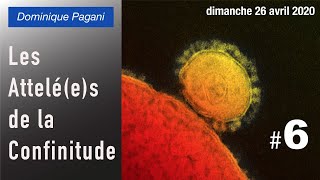 Season 7 · 26 Apr 2020#6 • Harnessed to confinitude
- 26:54The polarity of red and white has great temporal depth; it is poetic creation, not physics, that expresses it.
 Season 7 · 18 Apr 2020#5 • Harnessed to confinitude
- 1:03:53Sensations reach us passively; images, we project them from within toward the outside, as on a cinema screen: this is the dream.
 Season 4 · 11 Dec 2017#4.3 Angélique (by Nerval)
- 10:13The imaginary divides into three species: imagination, nocturnal dream and memory, an internalized image.
 Season 4 · 12 Nov 2017#4.2 Angélique (by Nerval)
- 1:44:15The setting of Senlis, superimposable on the dream, belongs to the same imaginary order; all reality is absorbed into Nervalian speech.
- 1:46:56Imaginary does not mean arbitrary; it is distinct from the imagination in power at Nuremberg.
 Talks · 8 Aug 2015Mythology and Truth
- 15:51Myth also belongs to the structures of the imaginary: to purge the monsters is to figure the monsters we have internalized.
- 41:34He divides the field of the imaginary into imagination, memory, dream and myth.
 Series · 8 Jan 2015Y for Yonville
- 3:18In power, the imaginary is terrifying: the Third Reich is ruled by fantasies, representation, and ceremony.
- 6:03While waiting for a change in reality, the imaginary is necessary, because truth takes refuge in it: this is its sacred function.
- 7:02There is a realism of the imaginary, but also a deadly imagination that leads to dead ends and regressions.
 Series · 1 Jan 2015R for Reverie
- 5:41Rousseau places the island at the middle of the lake although it is off-center: the imagination corrects the landscape according to the determining fantasy.
 Series · 30 Dec 2014P for People
- 11:11Cantonization goes on to infinity, like everything that belongs to the imaginary; wanting reality to correspond to the imaginary causes millions of deaths.