 Season 10 · 24 Mar 2022#11 UKRAINE: Mathematics unites men, politics divides them (Aristotle)
- 28:20A non-mystical hero who wants beer, ham and a little wife; his name comes from Papagei, parrot, because he is talkative.
Appears in 5 videos · 5 passages, 2 of them in depth.
Dominique Pagani discusses Papageno, a character in Mozart's The Magic Flute, several times between 2017 and 2023. He first presents him as the bird-catcher in the service of the Queen of the Night and reads the birds he catches as symbols of visions and dreams, in a session devoted to Nerval1. He then mainly retains the character's prosaic and popular nature. In his view, Papageno's aria shows the popular side of the opera2. He makes him a non-mystical hero who wants nothing but ham, beer and a little wife34. He traces his name to Papagei, the parrot, because the character is talkative4. He takes up this trait again in 2023, when he presents Papageno and his companion as the work's human couple and adds that Papageno sins through an excess of speech5. He also brings him into a session on happiness set against the death drive in music3.
Summary produced automatically from 5 of the passages below, to be reviewed; the numbers link to the moment in the session.
The Magic Flute, K. 620, is an opera in two acts by Wolfgang Amadeus Mozart to a German libretto by Emanuel Schikaneder. It is a Singspiel, a popular form that included both singing and spoken dialogue. The work premiered on 30 September 1791 at Schikaneder's theatre, the Freihaus-Theater auf der Wieden in Vienna, just two months before Mozart's death. It was Mozart's last opera. It was an outstanding success from its first performances, and remains a staple of the opera repertory. […]
Read the article on WikipediaText: Wikipédia, CC BY-SA 4.0, excerpt
Season 10 · 24 Mar 2022#11 UKRAINE: Mathematics unites men, politics divides them (Aristotle) Season 4 · 11 Dec 2017#4.3 Angélique (by Nerval)
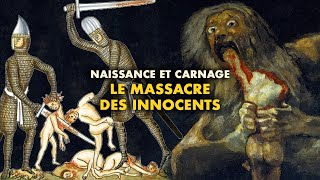 Season 12 · 22 Dec 2023Birth and carnage - The Massacre of the Innocents
 Series · 11 Dec 2020Musicosophy 5. Happiness versus the death drive in music
 Season 7 · 4 Apr 2020#3 • Harnessed to confinitude