 Season 11 · 26 Apr 2023Worldliness in Clouscard, or "The dominant ideology"
Marie-Antoinette
Appears in 10 videos · 11 passages, 2 of them in depth.
What Dominique Pagani says
Dominique Pagani mainly brings up Marie-Antoinette in connection with her farm at the Versailles hamlet, or at Trianon. He sees in it the figure of the dream of a return to nature and of the taste for simple nature, on the eve of the Revolution12. He also reads in it the dream of a class that has reached its limit3, and he takes it as the example of a world, that of high society, when he comments on Clouscard4. He contrasts this farm with the popular park of Ermenonville in a session devoted to Nerval5. A second theme recurs: when people speak ill of the queen, a regime is finished6. He calls "Marie-Antoinette syndrome" the act of attacking the sovereign's wife as if she concentrated all the evil of the regime7. He notes that more was attributed to her than to Louis XVI. He also mentions her in passing: the image of the young Mozart kissing her hand, and an example of films with historical pretensions.
- 1Mon éco-cabane dans la ZAD : autonomie ou aliénation ? • Q&A Philosophique • Dominique Pagani30 Apr 2021 · 23:57
- 2Dominique Pagani : De la débauche du sens à l'orgie du sentiment29 May 2023 · 2:29:18
- 3Dominique Pagani : « Ce qui menace les sociétés, ce sont les hommes et femmes bénéficiaires de l’exploitation des autres »12 Mar 2019 · 2:24:33
- 4La mondanité chez Clouscard ou "L'idéologie dominante"26 Apr 2023 · 11:02
- 5#4.7 Angélique (de Nerval)12 Apr 2018 · 31:33
- 6#2.6 Entre crise et guerre : Philosopher ?1 Aug 2017 · 36:41
- 7La mondanité chez Clouscard ou "L'idéologie dominante"26 Apr 2023 · 43:13
Summary produced automatically from 11 of the passages below, to be reviewed; the numbers link to the moment in the session.
 Who is this?
Marie Antoinette (Maria Antonia Josepha Johanna; 2 November 1755 – 16 October 1793) was Queen of France as the wife of Louis XVI from 10 May 1774 until the abolition of the French monarchy in 1792 during the French Revolution. Born in November 1755 at the Hofburg in Vienna, Marie Antoinette was the fifteenth child and youngest daughter of Emperor Francis I and Empress Maria Theresa. By right of her birth, she was an Austrian archduchess of the House of Habsburg-Lorraine. In 1769, Marie Antoinette was betrothed to Louis-Auguste, Dauphin of France, in order to strengthen the Franco–Austrian alliance. […]
Read the article on WikipediaText: Wikipédia, CC BY-SA 4.0, excerpt · Portrait: Élisabeth Louise Vigée Le Brun, Public domain
Season 11 · 26 Apr 2023Worldliness in Clouscard, or "The dominant ideology" Series · 30 Apr 2021My eco-cabin in the ZAD: autonomy or alienation? • Philosophical Q&A • Dominique Pagani
- 23:57His hamlet at Versailles, on the eve of the Revolution, figures the dream of the return to nature.
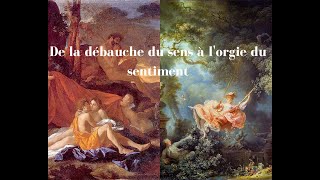 Talks · 29 May 2023Dominique Pagani: From the debauchery of sense to the orgy of sentiment
- 2:29:18His farm, a taste for simple nature.
 Series · 2 Feb 2021Musicosophy 13. Mozart restored
- 6:12Image of little Mozart kissing her hand.
 Season 5.2 · 26 May 2019#5.7 Nature or Landscape?
- 37:44Example of films with historical pretensions.
 Series · 12 Mar 2019Dominique Pagani ▷II Pablo Servigne
- 2:24:33Her farm at Versailles, the dream of a class that has reached its limit.
 Season 5.1 · 24 Oct 2018#5.1 The philosopher's Odyssey: Revolutionary thought
- 16:21Would have offered him a hundred louis.
 Season 4 · 12 Apr 2018#4.7 Angélique (by Nerval)
- 31:33His farm at Versailles, the opposite of the popular park of Ermenonville.
 Season 2 · 1 Aug 2017#2.6 Between crisis and war: Philosophising?
- 36:41When people speak ill of the queen, a regime is finished.
 Season 2 · 10 Mar 2016#2.4 Between crisis and war: Philosophising?
- 1:23:47More was attributed to her than to Louis XVI.